
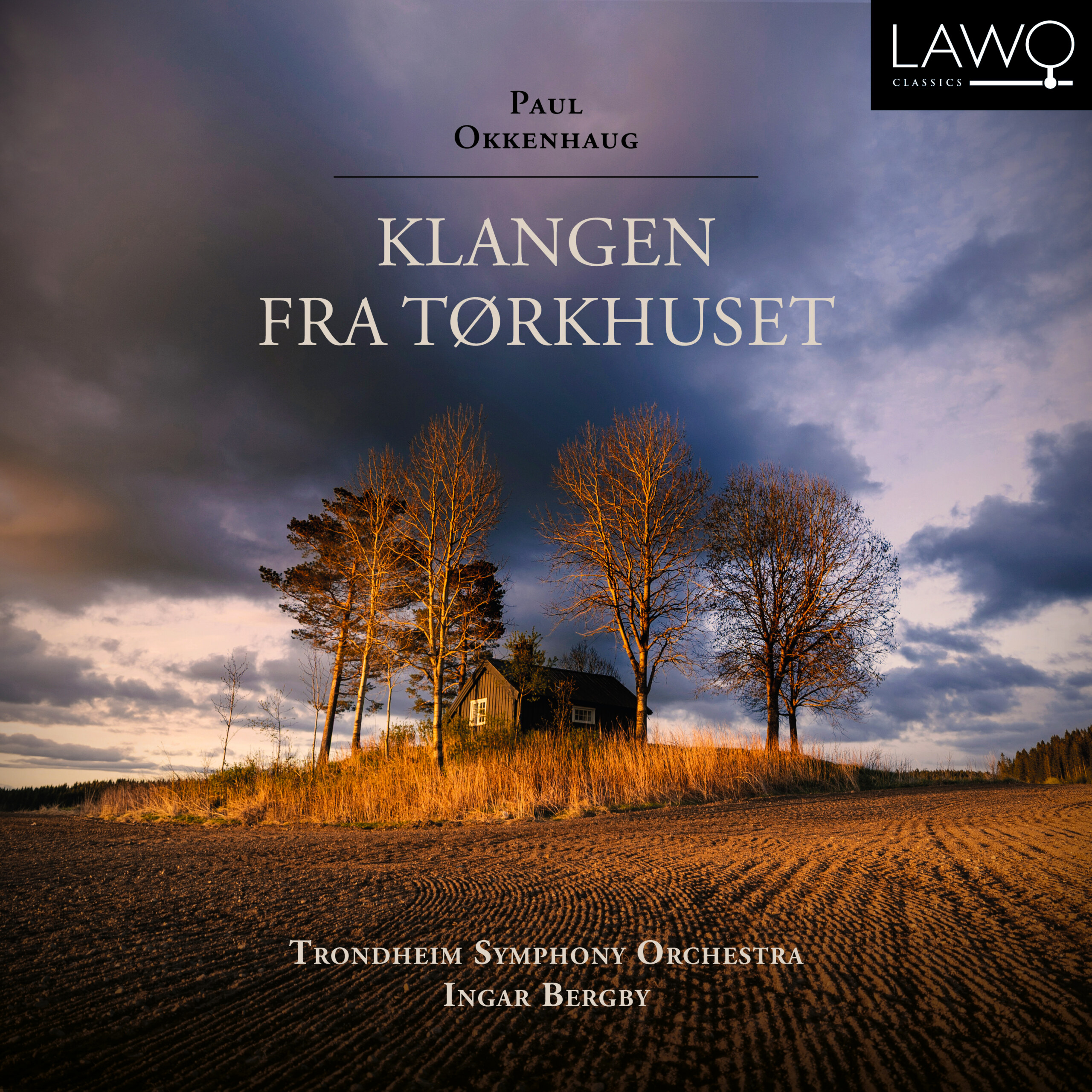
Paul Okkenhaug: Klangen fra Tørkhuset
Trondheim Symphony Orchestra (Symphony orchestra) | Ingar Bergby (Conductor)
Trondheim Symphony Orchestra revives Paul Okkenhaug’s orchestral music on Klangen fra Tørkhuset
Klangen fra Tørkhuset, a recording of music by Paul Okkenhaug (1908–1975) - the composer behind the music for “Spelet om Heilag Olav” with Trondheim Symphony Orchestra, conducted by Ingar Bergby. Soloists are soprano Eir Inderhaug and tenor Kjetil Støa, joined by the Trondheim Symphony Orchestra Opera Choir and Olsokkoret.
Okkenhaug is best known for the grand music he wrote for Spelet om Heilag Olav, the Olsok pageant at Stiklestad. The album presents this music alongside other pieces from his orchestral output: Ouverture for orkester, Lyrisk dans, Folla and Tonar frå Trøndelag.
The album’s title refers to the cultural milieu around Okkenhaug’s farm in Levanger, where the composer worked and where the painter Jakob Weidemann prepared his first solo exhibition. The recording shows a composer whose music is closely tied to Trøndelag, its landscape and its stories.
Stream & download
Tracks
Paul Okkenhaug (1908–1975)
Spelet om Heilag Olav
Text: Olav Gullvåg
Lyrics
Inngong
Vilja
de høyra kvædet mitt
og
vilja de orda tru
om
han Olav Haraldson
skal
songen her seg snu.
Dansen
dyn over vollen
så
dansar vi no i ring.
Glade
ride Noregs menn til Hildarting.
Kongen
var strid i sine krav
og
streng imot svik og prut,
dei
som alltid la landet ope
for
atale Store Knut.
Dansen
dyn over vollen,
så
dansar vi no i ring.
Glade
ride Noregs menn til Hildarting.
Folket
var både veikt og vilt,
men
våren gjekk over land,
trollskap
øyder åker og eng
og
setjer grender i brann.
Dansen
dyn over vollen,
så
dansar vi no i ring.
Glade
ride Norges menn til Hildarting.
Text: Olav Gullvåg
Opening
Would you listen to my
song
and would you believe
the words
about Olaf Haraldsson
this song will tell
the tale.
The dance roars over
the pasture
we dance now in a
ring.
The men of Norway ride
merrily to Hildarting.
The king was hard in
his demands
and strict against
betrayal and bargaining,
those who always left
the country open
for troublesome Store
Knut.
The dance roars over
the pasture,
we dance now in a
ring.
The men of Norway ride
merrily to Hildarting.
The people were both
weak and wild,
but spring swept over
the land,
witchcraft lays waste
to field and pasture
and leaves villages in
flames.
The dance roars over
the pasture,
we dance now in a
ring.
The men of Norway ride merrily to Hildarting.
Translation: Marie Haukeland, Verboo Language Services
Lyrics
Tormodstev I
Ølet
eg drikk på di velferd, dros.
Gjerne
så munde eg munnen din møte.
eg
drakk og drøste i stunder søte
og
flikrehugen fløkte min kos.
Eg
veit ikkje mætare ting enn ei møy,
trufast
i alvor og trivleg i skøy.
Utrulege
ting kan koma i tanken,
hjå
visne gråskjegg på vide vanken.
Ung,
det er du, og hugstolen er du,
lite
veit du om livet sjølve.
Ung
var eg og, og tåpeleg var eg,
og
arvesølvet for vindspong selde.
Text: Olav Gullvåg
Tormod's Folk Verse I
The ale I drink for your welfare, beauty.
Gladly would I let my
mouth meet yours.
I drank and chattered
in sweet times
and my delight was
entangled with laughter.
I know of nothing
greater than a maiden,
loyal in earnestness
and pleasant in jest.
Wondrous things may
come into the thought,
of withered greybeards
on long roams.
Young, that is you,
and you are disheartened,
you know little of
life itself.
I was also young, and
I was foolish,
and I sold the silver for a patch of ice on the water.
Translation: Marie Haukeland, Verboo Language Services
Lyrics
Tormodstev II
Eg
var ung og agelaus fole.
Eg
for over fjell og finne.
og
jenta eg heldt av gjordest
til
kvidekvad om ei kvinne.
Eg
leika for lenge med logen.
Den
eine eg kunne ha femna
sloka
som glo utan nøre.
og
no vil ho naudleg meg nemna.
Så
lærde meg livet omsider,
det
er seinkomen visdom diverre.
Du
skal vinna ei einaste kvinne.
Du
skal hava ein einaste herre.
Text: Olav Gullvåg
Tormod's Folk Verse II
I was a young and
reckless colt.
I roamed the mountain
and wilderness.
and the girl I loved
became
a sorrowful song about
a woman.
I played too long with
the fire.
The one I might have
embraced
extinguished like
embers with no kindle.
and now she will
hardly mention me.
At last life taught
me,
it is delayed wisdom,
unfortunately.
You shall win a single
woman.
You shall have a single lord.
Translation: Marie Haukeland
Lyrics
Hærmannssong
Kan
du bragder med brokatak
og
kan du bruke eit spjot
Då
er du kar for eit karaverk
som
ikkje er kongen i mot.
Landet
dyn under lovden
og
åsane syng omkring.
Glade
ride Noregs menn til Hildarting.
Stridsmann
er eg, og strid eg er,
eg
strid for land og viv.
Lydrikefolk
kan vi aldri bli,
då
kvesser vi sverd og kniv.
Røten
skjelv under føten
og
åsane syng omkring.
Glade
ride Noregs menn til Hildarting.
Kongen
er komen heim til sitt,
vil
lydast sitt eige land.
Kven
har likare rett til landet,
kven
har vel rett som han?
Det
blir far etter føten
som
denne ferda gjer.
Glade
ride Noregs menn til kongeferd.
Text: Olav Gullvåg
The Warrior's Song
If you can perform
feats in trials of strength
and if you can use a
spear
Then, you are a man
for a task
that the king cannot
dispute.
The land resounds
beneath the law
and the hills sing all
around.
The men of Norway ride
merrily to Hildarting.
A warrior I am, and
battle I am,
I fight for land and
wife.
A people of a vassal
state, never will we be,
we will sharpen our
swords and knives.
The root quivers
beneath the foot
and the hills sing all
around.
The men of Norway ride
merrily to Hildarting.
The king has returned
home,
he will listen to his
own land.
Who has a more
rightful claim to the land,
who has a right like
his?
There will be traces of the feet
that this journey
shall make.
The men of Norway ride merrily alongside their king.
Translation: Marie Haukeland
Lyrics
Grottesongen (Store Grotta)
I
vintrar ni nedunder jorda
som
systrar vi leika saman og voks.
Som
møyar vi stod ved store verk,
fluks
vi flytte berg over fly.
Vi
velte steinar til vettegardar
så
jordinnvolane redde skolv.
Vi
slengde slagget, vi sleit or fjellet
og
mata malmar til menns gaman.
Fyrstar
felde vi og førde andre,
skar
brynjer med skarpe bitjarn.
Blod
av såret bløytte sverdblad.
Frie
og fræge ferdast vi då.
No
er vi komne til kongehuset
miskunnlaust
må vi mylna draga.
Aur
under foten, ovantil frosten,
Hustrig
og hatal er heimen hans Frode.
Så
drog dei kvenna med makt og velde,
unge dei var med veldig kraft.
Skalv
då skaftet, kvar stod kvenna,
haldet
som heldt ho var sprunge i sundt.
Text: Olav Gullvåg
The Cave Song (Store Grotta)
In winters nine
beneath the earth
we played and grew as
sisters.
As maidens with stood
at great works,
suddenly we moved
mountains across the wilderness.
We rolled stones into
the homes of wood nymphs
and the insides of the
earth trembled with fear.
We removed the waste,
we worked the mountain
and fed ore to the joy
of men.
We slew some lords and
cast away others,
created coats of mail
with sharp blades.
The blood from the
wound wet the sword blade.
We roamed free and
known.
Now we are at the
royal house
mercilessly we must
run the mill.
Pebbles beneath the
foot, frost covering the body,
Ice cold and vicious
is the home of Frode.
Then they drew the
mill with food and might,
young they were, with great strength.
The handle then shook,
where the mill stood,
the grip that held her had burst asunder.
Translation: Marie Haukeland
Lyrics
Pastorale
Vargen
yler over dæld og dikje,
han
vil ha meg, men han får meg ikkje.
Eg
ser hjuringen som gjeter smalen,
eg
ser sigraren på siste valen.
Bloman' nigjer oppi alle lider.
Helsar
Kongen vår for alle tider.
Text: Olav Gullvåg
Pastorale
The wolf howls over
valley and pasture,
he wants me, but he
cannot have me.
I see the shepherd
that herds the sheep,
I see the victor on
the final field.
The flowers bend their heads in all the meadows.
Greeting our King for all time.
Translation: Marie Haukeland
Lyrics
Håsteinvisa
Har
du høyrt om han Håstein
han
som maula opp myra
han
som gnaskra på gråstein der han for.
Han
åt molda som makken,
han
åt bjørka på bakken,
han
åt veden til vinteren som ei bjor.
[Han
et deg og du - var deg veslemor.]*
Han
sleit tallen av stuven,
fløytte
myse av flinten,
berget
knasa’n som knuen,
veit
du det?
Veit
du krafta av grjotet
gjorde
føtene fljote,
så
det fanst ikkje fe som fylgde med.
[Jamvel
røyskatten vart til spott og spe.]*
I
ein blunk tok han blånen,
som
ein fjert tok han fjorden,
og
ein muns utav månen tok han kaut.
Han
drog reimar av drome
til
å binde opp skor med,
men
han enda, ja det er mesta flaut:
[For
han åt seg ihel på grynmjølsgraut.]*
*Resitert tekst i Spelet, ikke med på innspillingen
Text: Olav Gullvåg
The Song of Håstein
Have you heard of
Håstein
the one who ate up the
marsh
he who chewed on stone
where he went.
He ate the mold like the worm,
he ate the birch on
the ground,
he ate the timber
meant for winter like a beaver.
[He will eat you too – beware, child.]*
He tore the dirt off
the stump,
skimmed the whey off
the flint,
he chewed the mountain
like a knuckle,
did you know?
Did you know that the
might of the stone
made his feet swift,
so no livestock could
keep up.
[Even the stoat became a mockery and a joke.]*
In a moment he claimed
the mountain,
with a fart he took
the fjord,
and proudly he took a
bite of the moon.
He made straps from
dreams
to tie his shoes,
but even still, it's
almost shameful:
[For he ate himself to death on porridge made from meal.]*
*Recited text i Drama, not on the recording
Translation: Marie Haukeland
Lyrics
Sol-Leiken
Kven
er den kvinna som trør på trammen
Kven
er den kvinna som trør på trammen
Like
ved Lidskjalv, Svidurs stol.
Stod
ho i svala og lyfte arman:
Sjøen
og lufta lyste og skein.
Gjerd er det, Gjerd er det, Gymes dotter,
venaste
veikja i verda vide.
Munn
og mæle solguden miste.
Frøy
den frode då henne han såg.
Still
og sturen satt han og kurde.
Sola
svartna og jorda svalt.
Gjerd
er det, Gjerd er det, Gymes dotter,
venaste
veikja i verda vide.
Veikja
han ville for all ting vinne.
Veikja
han ville for all ting vinne.
Sende
så nordpå sendemann Skirne.
Sende
så nordpå sendemann Skirne.
Veikja
vart vivet hans, Skirne fikk sverdet,.
Mange
så meiner dei møya var verd det.
Gjerd
er det, Gjerd er det, Gymes dotter.
Venaste
veikja i verda vide.
Frøy
den frode og Gjerd den fride,
skin
over mannheim ved midtsommartid.
Text: Olav Gullvåg
The Sun Game
Who is the woman who
treads upon the threshold
Who is the woman who
treads upon the threshold
Right by Lidskjalv, the seat of Svidur.
She stood in the cold
and lifted her arms:
The sea and the air
glistened and shone.
It is Gjerd, it is
Gjerd, the daughter of Gymir,
the fairest girl in all of the world.
Freyr the Wise, The God of the sun,
lost the power of speech when he
saw her.
Still and sad he sat,
bowing his head.
The sun turned black, the earth starved.
It is Gjerd, it is
Gjerd, the daughter of Gymir,
the fairest girl in all of the world.
The girl he wished at
all costs to win.
The girl he wished at
all costs to win.
So northward he sent
the messenger Skírnir.
So northward he sent
the messenger Skírnir.
The maiden became his
wife, Skírnir received the sword.
Many believe the
maiden was worth it.
It is Gjerd, it is
Gjerd, the daughter of Gymir.
The fairest girl in
the world.
Freyr the Wise and
Gjerd the Fair,
shine over the world of men at midsummer time.
Translation: Marie Haukeland
Lyrics
Takkesong
Fader
vår du som styrer
sol
og måne og stjerner
og
dei kvikjend som yrer kvar ein stad,
gjev
meg kraft til å bera
alle
dei bører du gjev meg.
Gjev
meg nerk til å vera god og glad.
Lær meg å leva i evig takkekvad.
Herre,
hald oss i handa
kvar
i verda vi villar,
at
vi sælt skal få sanna livsens ord.
Gjer
oss sterk med din nærleik.
Nør
oss du med din nåde.
Lat
oss leva i kjærleik her i nord!
Herre
Kristus!
Sign
alle folk på jord!
Text: Olav Gullvåg
Song of Thanks
Our Father who governs
sun and moon and stars
and all living
creatures that teem in every place,
give me the strength
to carry
all the burdens you
give me.
Give me strength to be
good and glad.
Teach me to live in an eternal song of thanks.
Lord, hold our hands
wherever in the world
we wander,
that we may come to
know the words of life.
Make us strong through
your presence.
Nourish us with your
grace.
Let us live in love
here in the North!
Lord Christ!
Bless all the peoples on earth!
Translation: Marie Haukeland
Lyrics
Tormodstev III (Kveldskvadet)
Den
siste gletten av det siste glad
byd
kveld og kvile for dei stev eg kvad.
Om
dag og dåd er runnen ut for meg,
er
vegen som vi går uendeleg.
Du
føddest for å møte Gud og mann,
og
fann du rette vegen stort du vann.
Om
du er feigdarmerkt for fiendfot,
med
døden jarnkald i di hjarterot.
Eg
helsar deg du nåde som går ned.
Eg
veit at ingen veg er end med det.
Eg
ser i mot det nye solarsprett,
som
Kongen vår har vigd ei evig ætt.
Text: Olav Gullvåg
Tormod's Folk Verse III
The last glance at the
last sunset
offers night and rest
for the verses I have sung.
If day and deed have
run out for me,
the road we walk is
endless.
You were born to meet
God and man,
and if you found the
right road, greatly you gained.
If you are marked for
death by the foot of the enemy,
with the cold iron of
death in the root of your heart.
I greet you, grace, as
you descend.
I know that no road
ends with that.
I look towards the new
sunrise,
which our King has dedicated to an eternal lineage.
Translation: Marie Haukeland
Lyrics
Epilog – Etter slaget
Kongen
stupte på Stiklestad,
men
landet gjorde han fritt.
Sola
glar bak Hermannssnas’
og
landet er mitt og ditt.
Soga
seier så stille,
her
har det store hendt.
Her
er det evige altarljoset
i
Norden tent.
Text: Olav Gullvåg
Epilogue – After the battle
The king fell at Stiklestad,
but he made the
country free.
The sun glows behind
Mount Hermannssnasa
and the land is mine
and yours.
The saga says quietly,
great things happened
here.
Here the eternal altar
candle
of the North is lit.
Translation: Marie Haukeland
Lyrics
Epilog – Olsok
Heilagt,
heilagt er det blodet
det
som synet gjev åt blinde.
Heilag,
heilag er han, mannen,
han
som gjev oss slikt eit minne.
I
ei verd som vegvill er,
knelar
eg for himmelkongen,
han
som i den største trongen
er
oss traust og trufast nær.
Makter
gode, makter gode,
dei
kan vende alt det vonde
til
det gode, til det gode,
slik
som dette kongeblodet.
Kvinner,
mann, hand i hans,
tegn
og bumann, kongsmann, bonde
lyfte
opp i himmelklåren
Heilag
Olavs fagre land.
Text: Olav Gullvåg
Epilogue – Olsok
Holy, holy is the
blood
the one that gives
sight to the blind.
Holy, holy is he, the
man,
he who gives us such a
memory.
In a world that is
lost,
I kneel before the
king of heaven,
he who in the greatest
distress
is near us, strong and
faithful.
Powers of good, powers
of good,
they can turn all that
is evil
into good, into good,
like this royal blood.
Women, men, hand in
hand,
servant and farmer,
king's man, peasant
lift up into heaven's
light
Saint Olaf's fair
land.
Translation: Marie Haukeland
Credits
- Conductor
- Ingar Bergby
- Soloist
- Eir Inderhaug (Soprano) | Kjetil Støa (Tenor)
- Male choir
- Trondheim Symphony Orchestra Opera Choir | Olsokkoret
- Chorus Master
- Urša Lah | Hans Dur Molvik
- Symphony orchestra
- Trondheim Symphony Orchestra
- Composer
- Paul Okkenhaug
- Lyricist
- Olav Gullvåg
- Producer
- Vegard Landaas
- Engineer
- Thomas Wolden
- Editing
- Vegard Landaas
- Mastering
- Thomas Wolden
- Liner notes
- Paul Okkenhaug-selskapet
- English translation
- Marie Haukeland | Verboo Language Services
- Executive producer
- Vegard Landaas
- Booklet editor
- Alison Bullock Aarsten
- PR
- Camilla Momkvist-Skau
- Accounting
- Torgeir M. Landaas
- Cover photo
- Øyvind Malum
- Booklet photo
- Paul Okkenhaug at the piano in Tørkhuset by Okkenhaug family | Welcome to Tørkhuset! The words "SALAM ALAIKUM" are painted on the door by Okkenhaug family | Paul Okkenhaug by Okkenhaug family | Louis Kvalstad with Paul Okkenhaug by Okkenhaug family
- Booklet art
- Jakob Weidemann: Til Ragna (1946) © Jakob Weidemann / BONO 2026
- Artist photo
- Eir Inderhaug by Trond Gudevold | Kjetil Støa by Erik Maxim Kronda | Ingar Bergby by John Halvdan Halvorsen | Trondheim Symphony Orchestra by Harald Øren / TIBE
- Design
- Anna-Julia Granberg | Blunderbuss
- Recording location
- Olavshallen Concert Hall, Trondheim
- Recording country
- Norway
- Recording year
- 2025
- Recording dates
- 02.06.2025 | 03.06.2025 | 05.06.2025 | 06.06.2025
- Original source
- DXD (352.8 kHz, 24 bit)
- Discs / tracks
- 1 disc | 17 tracks
- Produced with support from
- County of Trøndelag | Verdal Municipality | The Arven Museums
- Release year
- 2026
- Label
- LAWO Classics
- Duration
- 1:01:35
- EAN
- 7090020184043
- ISRC
- NOEHX2613
Booklet text
Paul Okkenhaug (1908–1975)
If there is one thing for which the composer Paul Okkenhaug is remembered, it is the music for the historical Saint Olav Drama (Spelet om Heilag Olav), which has been performed at Stiklestad every summer since 1954.
St Olav (Olaf Haraldsson) played a pivotal role in the unification of
Norway, the introduction of Christianity and the establishment of a Norwegian
legal system.
In the Drama, we accompany him through the last day of his life, until he
reaches the farm where he is slain by the peasant army.
The final hymn from the Drama, Olsok, is sung and performed at concerts and funerals throughout the year, and has become something of an anthem for Trøndelag.
Who, then, was the composer behind this historical musical drama?
Paul Okkenhaug grew up as the heir to the family farm, Øvre Okkenhaug, in Levanger.
He received strong cultural influences from an early age through his father, Fredrik, who played the fiddle, and his mother, Sigrun, who was an author. He spent as much time as he could playing and composing little melodies on his grandparents’ piano. At the age of fifteen he attended his first concert, given by the composer and organist Johannes Haarklou, and the experience left a deep impression on the young Paul.
At the age of 16, he received his own piano and began taking lessons, quickly proving to be highly talented.
On one of her journeys, his mother Sigrun met the composer and organist Fridthjof Anderssen in Bodø, who strongly recommended that the talented young boy be sent to Oslo to study.
He completed his studies at the Oslo Conservatory of Music aged 19, finishing a two-year organist education programme in a single year, which was all that an heir to the family farm could spare, in both time and expense. On several occasions he served as deputy organist for Ludvig Nielsen at Nidaros Cathedral.
A decade later, he began studying composition, and spent several periods in Oslo working with Bjarne Brustad, David Monrad Johansen and Geirr Tveitt.
In 1936, he received a commission to compose a cantata for the town of Levanger's 100th anniversary, scored for soloists, choir and orchestra. The concert was broadcast live by NRK.
He joined the Norwegian Society of Composers in 1937, the same year that he won a composition competition organised by NRK and the Society with his work Lyrisk dans (‘Lyrical dance’).
Then, in 1938, he took over the 18th-century family farm – the obligations of inheritance could not be ignored.
The war created obstacles, but in 1946 he was awarded a state composition grant and travelled to Copenhagen, where the pianist and renowned teacher of music theory Dagmar Borup became an important mentor. He also took lessons with the composer Vagn Holmboe.
When he was asked to compose music for Olav Gullvåg's play about Saint Olav, he once again travelled to Denmark, where he wrote large parts of the music for the Drama at the Danish–Norwegian cultural centre Schæffergården. Gisle Straume, who was to direct the first Drama, was also there, and saved the score from the fire when Okkenhaug, who was intensely self-critical, became dissatisfied with what he had written.
The remainder was composed in the drying house (‘Tørkhuset’) at Okkenhaug, and the final note was put to paper just ten days before the premiere. The Drama was a great success, and has been performed at Stiklestad every year since.
Alongside his colleagues Ludvig Nielsen and Per Hjort Albertsen in Trondheim, Okkenhaug was part of an influential generation of composers in the Trøndelag region for many years. They collaborated on a collection of Norwegian melodies for schools, Norsk Tonesamling, which was published in 1964, with Okkenhaug serving as editor.
Out in the fields on the family farm stands the old drying house, where the grain was once dried after the harvest. The brothers Elliot and Louis Kvalstad, respectively a painter and a poet, whom Okkenhaug had known since his youth, visited in the early 1930s and turned the drying house into a studio, living quarters, and a place for writing.
Shortly after the war, the artist Jakob Weidemann prepared his first solo exhibition there, and Okkenhaug himself used the drying house as his own composing studio, both for the Levanger cantata and for the music to the Drama. He had a piano transported there by tractor.
Both the farm and the drying house enjoy a view of Frolfjellet. There the composer found strength, and sought silence and inspiration.
For Paul Okkenhaug, inspiration was of great importance. He sought to create simple melodies and enrich them with finely crafted arrangements. The music was intended to appeal directly to the listener and give immediate enjoyment rather than being processed via the intellect.
Perhaps, then, it was as an improviser at the organ that he found the greatest fulfilment in his music, for there he could flourish, unencumbered by his relentless self-criticism. People travelled from far away to hear his improvisations.
He was a very shy man. His way of publishing his music was to send an original manuscript or a copy to friends and acquaintances. One of those who received many of his compositions in this manner was his fellow composer Per Hjort Albertsen.
He described Paul Okkenhaug as a 'natural talent' who had not merely learned a craft, but had built his education upon what came naturally to him, and who possessed a rare ability to let the music grow from his own voice.
Paul Okkenhaug's musical language is rooted in a national late-Romantic tradition, enriched by the tonal colours of Impressionism. He often drew inspiration from folk music and the church modes, combining simplicity and folk character with a distinctive harmonic language.
His orchestral music is at the heart of this recording. For the wider public, Okkenhaug is inseparably associated with the music for The Saint Olav Drama at Stiklestad.
The Saint Olav Drama is Norway's oldest and best-known open-air theatre production, and since its premiere in 1954 it has become the very symbol of the Norwegian drama tradition. The production is performed each summer during The Olsok Days festival at Stiklestad in Verdal, where Olaf Haraldsson fell in the fateful battle of 1030. Since its premiere, this ‘mother of all dramas’ has attracted hundreds of thousands of spectators to the open-air amphitheatre, and is today regarded as one of the country's most important cultural events.
The drama, written by Olav Gullvåg, takes us to the farm of Sul in the days leading up to the great battle. Through the entrenched conflicts between the people of the farm, the king's men and the local farmers, the drama portrays the dramatic encounter between the old Norse faith, pagan rituals and the emerging Christian religion. The play portrays the human drama unfolding against the larger political forces that would shape Norway's future.
Olav Gullvåg's drama and Paul Okkenhaug's music are inseparably linked. The two artists collaborated in a near-symbiotic manner, with manuscripts, ideas and musical scores passing constantly between them.
The work was demanding, and on several occasions the composer came close to abandoning the project. But there were also moments of great inspiration. Both Olav Gullvåg and Paul Okkenhaug were particularly fascinated by the story of Olaf Haraldsson’s skald (court poet) Tormod Kolbrunarskald.
At an early stage of their work, Okkenhaug asked Gullvåg whether he might consider, if only as an amusement, turning the life of Tormod Kolbrunarskald into an opera libretto. To him, Tormod seemed a natural subject for an opera (he originally hoped that The Saint Olav Drama, originally titled Natterast på Sul (‘A Night's Rest at Sul’), could be written as an opera). Although both were enthusiastic about the idea, the opera about Tormod was never realised; but this creative energy gave rise to Tormod-stevene (‘The Tormod Staves’). Gullvåg died in 1961, leaving behind him notes and ideas inspired by the old Norse poem about Grótti the magic grindstone. Okkenhaug completed the Grotte songs several years later. ‘Store Grotta’ is derived from the original Song of Grótti, and here Tormod performs the ancient Eddic poem, in a musical setting that is unmistakably late-Romantic and Wagnerian. Here, the drama comes fully into its own, just as Gullvåg had envisioned it.
On several occasions, Paul Okkenhaug considered creating a symphonic suite from the music, as many composers before him had done with their theatre scores, but the project was never realised. On this recording, the music is presented in distilled form as a musical suite, free of dialogue.
Alongside The Saint Olav Drama, Okkenhaug left behind a rich body of orchestral works, songs, choral music, and chamber music.
Lyrisk dans (‘Lyrical Dance’) marked a breakthrough for Paul Okkenhaug. The work was written for a 1937 competition for new music for the Norwegian Radio Orchestra, jointly organised by the Norwegian Composers' Society and NRK. Winning first prize, the work was subsequently premiered on NRK Radio. It was a major milestone for Okkenhaug, who had joined the Norwegian Composers' Society earlier that same year following the success of the Levanger Cantata. The influence of Edvard Grieg’s orchestral dances is unmistakable, and the work unfolds with a spirit that is playful, energetic, and lyrical – true to its title.
Tonar frå Trøndelag (‘Melodies From Trøndelag’) was composed by Paul Okkenhaug at the joint request of NRK, the Student Society and the Oslo Duun Club (an organisation dedicated to the memory of the author Olav Duun). The premiere took place in 1957, when the Norwegian Radio Orchestra, conducted by Øivind Bergh, performed the work at a memorial event honouring Duun in the University Aula in Oslo. Tonar frå Trøndelag is a rhapsody based on five folk melodies from Trøndelag: a cattle-calling tune from Frol after Kjersti Haug, a bridal march from Frosta, a lullaby from Oppdal, a springar dance tune from Frol, and a religious folk melody from Selbu. Okkenhaug uses the cattle call as a unifying element, binding the other four melodies into a single work. The same folk melodies recur in several of Okkenhaug's other compositions; they have a musical clarity that he clearly appreciated. The orchestral work was dedicated to his father, Fredrik Okkenhaug.
Folla is a musical portrayal of the vast seascape off the coast of Outer Namdalen, describing in music the powerful open sea area, an unpredictable force that has caused many shipwrecks and earned the nickname ‘the graveyard of the sea’. It was composed by Paul Okkenhaug in 1962–63 for an NRK television programme about Olav Duun, who was born on the island of Jøa, on the edge of the Folla firth. The television programme was presented by Paul's brother, Arne Okkenhaug, and the work was recorded by the Norwegian Radio Orchestra under the direction of Øivind Bergh. The television programme containing the original recording is still available to view on NRK TV.
Ouverture for orchestra was composed in March 1969 on commission from Landbruksveka (‘Agricultural Week’) in Trøndelag, and was premiered just one month later by the Trondheim Chamber Orchestra under the direction of Finn Audun Oftedal at the opening of the event in Trondheim. In the overture, Paul Okkenhaug draws on themes and motifs from his own song Ungdomssong (‘The song of youth’), with a text by Ola Setrom, which was published in the collection Norsk Tonesamling. Okkenhaug prepared a new version of the overture in 1971 for unison choir and wind band to mark the 75th anniversary gathering of the cultural society Noregs Ungdomslag. Since the work has never been recorded, this release marks the first recording of the Ouverture.
Biographies
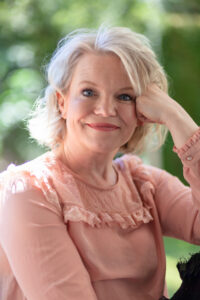
Eir Inderhaug
Soprano Eir Inderhaug studied at the Rogaland Conservatory of Music, the Royal Danish Opera Academy in Copenhagen, and the Royal Danish Academy of Music. She made her operatic debut in 1999 as Barbarina in Le nozze di Figaro at the Royal Danish Theatre in Copenhagen. However, she first became known in Norway in 1991 when she won NRK’s talent programme Talentiaden. This led to her being cast as Gudrun in the St Olav Drama, a role she performed over the course of 14 seasons. She has also sung the role of Solveig in the Peer Gynt drama at Gålå and appeared on several CD recordings, including Eg veit ei lita jente (Simax, 2005), an album featuring songs by Paul Okkenhaug.
As an opera singer, she has distinguished herself in a wide range of roles, particularly as Chef de Gepopo and Venus in Ligeti’s Le Grand Macabre, performing these roles at venues including the Komische Oper Berlin, La Monnaie in Brussels, the Royal Danish Theatre in Copenhagen, and the Norwegian National Opera & Ballet. For the latter production, she was awarded the Norwegian Critics’ Prize in 2014. Other roles in her repertoire include Adele in Die Fledermaus, Rosina in Il barbiere di Siviglia, and the Queen of the Night in Die Zauberflöte. Inderhaug has also performed Morton Feldman’s Neither in Dresden and at the Bergen International Festival, as well as appearing in Krzysztof Penderecki’s Devils of Loudon in Copenhagen. She has previously been a principal soloist with the Nuremberg Opera and Deutsche Oper am Rhein.
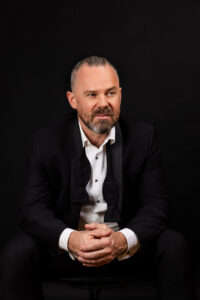
Kjetil Støa
Kjetil Støa was born in the small town of Verdalsøra in the Trøndelag region of central Norway. He studied singing at NTNU Institute of Music with Kåre Bjørkøy, and later at the University College of Opera in Stockholm, with Sonny Peterson. He took part in the soloist trainee program at the Norwegian National Opera during the 2010/2011 season. Since his debut as a tenor in 2009, Kjetil Støa has primarily worked in Scandinavia under many distinguished conductors and directors. His repertoire includes roles by Puccini and Verdi, such as Rodolfo in La Bohème, Pinkerton in Madama Butterfly, and Cavaradossi in Tosca, Don Carlos, Radames in Aida, and Macduff in Macbeth.
Other roles include Don José in Bizet’s Carmen, Tamino in Die Zauberflöte and Erik in Der fliegende Holländer, as well as Števa Buryja in Jenůfa by Janáček. His concert repertoire includes the Requiems of both Verdi and Dvořák, Beethoven’s 9th Symphony and Missa Solemnis, Puccini’s Messa di Gloria, Rossini’s Petite Messe solennelle and Stabat Mater, as well as Mozart’s Requiem. Kjetil Støa performed the role of Tormod Kolbrunarskald in the Saint Olav Drama for several years, describing it as “a dream role”.
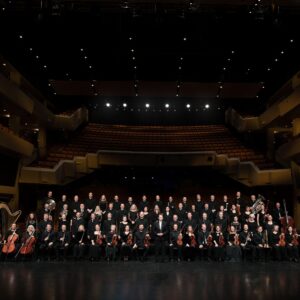
Trondheim Symphony Orchestra
The Trondheim Symphony Orchestra (TSO) is a powerhouse of the central Norwegian cultural landscape, providing a broad range of music of the highest artistic quality and contributing to the promotion and development of general interest in music locally, nationally and internationally.
The orchestra is one of Norway’s largest cultural institutions with a history stretching back to 1909. After the establishment of the Trondheim Chamber Orchestra in 1947, a professional orchestra began to take shape. TSO was taken over by the state and NRK in 1962, and gradually became one of the country’s leading orchestras. In addition to classical symphony concerts, TSO performs a wide range of music including opera, contemporary music, early music and popular concerts. Its educations activities include talent development, as well as projects for children and youth. TSO is based in the Olavshallen Concert Hall in Trondheim, where most of its concerts are held throughout the season. In addition, it performs on tour in and around central Norway, as well as nationwide and international tours and assignments. TSO collaborates with the Trondheim Soloists and Trondheim Vocal Ensemble, as well as the Trondheim Symphony Opera Choir (TSO-koret), which is naturally an integral part of its opera productions.
Trondheim Symphony Orchestra Opera Choir
The Trondheim Symphony Opera Choir is a choir affiliated with the Trondheim Symphony Orchestra & Opera. The choir is an integral part of TSO’s opera productions, but also participates in major choral works such as Haydn’s The Creation and Brahms’ Requiem, often together with Trondheim Vokalensemble. The choir’s Artistic Director is Urša Lah.
Olsokkoret
Olsokkoret (The Olsok Choir) is the male choir that participates each year in The St Olav Drama at Stiklestad. The choir consists of around 35 amateur singers, recruited from local choirs as well as nearby upper secondary schools with music programs, resulting in a wide age range among its members. Several of the singers are music students. In addition to performing in the play itself, the choir often organizes its own choral concert and also takes part in the opening of the Olsok Days festival and the Olsok High Mass.
The choir’s artistic director is Hans Dur Molvik, a renowned conductor educated at the Norwegian Academy of Music, with studies in choral conducting, singing, piano and organ. He has more than 20 years of experience conducting both children’s and adult choirs and has led the Olsok Choir since 2017.
Ingar Bergby
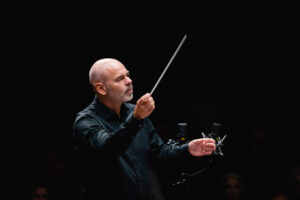
Ingar Bergby was born in 1964 in Sarpsborg, Norway, and grew up playing in local wind bands. He studied clarinet with Richard Kjelstrup at the Norwegian Academy of Music, then orchestral conducting with Karsten Andersen at the same institution and with Jorma Panula at the Sibelius Academy, graduating as a conductor in 1991.
Bergby is one of Norway's leading conductors, known for his versatility across classical, opera, contemporary, and crossover music, and has collaborated with major Norwegian and Scandinavian orchestras. He was principal conductor of the Värmlands Opera and Värmlands Sinfonietta from 1999 to 2005, and permanent guest conductor of the Bergen Philharmonic Orchestra from 2003 to 2008, focusing on Norwegian and Nordic repertoire. He served as profile conductor with the Norwegian Radio Orchestra (KORK) in 2009–2010 and has returned for engagements there every year since.
A regular guest conductor with nearly all Nordic orchestras, Bergby is renowned for his interpretations of contemporary music, having premiered works by Norwegian composers including Thommessen, Wallin, and Vaage. He has also conducted Norwegian wind bands, earning national and European championship titles, and in 2024 served as conductor-in-residence for the Cartagena Music Festival.