
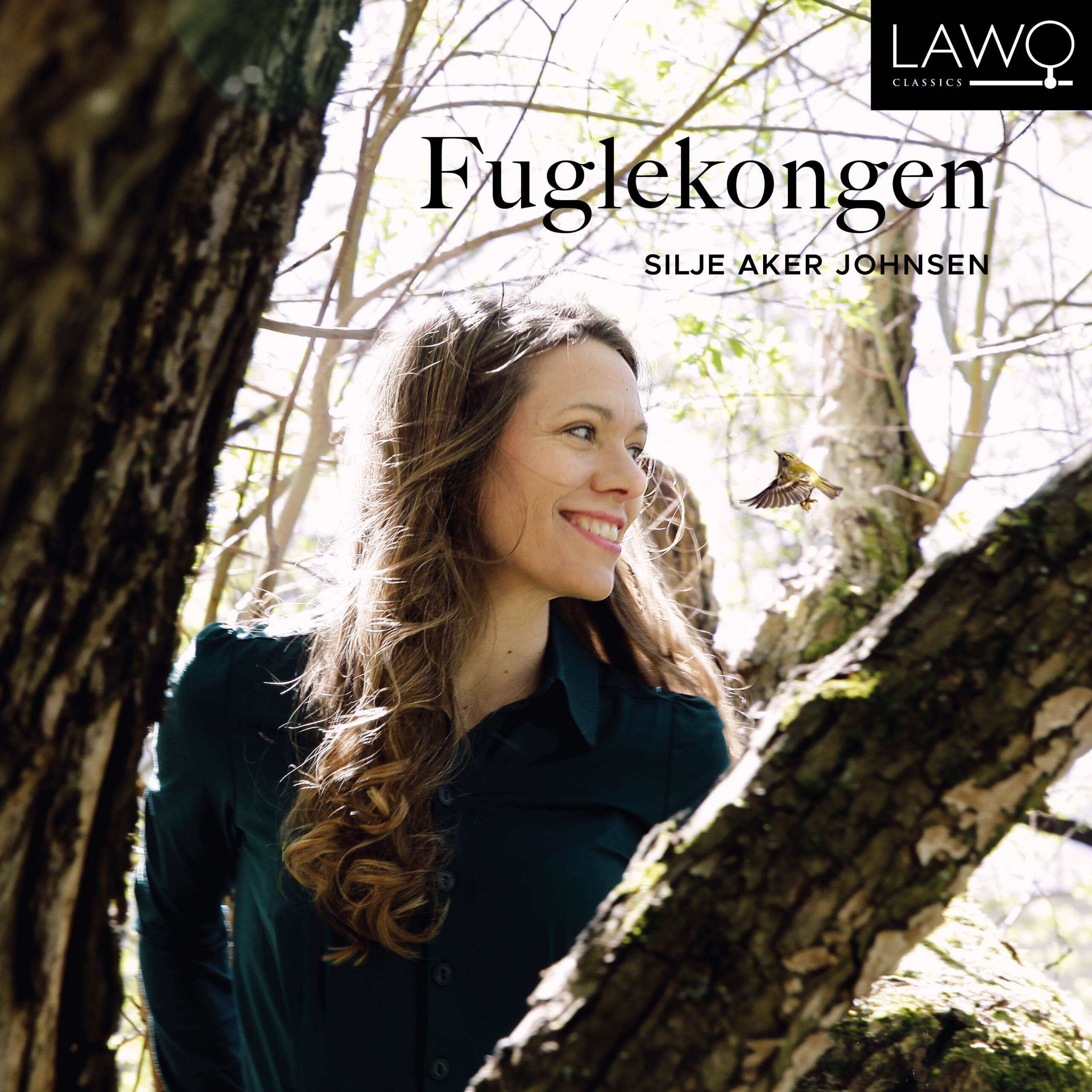
Silje Aker Johnsen explores the voice at its outer edges on Fuglekongen
A solo soprano album with works by Kristine Tjøgersen, Lene Grenager, Alvin Lucier, Jan Martin Smørdal, Therese Birkelund Ulvo, Georges Aperghis and Silje Aker Johnsen
Fuglekongen (The Bird King), the new album from soprano Silje Aker Johnsen, spins around the human voice, the human being, and nature in various forms. The voice unfolds on a journey spanning classical tradition and extended vocal techniques. Clarinettist Rolf Borch joins her on two works. The album takes its title from Johnsen’s own composition.
From Norway come Kristine Tjøgersen’s Gibbon Lieder, Lene Grenager’s Tre eller blod (Wood or Blood, text by Markus Midré, with clarinet), Jan Martin Smørdal’s The Lesser Nighthawk (with clarinet), Therese Birkelund Ulvo’s three-part Silent Songs for soprano and electronics, and Johnsen’s own work, Fuglekongen.
The American pioneer Alvin Lucier (1931–2021) is represented by Wave Songs for Female Voice and Pure Wave Oscillators, eleven brief movements in which the voice meets the pure tones of oscillators. The Greek-French composer Georges Aperghis contributes Pub 2, a compact piece of vocal theatre.
Together, the works show the voice as an instrument capable of far more than song, from whispering and speech, to animal calls and precise, shimmering interplay with electronic sound.
Stream & download
Tracks
Kristine Tjøgersen (*1982)
Lene Grenager (*1969)
Lyrics
Tre eller
blod
(text: Markus Midré)
pinocchios hjerte
av tre eller blod
fornemmer den søte lukta
fra epletrærne om høsten
et snev av råte
lukker jeg øynene
Text: Markus Midré
Wood or Blood
(translation by Gjertrud Pedersen)
pinocchio’s
heart
of wood or blood
sensing the sweet scent
from the apple trees in autumn
a hint of decay
my eyes closing
Translation: Gjertrud Pedersen
Alvin Lucier (1931–2021)
Wave Songs for Female Voice and Pure Wave Oscillators
Silje Aker Johnsen (soprano)
Jan Martin Smørdal (*1978)
Therese Birkelund Ulvo (*1982)
Silent Songs
Silje Aker Johnsen (soprano)
Georges Aperghis
Silje Aker Johnsen (*1982)
Credits
- Performer
- Silje Aker Johnsen (Soprano) | Rolf Borch (Clarinet)
- Composer
- Silje Aker Johnsen | Kristine Tjøgersen | Jan Martin Smørdal | Georges Aperghis | Therese Birkelund Ulvo | Lene Grenager | Alvin Lucier
- Producer
- Vegard Landaas
- Engineer
- Thomas Wolden
- Editing
- Vegard Landaas
- Mastering
- Thomas Wolden
- Executive producer
- Vegard Landaas
- Booklet editor
- Alison Bullock Aarsten
- PR
- Camilla Momkvist-Skau
- Accounting
- Torgeir M. Landaas
- Design
- Anna-Julia Granberg | Blunderbuss
- Recording location
- Sofienberg Church, Oslo | Ris Church, Oslo
- Recording country
- Norway
- Recording year
- 2024–2025
- Recording dates
- 23.04.2024 | 24.04.2024 | 03.04.2025 | 12.05.2025
- Original source
- DXD (352.8 kHz, 24 bit)
- Discs / tracks
- 1 disc | 19 tracks
- Produced with support from
- Arts and Culture Norway | Norwegian Society of Composers | Creo’s Remuneration Fund
- Release year
- 2026
- Label
- LAWO Classics
- Duration
- 1:10:24
- EAN
- 7090020183770
Booklet text
Fuglekongen – King of the birds
Dear Listener,
Thank you for lending your ear to these works that revolve around the human voice, the human being, and nature in various forms. From the smell of apple trees in autumn, the laws of physics in sound waves, and the wordless song of birds and gibbon monkeys, to bits and pieces of human language and communication, and a loud search for silence.
In every human being lives an embodied instrument: the voice itself. It is around this instrument that this album spins. Sometimes the voice stands alone as a solo instrument, or I, the singer, re-encounter my own voice as background, counterpart, or in calls and responses to prerecorded and sometimes processed tapes. At other times, the voice appears in collaboration with a clarinet or sine tones, evoking waves and beats. Spanning more than three octaves – ending on a high G in Fuglekongen – the human voice is explored, unfolding between classical traditions and extended vocal techniques. Gibbonlieder by Kristine Tjøgersen aims to let the gibbons’ voices speak through the human voice, the song building an arch between the two worlds. While in Tre eller Blod (‘Wood or Blood’) by Lene Grenager, the voice moves from classical techniques into vulnerable whispers, between the culturally schooled and the intimate, the human/nature duality of the Pinocchio theme.
The works on this album also represent different ways of working with music as a performer in the contemporary music field. Some of them meant tuning in to existing scores; others grew out of creating music together with composers through workshops, recordings and close collaboration. In that sense, they form a portrait of the different ways I have encountered music throughout my practice. Some pieces were commissioned and written especially for me; some I was asked to perform, and they stayed with me. Some I found – or they found me – through recommendations. After many years of working with improvisation and developing material in both music and dance, it also became natural to create a piece of my own.
I have been a singer and a dancer throughout my artistic practice. Pub 2 by Georges Aperghis has followed me since I was a student, when I first started working with movement and choreography together with the voice. I have sung it in concert halls, at dance festivals, and from the rig of a sailboat.
The meditative Wave Songs by Alvin Lucier gives a physical sensation. I strongly recommend varying your position relative to the loudspeakers as you will experience different beats.
Listening to the lesser nighthawk bird can give an unsettling feeling of breathlessness. Jan Martin Smørdal elaborates this feeling in the piece named after the bird, with his overlapping clarinet and voice parts. In the pieces by Therese Birkelund Ulvo and Kristine Tjøgersen, I meet my own voice in the tape parts. In Ulvo's piece, the recorded voice is me, fifteen and twenty years ago. In the most recent piece on the album, Tjøgersen lets layered recordings of my voice create a sense of rain forest insects and groups of gibbons responding. Both works were created in close collaboration through workshops and recordings, where colours and features of my voice get to merge into the composers’ concepts and materials towards the final scores. My own piece, Fuglekongen, is built around a myth, and I love how working with bird sounds lets me play with different kinds of rawness and beauty in the voice.
I hope you will find moments of surprise and perhaps some sense of fascination … inspiration … curiosity … Feel free to fill in the blanks.
Silje Aker Johnsen
About the works:
Kristine Tjøgersen: Gibbon Lieder (2024)
Scientists in Japan have discovered that gibbons use exactly the same techniques as professional sopranos when they sing. This has led to new theories about the evolution of the human voice.
Gibbons live in the Asian rainforest. They are fiercely territorial, and defend their territory with vocal performances. Gibbons communicate by singing, especially at night, and can make a huge variety of sounds. The song is clear and very powerful and can be heard from distances of up to a kilometre. Both males and females sing solos to attract a mate, as well as to defend their territories. The song can be used to identify not only the species of gibbon singing, but also the area it comes from.
Gibbons are highly endangered, owing to habitat destruction and logging, and they are also hunted, captured and sold as pets.
The piece was created in close collaboration with soprano Silje Aker Johnsen and it is the song of the gibbon, as well as the desire for contact with the more-than-human that is the starting point for this work.
Kristine Tjøgersen
Lene Grenager: Tre eller blod (2005)
The work Tre eller Blod (‘Wood or blood’) is based on a poem by Markus Midré. The poem investigates the duality of the Pinocchio figure, something which I have been exploring in several works: Pinocchio is neither human nor nature/tree. Because he has been carved from a branch and his heart has been wood, his belonging to nature as opposed to humanity is immanent in his being. At the same time he earns a human heart and becomes a real human. This for me is a notion and a duality that lives in all of us.
Lene Grenager
Alvin Lucier: Wave Songs (1998)
“I was trying to combine science and art and existence.” This quote is from Song X in Wave Songs, the only song in the piece that has a sung text and is extracted from the American artist Lee Lozano’s writing. These eleven short songs were composed in 1998 in response to Lozano’s ‘Wave Series’, eleven abstract canvases that explore wave phenomena.
In these songs, the voice sustains notes against two pure wave oscillators and creates beats as the sound waves collide. At certain distances apart, the beats are faster, but at unisons no beats occur. I first met Alvin Lucier and sung these songs at the Ultima Oslo contemporary music festival in 2013. He asked me then to record the songs and I am happy to include Wave Songs on this album. The quote above speaks to me and I find that it encapsulates some of the essence of Wave Songs.
Silje Aker Johnsen
Jan Martin Smørdal: The Lesser Nighthawk (2012)
Breath is fundamentally visceral, which upon hearing leaves a sensation you recognizes and mirrors: If you hear an unnaturally long exhalation the body senses the missing inhalation. Simultaneously you recognize the fiction the exhalation creates. This simple mirroring is the starting point for The Lesser Nighthawk. Like the seemingly circular breathing trills of the bird song, the piece is perceived as one long continuous vocalization. The bird’s Norwegian name translates to ‘Trilling Nighthawk’; I have used the ‘trill’ from the Norwegian name, and ‘lesser’ from the English name. A subdued slow melodic development can be sensed throughout the piece, like a camouflaged presence seeking to be noticed, but at the same time hidden. Like the bird itself.
Jan Martin Smørdal
Therese Birkelund Ulvo: Silent Songs for soprano and electronics, Part I (2007) – Parts II & III (2012)
This work explores what might be the most elusive and paradoxical element in music: silence – and its counterpart, the act of listening.
The first part opens with an act of attention. Its text meditates on listening as a form of power and intimacy: how we construct meaning from what we hear, how we project our own imaginings onto the words of others, how restraint, leaving something unsaid, withholding a detail, creates more presence than abundance ever could. Silence, here, is not absence. It is invitation.
The second part unfolds as a catalogue of contradictions. Silence as weapon. Silence as medication. Silence as fence, as mother, as music. Each aphorism arrives like a stone dropped into still water, the electronics holding the resonance after the voice has withdrawn. The cumulative effect is one of disorientation: the more silence is defined, the more it escapes definition.
The third part turns reflective, almost elegiac. Drawn from thinkers across centuries, its texts measure silence against speech and find speech wanting. The work closes on a single bleak observation about contemporary life: that silence has become the rarest of luxuries, and perhaps the most necessary. The soprano’s final phrases do not resolve so much as recede, absorbed into the surrounding texture until the boundary between voice and electronics, between utterance and silence, becomes impossible to locate.
Silent Songs was written for soprano Silje Aker Johnsen, whose voice inhabits the space between sound and its disappearance with uncommon grace.
Therese Birkelund Ulvo
Georges Aperghis: Pub 2 (2000)
As a student I collected all the scores, CDs and DVDs of Georges Aperghis’ music, and I attended a workshop with him in music theatre. I was curious to find solo vocal music that would be suited to choreographic work. He recommended me some of his then newer pieces, Pub 1 & 2, and they have become the solo vocal pieces I have performed the most in my years as a singer, with or without different choreographies.
In his iconic Récitations (1978) for female voice, bits and pieces of language are used as rhythmical and musical components in the compositions. In Pub 2, Aperghis uses more audible words in combination with vocal sounds. Aperghis later included Pub 2 in his work Reklamen, with the name ‘Detergent’. Each Pub or movement ‘sells’ a different product and Aperghis states in a program note on his website that he uses the pretext to “continue to explore the voice”.
Silje Aker Johnsen
Silje Aker Johnsen: Fuglekongen (????)
This piece is created around a Flemish myth I read as a child. All the birds gather and are given colours from a paint box. The raven becomes shining black, the blue tit yellow and blue, the robin gets a touch of red and the greenfinch turns green. My piece imagines the queue and the cacophony of birds waiting. It opens with a paraphrase of Saint-Saëns’ musical portrait of one of the most iconic of birds, the white swan. She is interrupted by all sorts of birds until the very end, when the tiniest bird in Europe, the Goldcrest, humbly comes forth after having waited patiently in line. Unfortunately, by then all the colours have been used up. Naturally, all the birds gather again and each give a touch of their colour to the tiny bird, so that he too may be beautiful. In Norwegian the little goldcrest is called ‘the king of the birds’, Fuglekongen, and it sings with a high pitched, beautiful song.
Silje Aker Johnsen
Biographies
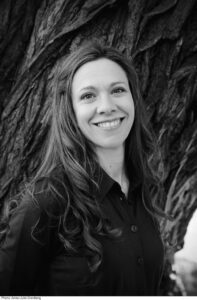
Silje Aker Johnsen
Silje Aker Johnsen is a soprano and dancer. Initially educated at the Grieg Academy of Music in Bergen and Universität der Künste, Berlin, she also holds a Master’s degree in classical singing from the Norwegian Academy of Music, Oslo and a PhD in Artistic Research from the Opera Academy at the Oslo National Academy of the Arts. She has throughout her studies and career had a strong focus on contemporary music repertoire in addition to baroque and classical vocal repertoire.
She has interpreted roles such as Io in The Io Passion by Harrison Birtwistle with Berliner Kammeroper in Konzerthaus Berlin and the main female role in A Gentle Spirit by John Tavener with the same company. She received outstanding reviews for her roles in Synne Skouen’s operas Ballerina and Fram and for the solo piece Her, which she created with Erik Dæhlin and performed at The Norwegian National Opera.
Silje Aker Johnsen has given the world premieres of numerous vocal pieces and has guested festivals such as Huddersfield Contemporary Music Festival, Die Donaueschinger Musiktage, Ultima Contemporary Music Festival and Bergen International Festival. She is a member of Ensemble Neon, who won a Spellemann Prize for their debut album in 2016. Silje was named Performer of the Year 2013 by The Norwegian Society of Composers.
Rolf Borch
Rolf Borch was born and raised in Bergen, where his first clarinet teacher was Mogens Leikvoll. He later studied at the Norwegian Academy of Music with Hans Christian Bræin.
Alongside a broad classical repertoire, Borch has a strong commitment to contemporary music, which has resulted in well over 100 world premieres of works by Norwegian and international composers. The list of composers with whom he has worked includes Helmut Lachenmann, Brian Ferneyhough, Carola Bauckholt, Laurence Crane, Helmut Oehring and Karin Rehnqvist, as well as numerous Norwegian composers, among them Ørjan Matre, Jon Øivind Ness, Magne Hegdal, Mark Adderley and Sven Lyder Kahrs.
Borch has established himself as a soloist with Norwegian orchestras, wind bands and other ensembles, and has appeared in concerts and at festivals throughout Europe. He has made numerous CD recordings, and both his critically acclaimed solo debut, Step Inside, and Inside Out, a double portrait with composer Ørjan Matre, were nominated for the Spellemann Award. In 2008, he was awarded the prestigious Young Lindeman Prize. In 2015, he completed his fellowship at the Norwegian Academy of Music.
Borch is a permanent member of the Cikada Ensemble, and since 2014 has held the position of Associate Professor of Clarinet at the Music Conservatory in Tromsø.
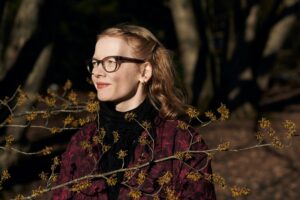
Kristine Tjøgersen
The compositional practice of Kristine Tjøgersen (b. 1982) is characterized by curiosity, imagination, humour and precision. Through her work, she creates unexpected auditory situations through playing with tradition. Nature in motion and process is often reflected in her works, and collaboration with researchers and biologists is for her a source of new sound and scenic ideas that allow her to incorporate organic forms into the music. Her music is developed in support of the notion that astonishment lies wherever one is willing to look.
As Tjøgersen puts it, “By giving nature a voice in the concert hall, I want the audience to get to know valuable forms of life, and to raise awareness of what can be lost if humans continue to change nature.”
Tjøgersen received her Master’s degree in clarinet from the Norwegian Academy of Music, and a Master’s in composition from Anton Bruckner Universität in Linz, Austria, where she studied with Carola Bauckholt.
Her works have been performed by many of the leading ensembles and orchestras in Europe, and she has received several prizes, such as the International Rostrum of Composers and Composer Prize from the Ernst von Siemens Musikstiftung.
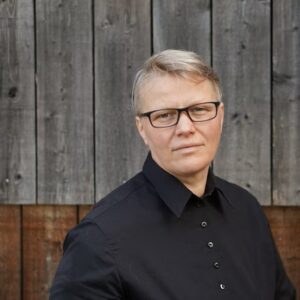
Lene Grenager
Lene Grenager (b. 1969) is a cellist and composer. She has written orchestral works, chamber music and solo works. As a performing musician, she mainly works with improvisation and with what she calls collective composition. Over three decades, her instrumental investigations have formed a cornerstone in her ensembles SPUNK and LEMUR, further developed and extended in her solo practice. Her trademark is a unique control of the cello’s timbral possibilities.
Her composition activity is broad and includes work with various forms of notation (including traditional notation, graphic notation and embroidered scores), incorporation of video, electronics and sound files. She has worked with site-specific compositions, installations and in collaboration with dancers and actors. As a cellist, she has released two solo albums and has also contributed to around 30 releases as a composer, musician and producer. She has written the book Hagearbeid – om frø og kultivering i Lene Grenagers musikk (‘Gardening – about seeds and cultivation in Lene Grenager’s music’) and several articles. In 2025 she was appointed Associate Professor in composition at the Norwegian Academy of Music in Oslo.
She was awarded the Arne Nordheim Composer Prize in 2018.
Alvin Lucier
Alvin Lucier (1931–2021) was an American composer, sound artist and pioneer of experimental music whose work explored acoustic phenomena, auditory perception and the physical properties of sound. Best known for his iconic 1969 work I Am Sitting in a Room, Lucier played a central role in shaping the development of avantgarde music and sound art from the 1960s onward. His compositions and installations investigated resonance, phase interference, room acoustics and the behaviour of sound in physical space.
Born in Nashua, New Hampshire, Lucier studied composition and music theory at Yale University before earning an MFA from Brandeis University. As a Fulbright scholar in Rome, he encountered John Cage, David Tudor and Merce Cunning ham, an experience that profoundly influenced his artistic direction. Later, while teaching at Brandeis, he collaborated with physicist Edmond Dewan in pioneering the use of brain waves in musical performance.
In 1966, Lucier co-founded the Sonic Arts Union with Robert Ashley, David Behrman and Gordon Mumma, touring extensively with live electronic works. From 1970 until his retirement, he taught at Wesleyan University, where he directed the Electronic and Computer Music Studios and became one of the most influential figures in experimental music. Through a career spanning more than six decades, Lucier continually expanded the possibilities of listening, composition and sonic experience.
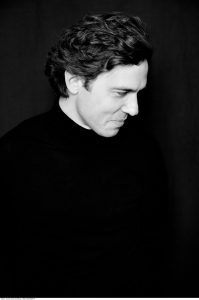
Jan Martin Smørdal
Jan Martin Smørdal (b. 1978) is a composer and musician, co-founder and member of Ensemble neoN. Smørdal comes from the band scene with a focus on experimenting and improvisation. In the course of the last fifteen years he has become a highly sought-after and very active composer. He works in a wide variety of settings: solo, chamber music, sinfonietta, chamber orchestra, choir, orchestra, and installations.
Recurring topics in his works are the impossibility of imitation and the phenomena of swarm formations found in nature. Although rooted in the Norwegian musical milieu, his music is performed throughout Europe and the Americas.
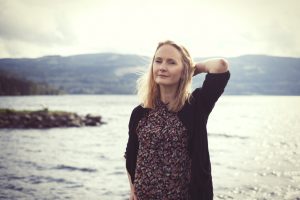
Therese Birkelund Ulvo
Therese Birkelund Ulvo (b. 1982, Bergen) has distinguished herself over the past decade through large-scale works and is one of the few Norwegian composers of her generation whose music is regularly performed by the major Norwegian orchestras. Her music is often inspired by other art forms such as film, text, and sound art. She has a close relationship with Norwegian traditional music, in which microtonality, rhapsodic elements and open forms can be found. Her works are frequently performed both in Norway and internationally.
Ulvo was appointed Intro composer with Rikskonsertene from 2011 to 2013. In 2015 she received the Young Lindeman Prize. At the International Rostrum of Composers in Wrocław, Poland, in 2016, her work Shadows and Shields was selected as a Recommended Work and was recommended for radio broadcast across the Rostrum’s 30 participating countries. In October 2017, Ulvo became the first composer chosen for Talent Norge’s KUPP programme, a development and networking programme for emerging composers. In 2020 she received the Edvard Prize for her orchestral work In the Cage. In 2024 she was awarded the Arne Nordheim Composer Prize.
Therese Birkelund Ulvo has been artistic director of Hardanger Musikkfest since 2014.
Georges Aperghis
Georges Aperghis (b. 1945) was born in Athens and has lived and worked in Paris since 1963. Raised in an artistic family, he was initially drawn to both visual art and music. Largely self-taught, he developed a highly individual musical language that emerged after his early encounters with serialism, musique concrète and the work of Iannis Xenakis.
Aperghis first gained recognition with La tragique histoire du nécromancien Hiéronimo et de son miroir (1971), a work that established the close relationship between music, text and theatrical action that would become central to his output. In 1976 he founded ATEM (Atelier Théâtre et Musique), a pioneering company through which he developed a distinctive form of music theatre combining voices, instruments, movement, narrative and visual elements.
His work spans music theatre, opera and concert music, though the boundaries between these genres are often blurred. Aperghis is particularly known for his innovative treatment of language and voice, as well as a large catalogue of chamber, vocal and orchestral music.
Georges Aperghis has become one of the most influential figures in contemporary music. His honours include the Mauricio Kagel Music Prize (2011), the Golden Lion of the Venice Biennale (2015), the BBVA Foundation Frontiers of Knowledge Award in Contemporary Music (2016) and the Ernst von Siemens Music Prize (2021).