
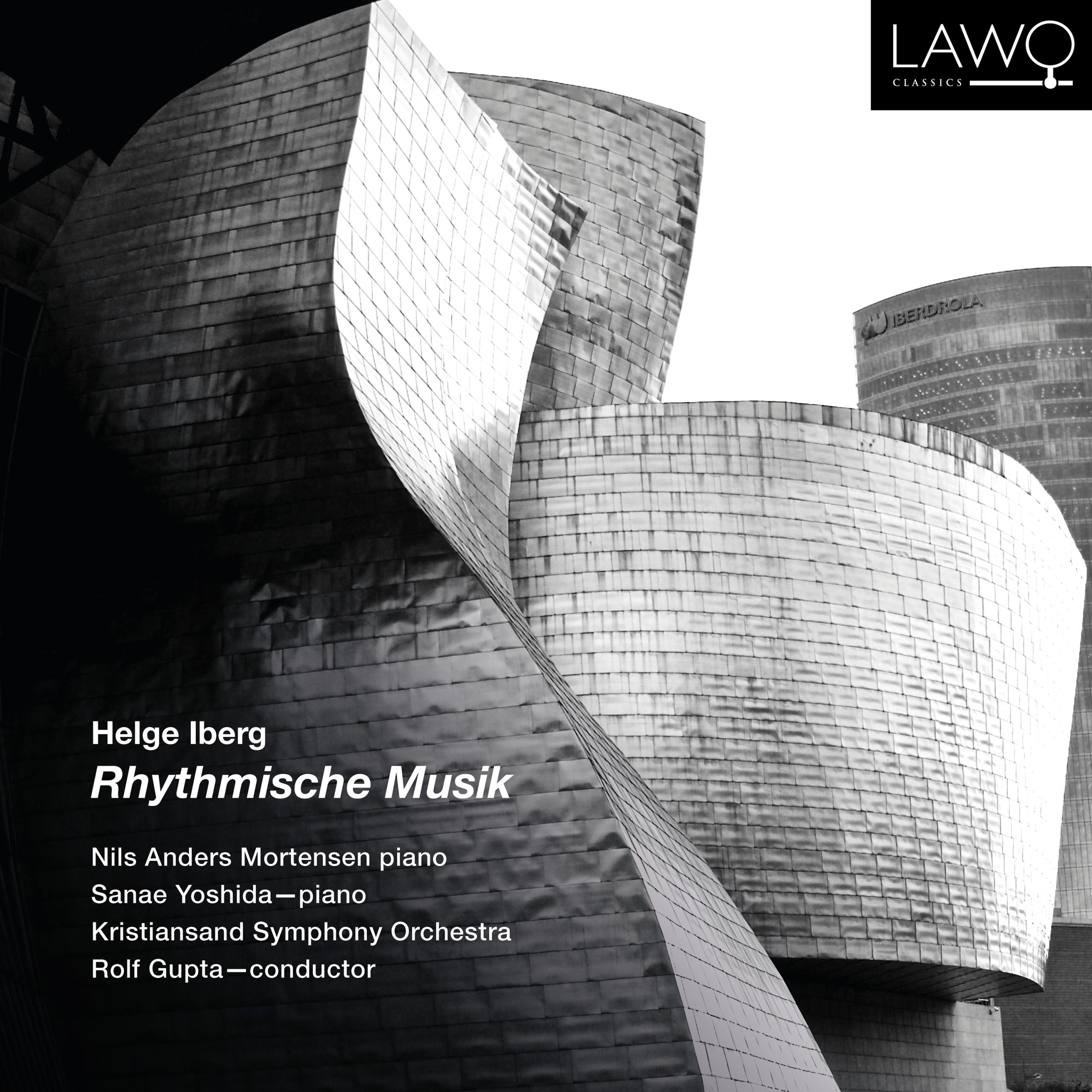
Helge Iberg: Rhythmische Musik
Nils Anders Mortensen (Piano) | Sanae Yoshida (Piano) | Rolf Gupta (Conductor) | Helge Iberg (Piano)
WELCOME TO HELGE IBERG'S MUSICAL WORLD
The release Rhythmische Musik presents four distinctive compositions by Helge Iberg: Auf dem Meeresboden, Small Feet Dancing, Palazzo and Petites Danses du Moment. These works explore a wide range of sounds and rhythmic landscapes, drawing inspiration from classical tradition, modern expression and improvisation alike.
The album's most extensive work, Palazzo, places major technical and rhythmic demands on pianists Nils Anders Mortensen and Sanae Yoshida. Soloist Nils Anders Mortensen also shines in the three movements of Small Feet Dancing, where the Kristiansand Symphony Orchestra plays with intensity and precision under conductor Rolf Gupta. In Auf dem Meeresboden and Petites Danses du Moment, we experience Helge Iberg as an improvising pianist, offering a unique closeness to the composer/performer.
Rolf Gupta is known for his work with contemporary music and conveys Iberg's intricate textures with great sensitivity. He says the following about the project: "Helge Iberg doesn't move from contemporary music over to jazz - or from jazz to contemporary music. He is firmly rooted in both genres. That's why the music sounds alive in both worlds."
Helge Iberg is one of Norway's most exciting and genre-crossing composers and musicians, known for combining humor, depth and virtuosity in his works. His music strikes an elegant balance between tradition and experimentation. With roots in both classical contemporary music and jazz, he has created an expression that is as original as it is engaging.
Stream & download
Tracks
Helge Iberg (*1954)
Auf dem Meeresboden
Small Feet Dancing (with Intermezzo)
Rolf Gupta (conductor) | Kristiansand Symphony Orchestra | Nils Anders Mortensen
Palazzo
Petites danses du moment
Credits
- Conductor
- Rolf Gupta
- Performer
- Helge Iberg (Piano) | Nils Anders Mortensen (Piano) | Sanae Yoshida (Piano)
- Symphony orchestra
- Kristiansand Symphony Orchestra
- Composer
- Helge Iberg
- Producer
- Helge Iberg
- Engineer
- Thomas Wolden
- Editing
- Vegard Landaas
- Mastering
- Thomas Wolden
- Liner notes
- Helge Iberg
- Executive producer
- Vegard Landaas
- Booklet editor
- Torgeir M. Landaas
- PR
- Camilla Momkvist-Skau
- Accounting
- Torgeir M. Landaas
- Cover photo
- Naotake Murayama
- Artist photo
- Kristiansand Symphony Orchestra by Knut Bry | Kristiansand Symphony Orchestra by Renate Madsen | Kristiansand Symphony Orchestra by Jens Westbye
- Design
- Anna-Julia Granberg | Blunderbuss
- Recording location
- Oslo Concert Hall | Kilden Teater og Konserthus, Kristiansand
- Recording country
- Norway
- Recording year
- 2023
- Recording dates
- 05.06.2023 | 06.06.2023 | 07.06.2023 | 09.08.2023 | 10.08.2023 | 11.08.2023
- Original source
- DXD (352.8 kHz, 24 bit)
- Discs / tracks
- 1 disc | 13 tracks
- Release year
- 2024
- Label
- LAWO Classics
- Duration
- 1:05:01
- EAN
- 7090020183206
- ISRC
- NOEHX2424010-130
Booklet text
Rhythmische Musik
All music essentially have rhythm, but not all rhythms have "groove." The term "groove" originates from the word "furrow" or "track" (something solid we can follow), and in music, we think of it as an underlying movement or pulse that continually repeats. In the classical Western tradition, music's momentum is perceived within the melody, phrase, and "gesture," while Afro-American music comes alive through the "mechanically" pulsing repetition. When we use the term rhythmical music, it is usually this pulsing aspect we have in mind.
To make a long story short and simplified: Christian-Greek culture separated soul and body. Music was meant to nourish the soul, not the body. Romanticism's "spirituality" and creative success marked a high point in this long tradition, where bodily sensuality and rhythm were largely relegated to more popular realms.
In the early 20th century, George Gershwin became a pioneer by composing the rhythmic and harmonic elements of Afro-American culture into the classical music tradition. In Europe, the break with tonality and classical forms took a stricter, more exclusive shape (modernism). After the German march culture had become the soundtrack to the Nazis' ravages, the artistic musical task was to suppress any hint of marching, dancing, or rhythmic obviousness. By layering complex rhythms on top of or alongside each other, a kind of fluid forward motion emerged, which did not appeal to any bodily reaction beyond the pure musical experience. The European avant-garde distanced itself from the "low" and predictable, though they likely believed they represented a kind of transcendent groove of a spiritual or intellectual nature (paradoxically continuing the idealistic tradition).
At the same time, art music was to be a rebellion against capitalism and entertainment culture, with groove-based jazz being no exception. Music philosopher Theodor Adorno argued that jazz was merely a commodity within the culture industry or a perverted form of rebellion against social injustice. Ironically, this view echoed the Nazis' term for jazz as "Negro music." For the Nazi ideologue Alfred Rosenberg, jazz symbolized "the deceitful, treacherous, and toxic" that threatened German culture.
French and Russian rhythm-based music, as seen in Ravel, Stravinsky, and Shostakovich, has persisted as a vibrant tradition in concert halls. However, "on the continent" and in Scandinavia, it wasn't considered contemporary or innovative enough. The U.S., naturally, has had a more diverse development and connection with popular music. Over time, American minimalism à la Steve Reich and John Adams gained a foothold in Europe. This groove-based music found a new audience after "machines" made their mark on pop music. A whole generation of youth grew up with a new awareness of timing and precision, and young classically trained musicians were just as familiar with Prince and Stevie Wonder as they were with Mozart and Mahler.
Impulses "from below" can also offer an alternative to the conceptualization and academic existence of contemporary art music. Today, rhythmically pulsing grooves are integrated into art music, just as jazz and pop music absorb elements from the tonalities and gestures of art music. So, should we just accept that the forms are merging? Perhaps, but at the same time, there are qualities in classical music culture that are so uniquely and painstakingly developed, refined. And it has a valuable "reception tradition" among both listeners and critics.
Surely no one thinks that contemporary music should distance itself from the free-floating pulse or the great classical tradition, where the conductor's vision and will summon forth the music's inner necessity from bar to bar and from phrase to phrase. It is precisely this indescribable organism that creates the greatest "oceanic experiences" and the most intimate "kleinkunst" in Western art music. But that the African (or indigenous folk musical) pulsing repetition can be a vital element in an art music palette, is hardly controversial these days. My aim with this album project is precisely to showcase some ways of doing that.
Something about the works
Auf Dem Meeresboden
Ein Hummerleben I'm no expert on the lobster's love life and conscience (or possible lack thereof). My interpretation here is based on imagination and pure speculation. Still, there may be something about the lobster that made me choose this metaphor: Colleague Bendik Hofseth (jazz saxophonist, composer, and professor) offers some zoological observations:
"It's quite possible to imagine a slightly angular sensuality, as in a lobster. In the summer, during molting, the males can impregnate the females. They must crawl out of the stone caves they like to hide in and wiggle into place. This happens in a mix of abrupt, staccato movements and smooth, gliding motions. The male has a clear plan and goal, but it also requires a careful improvisational touch to convince the female. Similarly, in this piece, Helge Iberg manages to combine a prescribed event in the form of a score that is replicable, with surprising soloist elements that capture the place and moment through improvisation.
Up until the 1960s, Norwegian lobster catches ranged between 600 and 1000 tons annually. After 1987, the catch has varied between 30 and 60 tons. It is only fitting that musicians also do everything they can to improve the reproduction of lobsters."
Flucht des Untreuen Hummers I don't like the term crossover, but in this sequence, the word is probably appropriate. Here, I "cross over" to the jazz genre, where the unfaithful lover is propelled by Per Oddvar Johansen's energetic cymbal playing. In the improvisation, I weave in some motifs from Small Feet Dancing.
Small Feet Dancing
This is music with an ethnic feel, inspired by nature poetry from the Chinese Middle Ages. Two of the pieces originally belong to the work Songs from the Planet of Life but are here in revised versions. Lotus Dance part II is presented for the first time. There's a lot going on in the orchestra, and some of the rhythmic divisions might look complicated in the score but become simpler once they fall "into the groove." It doesn't take much; small irregularities in the tempo can cause the rhythmic foundation to collapse. The performance won't "swing," as they say in jazz. But within the concept of swinging lies a paradox: while the underlying pulse represents mechanical timing, we won't say that something swings unless the soloist or the orchestra relates effortlessly to this pulse.
Conductor Rolf Gupta brings the score to life with a genuine sense of the intentions for effortless lightness amid the multitude of musical impulses. Gupta himself says about the work: "Iberg's piano concerto has an almost crystalline transparency that can evoke associations with Ravel and Mozart. It feels both free and restrained at the same time."
Pianist Nils Anders Mortensen plays with the dance rhythms and lets the melancholy glow in Green Grass Next Year?
Palazzo — Cinque pezzi per due pianoforte e percussionista jazz
My original formal idea was inspired by the expression memory palace, a mnemonic technique where you link things you want to remember to familiar places, rooms, or houses (palace). But instead of letting the composer wander around in rooms that create musical associations, I ended up imagining a person looking back on their childhood where the local estate, the "palazzo," was the focal point for their perception of existence. The fact that the scenes took on Italian settings is probably due to my recent viewing of the film Cinema Paradiso, which has a similar subject, but also because the contrasts between power and powerlessness were more pronounced in an Italian context than, for example, in a Norwegian reality. And not least, the Italian language is colourful and provides stimulating titles. Here are a few keywords for the individual movements:
1. Forza: The explicit necessity of existence — physical and mental boundaries embodied in the Palace. Here, the rhythms are relentless, and the "groove" unstoppable. Per Oddvar Johansen plays the South American cajón, a wooden box with different resonances depending on where you strike it on the drum.
2. Luogo di casa/Ritorno: The hometown. The house at home. I've tried to create a sense of poverty and desolation. A simple melody and pure triads develop into strange constellations. We use a third piano that is tuned a quarter tone lower. The microtonality that arises emphasizes the feeling of a musica povera (cf. the Arte Povera movement).
3. La Giostra (Carousel, originally: tournament): Funfair in town! Gioia e terrore! Childlike joy, fear, and pleasure all at once. There's a lot to manage for the pianists here. Metric modulations "en masse" and time signature changes around every corner. A formidable pianistic challenge! Thanks to Nils Anders and Sanae.
4. Caccia a cavallo: Hunting party on horseback. A fascinating and terrifying ritual for the villagers. The hunt was a spectacle that also displayed the palace's violent potential and power. Toward the end, the musical dramaturgy becomes quite explicit when the prey falls. A seemingly triumphant return home in my interpretation becomes a grim reminder of power and violence as a tragedy for both animals and people. The motifs and rhythms are the same as in Forza 1.
5. Ritorno. See 2.
Petites Danses Du Moment
After a long day of recording the hard and slightly stern PALAZZO, I felt the need for a musical counterpoint, so I sat down at the piano and improvised a few measures in a "retrospective" style. Since the microphones were already set up, producer Vegard Landås suggested we record it. It became the three small dances that conclude this album.
Finally, a plea to the listener in a mindful style: Forget everything that's been written here and let the music speak for itself.
— Notes: Helge Roald Iberg
Biographies
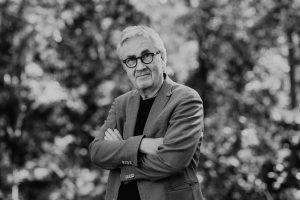
Helge Iberg
Helge Roald Iberg is an original and genuine voice in Norwegian cultural life. He holds a degree from the University of Oslo, where he studied music, history of ideas, and religious studies. He has a master's degree in composition from the Norwegian Academy of Music and has been awarded the Norwegian State Guarantee Income for Artists.
Helge began playing the piano at the age of 3–4 but had to give up a career as a classical pianist due to a neurological condition. As an adult, he has moved between the scores of classical contemporary music and the landscapes of modern jazz. His music is often rhythmically complex with an underlying groove. Helge employs various approaches to tonality and harmony. His works have been commissioned and performed by Norway's leading soloists and symphony orchestras, and his catalogue includes instrumental concertos, orchestral works, chamber music, songs, operas, musicals, and more.
"In truth, very few composers from the early twenty-first century have managed to unite their central truth with stylistic or natural parameters of their own voice. Very few, but some. Helge Iberg is among them," wrote Andrew Mellor in his review of the CD "Life Music."
As a jazz musician and improviser, Helge has produced numerous CDs and collaborated with performers such as Bendik Hofseth, Sidsel Endresen, Elin Rosseland, Nils Petter Molvær, and Rain Sultanov. His piano style reflects the spontaneity of a jazz musician and the tonal palette of a composer. Iberg has received the Spellemann Award (the Norwegian Grammy), the Music Publishers Award, the Prix Italia, and several other honors. As an author, he has published two books on cultural criticism and written numerous essays and articles for journals and newspapers.
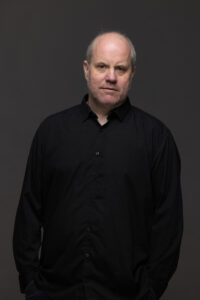
Nils Anders Mortensen
Nils Anders Mortensen is a Norwegian pianist renowned for his versatility and expressive playing. Born in Flekkefjord in 1971, he began playing the piano at three, won the Norwegian Young Pianist Competition in 1986, and studied at the Norwegian Academy of Music, the École Normale in Paris and the Hochschule für Musik und Theater in Hannover.
In 1996 Concerts Norway named him "Debutant of the Year", leading to an extensive national tour. He has since performed in the United States, Germany, Russia, Hungary and the Baltic states, and appeared as soloist with the Norwegian Radio Orchestra at the Bergen International Festival in 1998.
Based in Alta since 1998, Mortensen moves freely between classical and contemporary music, jazz, folk and crossover. He has worked closely with mezzo-soprano Marianne Beate Kielland, violinist Arvid Engegård and double bassist Knut Erik Sundquist on several acclaimed recordings; Veslemøy synsk, with Kielland, was nominated for a Grammy Award. His solo discography includes Grieg, Brahms, Debussy and Bach, and his 2023 album J.S. Bach: Partitas Nos. 1, 5 & 6 won critical acclaim.
He received the Robert Levin Memorial Prize in 2004 and the Nordlys Prize in 2013.
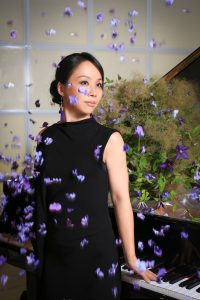
Sanae Yoshida
Sanae Yoshida is a Norway-based pianist whose work centres on contemporary music, alongside selected repertoire from the classical canon. She performs as a soloist, chamber musician and ensemble pianist, with a particular focus on close and long-term collaboration with composers. In 2025, she was named Performer of the Year (Årets utøver) by the Norwegian Society of Composers.
Since 2026, Yoshida has been a member and pianist of Cikada. She is also pianist of Ensemble Ernst, founder and pianist of Ensemble Temporum, and a member of Stene / Torrence / Ugelvik / Yoshida.
Yoshida completed her artistic PhD at the Norwegian Academy of Music in 2025. Her project, Mi(my)crotonal Piano, investigated the artistic possibilities of microtonally retuned pianos through close collaboration with composers, resulting in more than 30 premieres across solo, chamber and concerto repertoire. Her debut solo album, My Microtonal Piano (LAWO Classics, 2024), was named Disc of the Month and Instrumental Choice by BBC Music Magazine. In 2025, Magne Hegdal’s Ars et vita, which Yoshida recorded with Håkon Austbø and Ellen Ugelvik, was nominated for the Spellemann Award in the contemporary music category.