
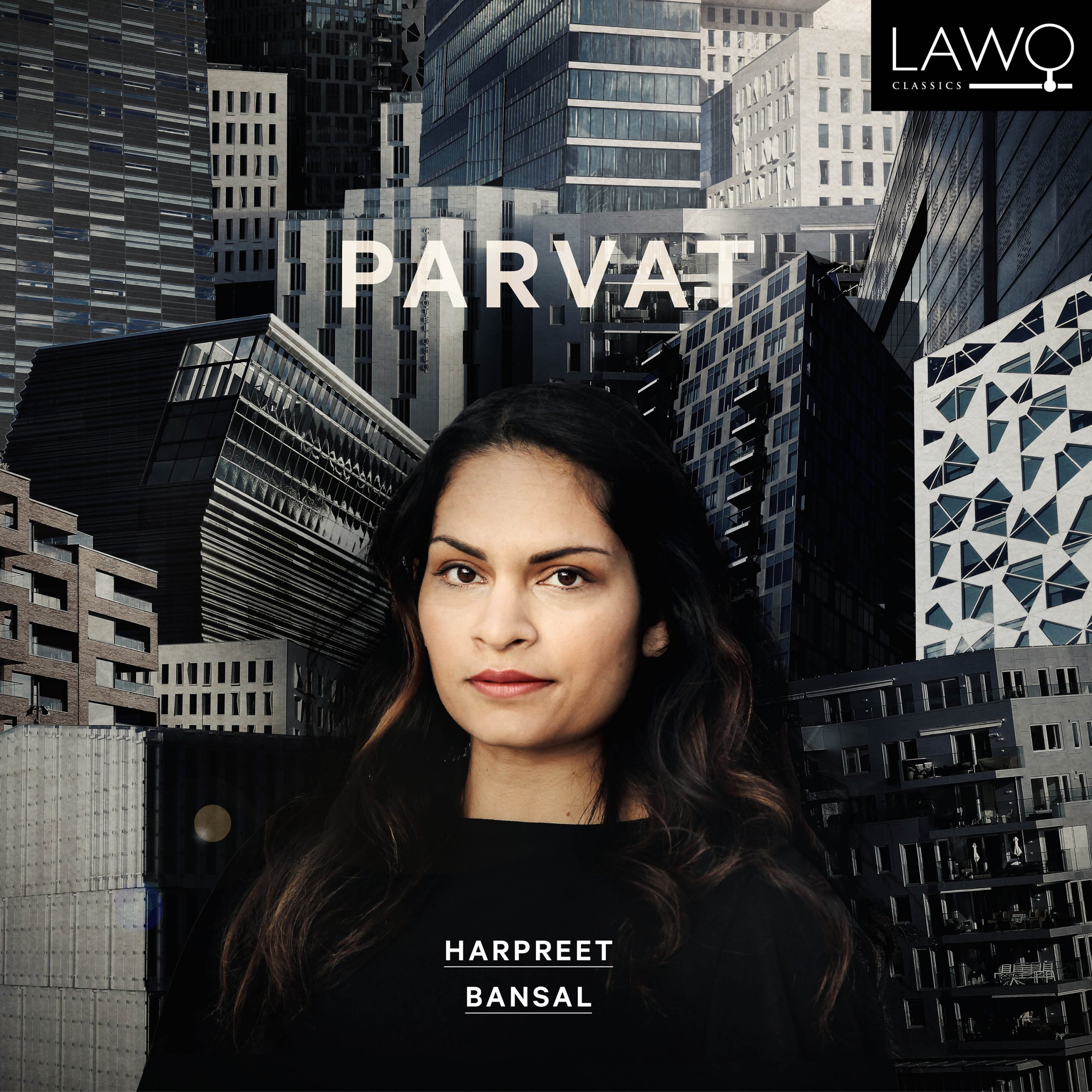
Harpreet Bansal
Parvat
Harpreet Bansal (Violin) | Vojtěch Procházka (Harmonium) | Sanskriti Shrestha (Tabla) | Norwegian Radio Orchestra (Orchestra) | Hannu Koivula (Conductor)
Stream & download
Tracks
Harpreet Bansal (*1980)
Parvat
Reviews
Norwegian musical maestro Harpreet Bansal has offered what will likely be one of the most unique albums of 2022.…
Show more Show less
Norwegian musical maestro Harpreet Bansal has offered what will likely be one of the most unique albums of 2022. The violinist and composer has teamed up with top drawer musicians for compositions that combine the Indian classical tradition with contemporary jazz. The 37-minute long, three-piece offering also injects various other influences into what can best be described as a surprising musical ride loaded with feeling, emotion, and drama. It offers more the deeper you go into the compositions. Some may find it hard to access this treasure-filled album, but it is worth finding if you enjoy classical, jazz and world music.
The violinist and composer Harpreet Bansal (1980) has already made a name for herself internationally with her interpretations of raga – a musical genre with which many will be…
Show more Show less
The violinist and composer Harpreet Bansal (1980) has already made a name for herself internationally with her interpretations of raga – a musical genre with which many will be familiar through The Beatles and Ravi Shankar. Now Bansal offers us a truly magnificent sonic experience of nature. For us icy northerners, the music takes on a somewhat mysterious quality in Bansal’s rendition. Her magical violin playing is delicate and searching, yet at the same time compelling. The delicate yet heartfelt violin tones blend with a soundscape in which a harmonium and a wonderfully spirited Norwegian Radio Orchestra add colour to Bansal’s creative vision.[...] Simply marvellous!Show original
Fiolinisten og komponisten Harpreet Bansal (1980) har allerede skapt seg et internasjonalt navn med sine tolkninger av raga - en musikksjanger som nok en del har stiftet bekjentskap med gjennom The Beatles og Ravi Shankar. Nå gir Bansal oss en klanglig naturopplevelse av de helt store.Musikken er for oss iskalde nordboere er smått mystisk i Bansals tapning. Hennes magiske fiolinspill er delikat og søkende, men samtidig overbevisende. De sarte, men inderlige fiolintonene blender seg med et lydlandskap der et harmonium og et nydelig opplagt Kringkastingsorkester fargelegger Bansals skapende.[...] Herlig rett og slett!

[…] ‘Parvat’ means ‘mountain’ in the ancient Indian language Sanskrit.…
Show more Show less
[…] ‘Parvat’ means ‘mountain’ in the ancient Indian language Sanskrit. I thought the name suited the work well, as it reflects its scope – it will last around 50–55 minutes. I want to convey the mood of the raga together with the orchestra. Over the years, a great deal of music has been written for symphony orchestras or classical Western ensembles by Indian musicians. Much of this music expresses a clear distinction between the East and the West, naturally enough. The work ‘Parvat’ is structured around the two North Indian ragas, Puria Dhnasri and Bhimpalasi, which, through their contrasting characters, create a balanced whole, with the orchestra playing the role of an extended ‘band’, explains Harpreet Bansal. […]Show original
[…] «Parvat» betyr fjell på det gamle indiske språket sanskrit. Jeg synes navnet passet godt til verket, siden det gjenspeiler hvor omfattende det er – det vil ha en varighet på rundt 50-55 minutter. Jeg ønsker å formidle ragaens stemning sammen med orkesteret. Det har gjennom tidene blitt skrevet en god del musikk for symfoniorkester eller klassiske vestlige ensembler, av indiske musikere. Mye av denne musikken uttrykker et klart skille mellom det østlige og det vestlige, naturlig nok. Verket «Parvat» er bygd opp rundt de to nordindiske ragaene Puria Dhnasri og Bhimpalasi, som gjennom sine ulike karakterer skaper en balansert helhet, der orkesteret spiller rollen som et utvidet «band», forteller Harpreet Bansal. […]

There isn’t a particularly large raga culture in Norway, but anyone interested in Indian music is bound to have heard of Harpreet Bansal.…
Show more Show less
There isn’t a particularly large raga culture in Norway, but anyone interested in Indian music is bound to have heard of Harpreet Bansal. The violinist from Sagene learnt her first raga from her Indian father when she was two years old. Since then, she has immersed herself in the traditional scale and rhythm patterns that form the basis of raga music, combining them with her experience of classical, jazz and folk music. This has given her a unique sound, as well as credibility in a wide variety of contexts.Show original
Det er ikke en veldig stor ragakultur i Norge, men den som interesserer seg for indisk musikk, har garantert hørt om Harpreet Bansal. Fiolinisten fra Sagene lærte sin første raga av sin indiske far som toåring. Siden har hun fordypet seg i de tradisjonelle skala- og rytmemønstrene som er grunnlaget for ragamusikken og kombinert dem med erfaring fra klassisk, jazz og folkemusikk. Det har gitt henne en unik sound, men også autoritet i svært forskjellige sammenhenger.
 Aftenposten | 26.02.2022
Norwegian
[…] Rarely have I heard anything so free and unrestrained, yet with its weight firmly rooted in the solar plexus, as in this work.…
Show more Show less
[…] Rarely have I heard anything so free and unrestrained, yet with its weight firmly rooted in the solar plexus, as in this work. Whilst it is not pure improvisation – improvisation can quickly become self-indulgent – Parvat is sincere and treats the instruments as equals, allowing them to blend together naturally and authentically. Here, the music is played with vitality and a sense of wonder. […]Show original
[…] Sjelden har jeg hørt noe så fritt og ubundet og likevel med tyngden liggende godt i solar plexus, som i dette verket. Uten at det er ren improvisasjon, improvisasjon kan fort bli navlebeskuende. Parvat er oppriktig, har respekt for likestilte instrumenter, da smelter det naturlig og sannest sammen. Her spilles det med liv og undrende lyst. […]
 Vårt Land | 09.03.2022
Norwegian
Show all 6 reviews
[…] The finished work reveals absolutely no stylistic discrepancies or inconsistencies; the three movements flow seamlessly into one another.…
Show more Show less
[…] The finished work reveals absolutely no stylistic discrepancies or inconsistencies; the three movements flow seamlessly into one another. The central 9½ serves as a combination of a slow movement and a common cadence, although there are many independent solos, particularly for Sanskriti Shrestha’s lively tabla playing. Bansal describes it as ‘more traditionally Indian, a chamber music piece that alternates between composed elements and free form’. This is very much the whole point of Parvat, as Bansal’s “intention with the two outer movements was to extend this form of musical interaction to an orchestral format. To achieve this, I created several ‘modules’ – particularly for the introduction to Puria Dunasri – and worked extensively with KORK’s principal bassoonist, Embrik Snerte, on raga improvisation for the opening of Bhimpalasi.” Snerte’s atmospheric playing demonstrates the orchestra’s holistic approach, superbly led by Hannu Koivula. Vojtěch Prochászka is a fine ensemble player, and at times also an accompanist, on the harmonium, but above all, Bansal’s solo violin flows alternately dreamlike and vibrant. Lawo’s sound captures every single nuance in this multi-layered composition. One I think I’ll be returning to often.Show original
[…] Det ferdige verket avslører overhodet ikke noen stilistiske uoverensstemmelser eller inkonsekvenser; de tre satsene flyter sømløst over i hverandre. Den sentrale 9½ fungerer som en kombinasjon av langsom sats og felles kadens, selv om det er mange uavhengige soloer, spesielt for Sanskriti Shresthas livlige tablaspill. Bansal beskriver den som «mer tradisjonelt indisk, et kammermusikkstykke som veksler mellom komponerte elementer og fri form». Dette er i høy grad selve poenget med Parvat, siden Bansals «intensjon med de to yttersatsene var å utvide denne formen for musikalsk interaksjon til et orkesterformat. For å oppnå dette, laget jeg flere «moduler» – spesielt til introen på Puria Dunasri – og jobbet mye med førstefagottisten i KORK, Embrik Snerte, på ragaimprovisasjon til åpningen av Bhimpalasi.» Snertes atmosfæriske spill viser orkesterets helhetlige tilnærming, ypperlig ledet av Hannu Koivula. Vojtěch Prochászka er en fin samspiller, og tidvis også akkompagnatør, på harmonium, men fremfor alt flyter Bansals solofiolin vekselsvis drømmende og levende. Lawos lyd fanger hver eneste nyanse i denne flerlagskomposisjonen. En jeg vil komme tilbake til ofte, tror jeg.

Credits
- Conductor
- Hannu Koivula
- Performer
- Harpreet Bansal (Violin) | Sanskriti Shrestha (Tabla) | Vojtěch Procházka (Harmonium)
- Orchestra (unspecified)
- Norwegian Radio Orchestra
- Composer
- Harpreet Bansal
- Producer
- Vegard Landaas
- Engineer
- Thomas Wolden
- Editing
- Vegard Landaas
- Mastering
- Thomas Wolden
- Liner notes
- Harpreet Bansal
- English translation
- Jim Skurdall
- Executive producer
- Vegard Landaas
- Booklet editor
- Hege Wolleng
- PR
- Camilla Momkvist-Skau
- Cover photo
- Anna-Julia Granberg
- Artist photo
- Harpreet Bansal by Julia Marie Naglestad | Harpreet Bansal by Signe Fuglesteg Luksengard | Harpreet Bansal by Anna-Julia Granberg
- Design
- Anna-Julia Granberg | Blunderbuss
- Recording location
- NRK Radio Concert Hall, Oslo
- Recording country
- Norway
- Recording year
- 2020
- Recording dates
- 24.02.2020 | 25.02.2020 | 26.02.2020 | 27.02.2020
- Original source
- DXD (352.8 kHz, 24 bit)
- Discs / tracks
- 1 disc | 3 tracks
- Produced with support from
- Arts and Culture Norway | The Audio and Visual Fund | Creo – The Union for Arts and Culture
- Release year
- 2022
- Label
- LAWO Classics
- Duration
- 48:14
- EAN
- 7090020182551
- ISRC
- NOEHX2202010/30
Video
Booklet text
Harpreet Bansal's very first glissando — in unison with the subtle drone of the strings sul ponticello and non vibrato — sets the tone in more than one sense of the expression 'listening is understanding'. The sensibility of the musicians' playing becomes my sensibility, and listening intensifies my sensibility and vulnerability. My preconceptions about music and the world are put into question. Music is truly magic. It is the domain where everything normal is different and everything different appears to be absolutely normal. But for the magic to actually happen, music needs to be allowed to be understood for what it is, rather than what one may want it to be. It has to be understood from the inside, so to speak — listened to in a way that allows the act of listening to structure what is heard.
Yet, so often instead we attempt to frame music in ways that do not encourage musical freedom. Is it because we want to reserve that freedom for ourselves? If so, we are on the wrong path because here we are talking about freedom of the music, the kind of freedom that Parvat is exploring for itself.
There are many terms for depicting music that transcends customary boundaries of genre, music that does not conform to the confines of certain musical idioms. Examples are World Music and Crossover. One may rightfully ask why we need these categories, pointing to the music itself as the main category. Trusting our intuition rather than relying on pre-categorization, is this a viable way forward? It is true that we cannot know anything for certain about the world around us; there is no possible true knowledge about the objects in the world. In the end there is only our impression of them. Listening, however, may go beyond defined categories of conception and allow us to perceive what we are actually hearing. But, then again, what are we actually hearing?
Music theory is one way to define what we are hearing, but it is also a way of differentiating between what is correct and what is not. Theory — theoretical concepts about music — is difficult to discard, and it may not be desirable to do so either. Disallowing theoretical concepts for structuring one's intuition is not likely to be a solution here because the absence of structure is also structure. Moreover, there can be little doubt that theoretical knowledge allows us to experience music in a different way. Any kind of listening helps create structures of perception.
The larger problem with genres such as Crossover, however, is that they imply by definition that something is crossed over by something else, one breaking with the norm set by the other. What is normal is crossed over by what is abnormal, creating in turn something that is also not normal. It is easy and tempting then to regard the familiar style as being the norm at the centre, while relegating the foreign style to the periphery. Inside, outside. Crossover is in this sense a power structure, a way to protect normality. This kind of exclusion by creation is so common that we do not always react to it. Europe is at the centre of the world, and this central order is maintained in ways that are so intertwined that it is difficult to see the forest for the trees.
But what is it in a certain kind of music that communicates its identity? What needs to be kept intact in a style of music that cannot change without something significant being lost? These are not questions of merely theoretical interest. In a time when almost all kinds of music are available for any listener, what is it that creates difference? What is it that makes us associate this style of music with a certain identity and that style with another? There is clearly more than one aspect at play. Many different kinds of music share the same harmonic structure, yet they remain distinctly different, and a lot of music is based on similar kinds of rhythmic structures without sharing the same relation to timing. One cannot deny that when the second section of Parvat, 9 1/2, begins, it is the rhythm that catches your ear and sets the mode. Later in the movement, during the tabla solo, as the music develops through metric modulation over into the lyric melodies played by Harpreet Bansal and Vojtěch Procházka on harmonium, it resists classification. It asks only to be listened to.
Asking questions concerning musical identity and what actually creates musical genre is interesting because it allows us to reflect on what musical styles we are familiar with and how that knowledge feeds into our listening experience. Oddly, it appears to be quite easy to identify a sound as belonging to a particular style or culture. Having watched only one Bollywood movie, I can easily identify the sound of Indian music if I hear it, and, thus, come to the conclusion that Parvat is Indian music. Yet this can be deceptive. We have a keen sensitivity to stylistic variations and properties of sound, but this begs the question of what it is the expert listener knows that the non-expert listener does not know, and what it is that helps the expert to better analyze a style of music.
Once again, one may ask why we need these categories: why does the music itself not suffice as the principal category? In an effort to trust intuition rather than pre-categorizations, we might argue with respect to value judgment that all there is and all there should be is the music itself. Either it sounds good or it does not. While this may seem a valid argument with regard to similar kinds of music, it fails terribly for music from other cultures that does not share central aspects of the music known to the listener. This may be the case for someone having grown up in the West hearing Indian classical music for the first time. It differs from Western music in its harmony, its rhythm, in the way its melodic material is developed, as well as in its formal structures. Having grown up with Western music myself, I believe it takes more than one listen before the potential of Indian music is revealed. But — and this is the real beauty in this reasoning — it doesn't take a lifetime of study to understand it either.
Here's the point: when exposed to music foreign to that of one's own culture, an extra effort must be made to not let the new musical experience merely create a sensation of musical otherness. Without this extra effort, there is the risk that one's perception of the music — which may seem pleasant enough — is stuck in a relational otherness to the more familiar music. It is this, I believe, that leads to categories such as World Music and Crossover. They are not so much genre specifications as lines of division between what is normal and what is foreign, between self and other. But if, instead, the act of listening leads to our engaging in the other kind of music in a way that avoids the structurality of the difference, focusing instead on what the musical differences and similarities may have to offer, then there is much to be learned.
Parvat invites us to participate in this kind of listening. The music is easily recognizible as both Indian and Western. It is not Indian-sounding Western music, nor vice versa. It is not a crossover of styles, nor is it merely a mixture of styles. We have an intertwining of different kinds of musical logic achieved in a number of ways. Formal structures commonly heard in Indian music are utilized and applied to the orchestra seemingly without effort. Orchestration techniques recognizable from Western music traditions are used and woven into Harpreet Bansal's violin playing, itself a mixture of East and West in tradition and practice. The resulting idiomatically intoned melodies are explored as irresistible musical objects resisting classification.
The enlightenment philosopher Immanuel Kant's notion of the free play of the cognitive faculties comes to mind here in a probably incorrect, but nevertheless pleasing interpretation: the music on this CD makes me think that the kind of cognitive appreciation Kant talks about is not only possible, here it is a reality. I can freely delve into this music as if I had never heard music before, while, at the same time, understanding and scrutinizing it in new ways. It compels me to cross boundaries I had never seen, and learn to disregard those I thought needed to be upheld. It makes me understand free play in a new and freer way.
— Henrik Frisk (PhD), musician, composer, professor, Royal College of Music, Stockholm