
BODY, SPIRIT AND MIND
It is always a pleasure to be able to present a release of recent Norwegian chamber works. This time we can offer compositions of Knut Vaage, performed by members of the Valen Trio (both solo and as ensemble) and a string quartet assembled especially for this occasion.
The three works on these recordings seem to traverse, in sequence, three of the primary realms of human experience: Body, Spirit and Mind. However, as Carl Nielsen pointed out in relation to his second symphony, The Four Temperaments, the principal characters of each movement are, at times, interspersed with hints of the other temperaments. The same is the case with Bumerang, Rabalder and Svev, the three remarkable works heard on this CD.
There are elements of the intellectual in the very physical Bumerang. Rabalder gives the impression of being the most physical of the three, until we realize it is set out as a spiritual journey from noise to silence and their attending emotional states. The physical and the spiritual visit themselves upon the predominantly cerebral Svev.
Listen
Tracks
Knut Vaage (*1961)
Credits
- Performer
- Einar Røttingen (Piano) | Ricardo Odriozola (Violin) | John Ehde (Cello) | Mara Haugen (Violin) | Ingrid Rugesæter Eriksen (Viola) | Ragnhild Sannes (Cello)
- Piano trio
- Valen Trio
- Composer
- Knut Vaage
- Producer
- Vegard Landaas
- Engineer
- Thomas Wolden
- Editing
- Vegard Landaas
- Mastering
- Thomas Wolden
- Piano tuner
- Richard Brekne
- Liner notes
- Ricardo Odriozola
- English translation
- Torkil Baden
- Executive producer
- Vegard Landaas
- Booklet editor
- Hege Wolleng
- PR
- Camilla Momkvist-Skau
- Cover art
- Anette L’orange
- Artist photo
- Knut Vaage by Observatoriet | Valen Trio by Anna-Julia Granberg
- Design
- Anette L’orange | Blunderbuss
- Recording location
- Gunnar Sævigs Sal, Grieg Academy, Bergen
- Recording country
- Norway
- Recording year
- 2019
- Recording dates
- 19.06.2019 | 05.12.2019
- Original source
- DXD (352.8 kHz, 24 bit)
- Discs / tracks
- 1 disc | 3 tracks
- Produced with support from
- Municipality Of Bergen | Fund for Performing Artists
- Release year
- 2020
- Label
- LAWO Classics
- Duration
- 1:01:33
- EAN
- 7090020182216
- ISRC
- NOEHX2008010/30
Booklet text
The three works on these recordings seem to traverse, in sequence, three of the primary realms of human experience: Body, Spirit and Mind. However, as Carl Nielsen pointed out in relation to his second symphony, The Four Temperaments, the principal characters of each movement are, at times, interspersed with hints of the other temperaments. The same is the case with Bumerang, Rabalder and Svev, the three remarkable compositions by Knut Vaage on this CD.
There are elements of the intellectual in the very physical Bumerang. Rabalder gives the impression of being the most physical of the three, until we realize it is set out as a spiritual journey from noise to silence and their attending emotional states. The physical and the spiritual visit themselves upon the predominantly cerebral Svev.
BUMERANG (2011)
The piece "Bumerang" (Boomerang) is made up of contrasting sections that keep turning back, albeit never exactly to the same starting point. These various changes incite a restless expression. Another element of unrest is the use of different kinds of tremolo throughout most of the piece. "Bumerang" offers contrasting textures, both between the instruments and in the juxtaposition of the work's sections.
The string quartet is a kind of ensemble that from the Classical era to our time has been used in order to try out new musical tools. In "Bumerang" I wish to get to grips with some of the special properties germane to string instruments. This takes place through a process that can perhaps be defined as an exploration of the instruments' anatomy. "Bumerang" was commissioned by Nidaros String Quartet, who premiered it in their concert series in 2011. The piece was financed by Arts Council Norway. KV
The musical terrain where Bumerang unfolds is defined by agitated bouts of physical activity and the periods of rest in between them. Vaage's use of the word "anatomy" gives a clue in this direction. One may even sense the high energy of competitive sports. It is easy to imagine a group of rowdy, wayward youngsters aiming at higher feats of exertion than they are able to cope with. The short sequences of aimless passivity seem to attest to their limited success. In some of these, individual instruments are given a melodic solo backed by sounds that show the others are not actively listening. Such solos are played in tremolo, perhaps suggesting that, although the body is temporarily at rest, the heart is still beating faster than usual.
At roughly one third of the way through the piece, we hear air being exhaled by some of the players, while the others hit the strings lightly with the stick of the bow. Have the youngsters fallen asleep? If so, their awakening is rude and sudden. Soon, what sounds like a fully revved-up motorbike drives by several times, disrupting further hapless cracks at athletic antics. This results in much animated dialogue between the instruments, eventually turning into more philosophical considerations. Abandoning all pretence of brawny prowess, our young 'rebels without a cause' attempt an impromptu dance that peters out almost as soon as it has started. The music ends quietly but there is no real calm. Echoes of the discarded dance can be heard at the very end, while the return of the blown air suggests that everyone has succumbed to sleep.
In this charmingly odd string quartet we seem to be dealing with the realm of inchoate being. There is much boisterous activity, much showing off in the context of an underlying insecurity, the conquering of which will require a time span long beyond the confines of the piece. It is, thus, a 'piece of music' in the literal sense. It is not a final statement, but rather a prelude to many possible futures.
RABALDER (2018–19)
As the title (Uproar) shows, 'Rabalder' is a very loud piece of music. Is it just noise, or is it possible to find a certain vulnerability in all the commotion? If we sit close to a waterfall and listen intensely to the all-encompassing cacophony of sound, the energy can be overwhelming. But, can perhaps this chaos prove to be liberating to us, if we choose to surrender to it? The expression in 'Rabalder' goes from outright brutality down to the tender and meditative. For those of us who go through life without an emotional armour, the echoes of an uproar can serve as a sort of metaphor for how the times we live in can be experienced.
'Rabalder' is dedicated to the pianist Einar Røttingen, and the piece is also part of the research project '(Un-)settling sites and styles'. The work was financed by TONO and the Norwegian Society of Composers. KV
This is an extraordinary work. All the more so because, in the hands of a lesser composer, the material here used could easily have resulted in an incoherent series of meaningless 'avant-garde' clichés. Vaage manages here, as is his wont, to bring us, the listeners, into intimate contact with the latest object of his search, and, in doing so, in contact also with our own personal thoughts and feelings (at a recent performance of the piece, at Pacific Lutheran University in Tacoma, some audience members were visibly shaken by it).
Our composer also manages, with the short introductory text to the piece, to touch on the essence of the work and on its very right to exist at a time such as ours, permeated by noise at all levels: political, social, religious, artistic, interpersonal … the world of omnipresent screens and negated privacy that George Orwell anticipated in 1984. Vaage seems to realize that no amount of despair or radical action will affect this status quo to any considerable extent.
The spark that brings this outwardly confrontational, even at times downright unpleasant, work into the realm of true music lies in Vaage making the inspired connection between the unwanted noise of "the world" and the noise found in nature. These two sources of energy may not greatly differ in terms of decibels, but they are vastly different in quality. By succumbing to the overwhelming din of the waterfall, we can learn to metamorphose the noise of 'the world' into something beautiful and, ultimately, useful to us.
It seems that the piece is a spiritual journey through all the stages needed to achieve this acceptance. Towards the end of the piece, noise recedes gradually into the background as a diatonic cluster moves upwards like a soul looking for its final home. There is one single, very subdued and emotionally charged chord that keeps reappearing in the piece, as if our quiet inner voice, perhaps the innocent child in us, is defiantly making itself felt in spite of all the outward forces that seem intent on smothering it. In the final page of the work, that chord takes centre stage. An e-bow (the one and only electronic device to be found in these recordings) placed on one of the strings of the piano sustains one of the chord's notes. An upward series of notes is first played on the keys and then plucked directly on the strings of the instrument. These two elements create an atmosphere of disembodiment. The alchemical process (ostensibly started by the pianist's impassioned incantation a few minutes earlier) — that alone can turn noise into silence — is complete.
SVEV (2017–18)
Selected synonym for 'Svev' (Levitate): Float, rise into the air, rise, hover, be suspended, glide, waft, drift, hang, defy gravity, fly… The title 'Svev' might be seen as an elegant way of flying/hanging without gravity.
We all know that this is hard on earth, because eventually we will touch the ground. The musical material contains more or less gravity. One recurring sequence is quite 'down to earth', while other parts are more floating. In the piece, a playful tension between those extremes occurs. 'Svev' is included in the '(Un-)settling sites and styles: performers in search of new expressive means' research project at the Grieg Academy (2017–2020). The members of Valen Trio and I are all in that group. We are looking for new ways of articulating musical elements. 'Svev' includes special articulations developed and combined in new ways as a part of the research project, first worked on with cellist John Ehde (my partner in the project), and further developed together with Valen Trio.
The work was commissioned by Einar Røttingen/Valen Trio (who premiered it at Bergen's Borealis Festival in March 2018) and was supported by the Norwegian Society of Composers. KV
Svev is many things: a hidden jigsaw puzzle, a playful exploration of the possibilities of the piano trio, a juxtaposition of planes and points, a treatise on sound archaeology, a vast soundscape where sounds and musical ideas are given plenty of time to unfold…
The recurring sequences that Vaage mentions are the so-called 'Row and shadows' segments. Four such sections appear intermittently in the first two thirds of the piece. These impersonal sequences of point-music represent absolute control, whereas the extended parts devoted to sound exploration (conducted, by and large, by the group working as a team in search of similar sound properties) come with an inherent element of chance (including the possibility of malfunction). After the fourth 'Row and shadows', the music finally gathers momentum, as if making up for the rather sedate pace that has characterized much of the work up to that point. After the most raucous part of the piece cuts off abruptly, we are left with a sense of ghostly disassociation until, as if out of nowhere … the four previous 'Row and shadows' segments are played in succession, without a break; a formal procedure vaguely reminiscent of Italo Calvino's 1979 novel If On A Winter Night A Traveller. The title of the piece is beautifully honoured in the weightless, saturnine coda. Here the melody consists of the tones of the 'row' played very slowly by the strings, while the piano repeats a languid scraping figure inside the instrument. In the end we are left with the sound of ethereal harmonics and, ultimately, air.
All of the above are, partly, personal interpretations of the meaning behind the music, partly descriptions of events therein. They are not meant to be the final word on the music. The listener is welcome (encouraged, even) to disregard all of the preceding commentary and enjoy and discover the music in his or her own way.
— Notes: Ricardo Odriozola · Composer's notes (KV): Knut Vaage · Norwegian translation: Torkil Baden
Biographies
Knut Vaage
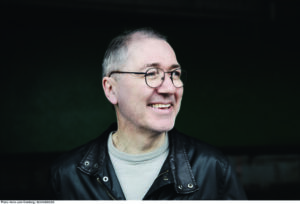
Knut Vaage (b. 1961) is a full-time composer living in Bergen, Norway, where he studied piano and composition at the Grieg Academy. He has worked with multiple styles of music, but primarily with improvisational and contemporary music, and in several projects he has explored the boundaries between improvisation and composition. Developing a hybrid acoustic/electronic sound is another important aspect of his music, and he has participated in several collaborations that combine contrasting art forms.
Vaage’s output ranges from large-scale works to solo pieces, and his music is frequently performed at concerts and festivals both in Norway and internationally. These include the Bergen International Festival, Ultima, Borealis, Ilios, Grec Festival (Barcelona), Prague Spring Festival, Nordic Music Days in Stockholm and Reykjavik, and Carnegie Hall. He has composed several full-scale operas, which have been performed at the Bergen National Opera, Norwegian National Opera & Ballet, the Ultima Festival, Bergen National Theatre, and NOSO in Tromsø, as well as internationally at Pfalztheater, Stadttheater Giessen, Théâtre National du Luxembourg (TNL), Porgy & Bess in Vienna, and the Armel Opera Festival in Hungary. Vaage was nominated for the Nordic Council Music Prize in 2022 for his work Hybrid Spectacle and was awarded the Lindeman Prize in 2024.
Valen Trio
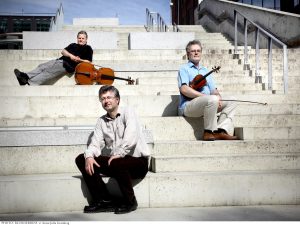
Valen Trio consists of Einar Røttingen (piano), Ricardo Odriozola (violin) and John Ehde (cello). Founded in 2009, the trio took its name after the Norwegian composer Fartein Valen. In addition to performing trios from the standard repertoire, Valen Trio actively commissions new trios and explores repertoire from the 19th and 20th centuries that deserve to be better known.
Valen Trio's first CD release on LAWO with trios by Fartein Valen, Klaus Egge and Ketil Hvoslef received great critical acclaim — Gramophone wrote: 'The players' ensemble and intonation are flawless and their understanding of each other and the repertoire highly impressive.' Fanfare wrote: 'They play Valen's rhythmic, energetic music with love and great attention to detail and with the stylistic knowledge that comes from a serious study of the composer and knowledge of the culture in which he worked.' In 2013 Valen Trio did the first performance of Knut Vaage's In Movement at the Bergen International Festival, and in 2015 they toured Norway and Denmark with trios by Martinu, Dvořák and Grieg.