
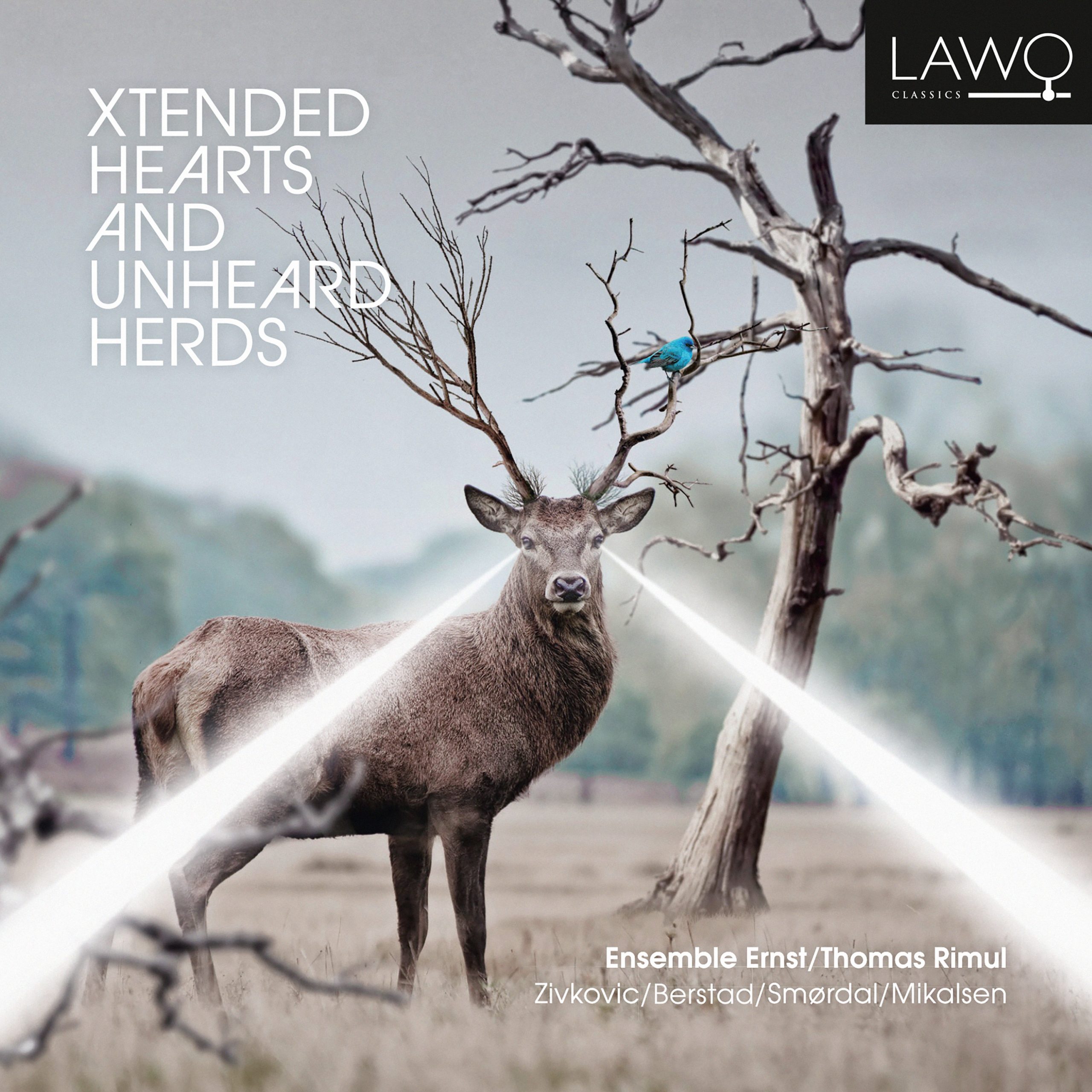
Extended Hearts and Unheard Herds
Ensemble Ernst (Contemporary music ensemble) | Thomas Rimul (Conductor)
WITH THE HEART AS HUNTER
Ensemble Ernst’s “Xtended Hearts and Unheard Herds” is the second release on LAWO Classics by the distinguished contemporary music ensemble. This album is a continuation of their first, “… BUT …”, as they combine their own commissions with works with international appeal. Their intention is to let well-known names help Norwegian composers gain greater recognition worldwide. We hear works of the Norwegian composers Ragnhild Berstad, Jan Martin Smørdal and Jan Erik Mikalsen, together with Serbian-Swedish comoposer Djuro Zivkovic. The result is a contemporary music bag of sweets in which hopefully everyone can find a favourite.
This recording was made in Jar Church and NRK Radio Concert Hall on cold November afternoons in 2017. The recording process was a close collaboration between the ensemble, the recording company and the composers, and the result is, in our eyes, an important recording of the present for the future and for history. Ensemble Ernst was established in 1996, an offspring of the contemporary music ensemble at the Norwegian Academy of Music. Thomas Rimul has been the conductor from the start, and most of the musicians have been members since the very beginning.
The ensemble has specialised in recent contemporary music, focusing on composers such as Beat Furrer, Salvatore Sciarrino, Jonathan Harvey, and Iannis Xenakis, as well as actively commissioning music from Norwegian composers. The ensemble won the Fegersten Foundation’s music prize in 2004, and the Norwegian Society of Composers “Performer of the Year Award” in 2011. Together with Christian Blom and his computer-directed Al-Khowarizmis mechanical orchestra they won Spellemannprisen (Norway’s Grammy) for 2017 in the category “contemporary” for “Christian Blom — Bring me that Horizon”. Ensemble Ernst previously released “… BUT …” (LWC1085), with music of Nordheim, Sciarrino and Matre.
Listen
Tracks
Djuro Živković (*1975)
Ragnhild Berstad (*1956)
Jan Martin Smørdal (*1978)
Jan Erik Mikalsen (*1979)
Credits
- Conductor
- Thomas Rimul
- Performer
- Silje Aker Johnsen (Soprano)
- Contemporary music ensemble
- Ensemble Ernst
- Composer
- Djuro Živković | Ragnhild Berstad | Jan Martin Smørdal | Jan Erik Mikalsen
- Producer
- Vegard Landaas
- Engineer
- Thomas Wolden
- Editing
- Vegard Landaas
- Mastering
- Thomas Wolden
- Liner notes
- Jon Øivind Ness
- English translation
- Jim Skurdall
- Executive producer
- Vegard Landaas
- Booklet editor
- Hege Wolleng
- PR
- Camilla Momkvist-Skau
- Cover photo
- Pexels.com CC licence | Anette L’orange
- Artist photo
- Ensemble Ernst by Siri Hempel Lindøe
- Design
- Anette L’orange | Blunderbuss
- Recording location
- Jar Church, Bærum | NRK Radio Concert Hall, Oslo
- Recording country
- Norway
- Recording year
- 2017
- Recording dates
- 04.11.2017 | 05.11.2017 | 06.11.2017 | 07.11.2017
- Original source
- DXD (352.8 kHz, 24 bit)
- Discs / tracks
- 1 disc | 4 tracks
- Produced with support from
- Arts and Culture Norway | Fund for Performing Artists | Norwegian Society of Composers
- Release year
- 2019
- Label
- LAWO Classics
- Duration
- 57:05
- EAN
- 7090020181998
- ISRC
- NOEHX1908010/40
Booklet text
Djuro Zivkovic is a Serbian-Swedish composer residing in Stockholm. The title "On the Guarding of the Heart" suggests something of an inwardness and perhaps a somewhat old-fashioned sincerity that in today's post-ironic landscape can seem very refreshing. His Serbian background finds expression in elements of style that are easily associated with Eastern European traditional folk music, especially in his treatment of the piano. Repetitions of notes in pairs imitate the use of hammers when playing a cimbalom, and the cimbalom effect is further reinforced through extensive use of the sustain pedal. The long notes in the opening cause one to think of other, more drone-like instruments — a hurdy-gurdy perhaps? The music sounds at times almost modal, but does not feel that way for one reason or another. It alternates between explosive, energetic outbursts and long, sustained surfaces usually emphasizing traditionally laden intervals, such as a minor third or a tritone. Sad melodies are heard against the fleeting background of trills and tonal garlands. It is strange music that seems firmly rooted in its more local traditions, yet is fully from our time. The composer also succeeds in expressing intense pathos that moves us in its sincerity. The music's often simple structure (a long drone on a fifth, for example) makes it perhaps a very attractive alternative to new amateurism, the direction which, to a great extent, has been critical of a lot of contemporary music's most exaggerated complexity.
Ragnhild Berstad has told of sitting in the tram from downtown Oslo to Ekeberg when she was quite young and listening for melodies and overtones as the carriage creaked and whined against the rails and tram wires. After studying guitar at Oslo Conservatory of Music, she applied to study composition at the Norwegian Academy of Music. There she participated in Lasse Thoresen's experimental surprise package course, Sonology 3, which was characterized by a "finding your path as you go" approach. Something of the course content: transcriptions of traditional folk music, including milk-maids' songs and cattle calls. Listening to the world around her (exemplified by the tram) in a musical context; likewise, using fragments of traditional folk music melodies — these are for Berstad important recurring themes. What it amounts to is musical interpretation of all imaginable physical phenomena in her immediate surroundings, and — especially when writing for voice — elements of style that impart associations with transformed traditional folk song. She can also hear a bird in the forest and use the experience in music, without reproducing the sound exactly like a bird. The material she uses can be bird-like, without one needing to know that it is a specific bird, as was the case with Olivier Messiaen. Another obvious influence is spectralism of the French school. Put somewhat simply, spectral music was originally a matter of isolating given qualities of a particular sound and letting these become the main focus of the musical progression. For example, the sequence attack-sound-fading of one note can be extended to a sequence lasting many minutes, generally referred to as a spectromorphological approach: the sound's gradual development, the manner in which it "morphs" over time, is the main idea. It was gradually realized that sequences of this kind, which often become strikingly organic, could be interpreted allegorically for other phenomena. They were developed to become new ways of making musical sequences, liberated from old hierarchies with sharply defined boundaries between bass, harmony and melody. In a spectral context, one views music in large measure as an object or a state that changes organically over time. The inspiration behind the music of Berstad is taken from a way of listening to the world, usually nature, and she poeticizes it and represents it so distinctively nuanced that one does not necessarily think of the music as a direct depiction of nature. Are the structures at the beginning of this piece birds or milk-maids, or have they morphed into something between the two? It is not so important, but when listening to Berstad's music, one definitely has the experience of inhabiting a special world in close kinship with nature.
Jan Martin Smørdal has a background in various forms of jazz, pop and rock, and he was in his younger days seriously interested in extreme metal music. He was musical producer for the first album of Rockettothesky (Jenny Hval) and is a frequent visitor in pop music territories. He has, in parallel with this and to an ever increasing degree, established himself as an important innovative composer in the classical music field. In "(herd)STUDY," Smørdal has attempted to explore different ways in which the musicians and the pitches can behave like a "flock." They can act completely synchronously, as in the opening, with statically repeated chords; they can swarm; or they can be entirely separated points. Auditively, this piece is mainly about the first and last-mentioned categories: the long static chords at the beginning find their rejoinder circa midway in the piece with a new series of sustained chords, but the second time the chords evolve to some extent and become increasingly dramatic. Between and following these stretches with long chords we find episodes that are characterized more by points, more or less static. From the beginning, these episodes seem indeed episodic and separate, with little linking between the one structure and the next. A rapid piano figure in the high register, used three times in the course of the piece, functions virtually as an on/off button; it turns off the previous structure and gets the new one going. The process to which these episodes are subjected is a gradual microtonal distortion, like turning a camera lens and bringing them out of focus, letting the notes or chords bleed microtonally upwards and downwards. This simultaneous rising and falling movement soon has a structural consequence, inasmuch as the various layers of points begin to move chromatically upwards and downwards. Toward the end of the piece there is a long point sequence in which all the musicians each have their own rhythmic duration. It is a simple principle, but nonetheless a rather complex construction that is based on meticulously notated polymetre, in this case 15 different metres running simultaneously. They meet at a starting point, and the composer has said that had they had to meet at the same point again, it would have happened over 18,000 (!) years later. This structure is not interrupted, but is rather, step by step, phased out of longer chords, leading the piece more organically over into its last phase, where it all ends quite abruptly. A small coda with white noise suggests that the piece essentially could have gone on considerably longer. Smørdal says himself that the piece was written as a series of separate episodes, which he later connected in different ways. He sees that the piece can be interpreted as becoming progressively cohesive more toward the end than in the beginning, but he does not believe this development was intended on his part.
While growing up in Kristiansund, Jan Erik Mikalsen lived for a time on the second floor above his family's video rental shop. So at an early age he got his dose of horror movie music from the films he was able to borrow free of charge and view as many times as he wished. His early pieces in particular often had elements of musical expression one could associate with horror films. Now his sound images have moved more in the direction of Giacinto Scelsi's, with a palette of timbres that is perhaps a bit more spectacular. Yet one can still sense the influence of the darker side of Hollywood, with its intense drama and fierce orchestral brilliance.
"Jeger" is an exquisite little gem of a jest. It was written for Bodø Sinfonietta's concert in 2014 celebrating the bicentenary of the Norwegian constitution. A handful of composers were asked to write a piece, each lasting exactly 2'14". Because it was a national celebration, Mikalsen chose "Gammel Jegermarsj" ("Old Rangers March"), which elegantly, yet likewise "sourly" and perhaps in a somewhat careworn manner, is suggestive of the typically scintillating-sourish chords of Mikalsen. It can be tempting to make comparisons to the Danish bonbon "Søppeldynga" ("garbage dump"), with the tastes of salty liquorice and raspberry drops side by side — Mikalsen is sort of pure and sour at the same time. The piece ends abruptly during the second playing of the refrain, for Mikalsen had come to precisely 2 minutes and 14 seconds in his tempo. In the version on this album, the piece lasts 2 minutes and 48 seconds.
— Jon Øivind Ness
Biographies
Ensemble Ernst
Ensemble Ernst was established in 1996, an offspring of the contemporary music ensemble at the Norwegian Academy of Music. Thomas Rimul has been the conductor from the start, and most of the musicians have been members since the very beginning. The ensemble has specialised in recent contemporary music, focusing on composers such as Beat Furrer, Salvatore Sciarrino, Jonathan Harvey, and Iannis Xenakis, as well as actively commissioning music from Norwegian composers.
Underlying the musicians' commitment to performing contemporary music is a strong desire to communicate with a broader audience. This motivation pervades every aspect of the ensemble's work, from programming to presentation to performing, and is deeply anchored in the heart of the ensemble. Ensemble Ernst has received enthusiastic response and glowing reviews for frequent appearances at the Ultima Oslo Contemporary Music Festival and has had successful tours of Scandinavia and Germany.
The ensemble won the Fegersten Foundation's music prize in 2004, and the Norwegian Society of Composers' 'Performer of the Year Award' in 2011. Together with Christian Blom and his computer-directed Al-Khowarizmis mechanical orchestra they won Spellemannprisen (Norway's Grammy) for 2017 in the category 'contemporary' for 'Christian Blom – Bring me that Horizon'.
Thomas Rimul
Thomas Rimul received his diploma in conducting from the Norwegian Academy of Music in 1998. He is artistic director for Ensemble Ernst, one of Scandinavia's leading contemporary music ensembles, chief conductor of Arktisk Sinfonietta in Tromsø, and he has established himself as a distinguished interpreter of contemporary music. With these, and with other orchestras and ensembles, he has conducted first performances of over a hundred works. The Norwegian Society of Composers honoured the conductor, together with Ensemble Ernst, with its 'Performer of the Year Award' in 2011.
Rimul has conducted most of Norway's major orchestras and regularly accepts invitations from professional bands and other institutions associated with Norwegian musical life. He has recorded with Ensemble Ernst, Bodø Sinfonietta, and the Norwegian Radio Orchestra, and received Spellemannprisen (Norway's Grammy) for 2017 together with Ensemble Ernst. Rimul has taught at the Norwegian Academy of Music and in 2017 completed a two-year fellowship at the University of Stavanger. Through his involvement in the project 'Transposisjon' he has on a number of occasions conducted Vietnam's national symphony orchestra and taught Vietnamese conductors.
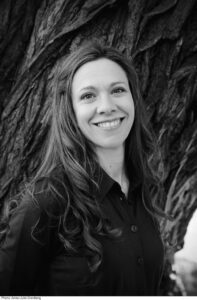
Silje Aker Johnsen
Silje Aker Johnsen is a soprano and dancer. Initially educated at the Grieg Academy of Music in Bergen and Universität der Künste, Berlin, she also holds a Master’s degree in classical singing from the Norwegian Academy of Music, Oslo and a PhD in Artistic Research from the Opera Academy at the Oslo National Academy of the Arts. She has throughout her studies and career had a strong focus on contemporary music repertoire in addition to baroque and classical vocal repertoire.
She has interpreted roles such as Io in The Io Passion by Harrison Birtwistle with Berliner Kammeroper in Konzerthaus Berlin and the main female role in A Gentle Spirit by John Tavener with the same company. She received outstanding reviews for her roles in Synne Skouen’s operas Ballerina and Fram and for the solo piece Her, which she created with Erik Dæhlin and performed at The Norwegian National Opera.
Silje Aker Johnsen has given the world premieres of numerous vocal pieces and has guested festivals such as Huddersfield Contemporary Music Festival, Die Donaueschinger Musiktage, Ultima Contemporary Music Festival and Bergen International Festival. She is a member of Ensemble Neon, who won a Spellemann Prize for their debut album in 2016. Silje was named Performer of the Year 2013 by The Norwegian Society of Composers.
Djuro Živković
Djuro Živković is a Serbian composer, born in Belgrade in 1975, who has lived in Stockholm, Sweden, since 2000. He began his musical training on the violin at the age of nine in Zagreb, continuing his studies at the Academy of Arts in Novi Sad and the University of Arts in Belgrade before turning his focus from performance to composition in 1997.
Zivkovic has built a significant academic career alongside composing, teaching composition at the Royal College of Music in Stockholm and holding a professorship in composition at the Academy of Arts at the University of Novi Sad. He is also a permanent member of the Royal Swedish Academy of Music.
His music is distinguished by original harmonic and rhythmic techniques, including his proprietary Ancient Mode and Harmonic Field concepts, which combine polyrhythms and microtones and have attracted academic study, including research at the University of Music and Performing Arts in Graz. Zivkovic's work has received significant international recognition. His piece Le Cimetière Marin, performed with the Sonanza Ensemble, received the Swedish Grammis award in 2010, and his Ascetic Discourse won the Mokranjac Award in 2012. His greatest distinction came in 2014, when his composition On the Guarding of the Heart was awarded the prestigious Grawemeyer Award for Music Composition.
Ragnhild Berstad
Ragnhild Berstad (b.1956, Oslo) is a Norwegian composer who works in both acoustic and electroacoustic music. She studied at the Buskerud Conservatory of Music, the University of Oslo and the Norwegian Academy of Music, where she completed her diploma in composition in 1997 with Lasse Thoresen and Olav Anton Thommessen. In autumn 1998 she was artist-in-residence at Künstlerhaus Schloss Wiepersdorf in Germany. Her works have been performed at major international festivals, including the ISCM World Music Days in Seoul (1997), the Juilliard Focus Festival in New York (1998) and the Donaueschinger Musiktage (2021).
Berstad often uses field recordings of natural sounds as raw material. She has developed a distinctive collaboration with the glass artists Lars Kverne and Vidar Koksvik, who make glass instruments for her works on fragility and vulnerability. She describes her relationship to sound in personal terms: life has reached her through sound, and sitting still and listening to the sounds around her is like meditation.
Her work has received the Arne Nordheim Composer Prize (2008), the Edvard Prize twice (2001 and 2005) and a nomination for the Nordic Council Music Prize (2015).
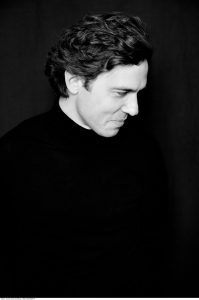
Jan Martin Smørdal
Jan Martin Smørdal (b. 1978) is a composer and musician, co-founder and member of Ensemble neoN. Smørdal comes from the band scene with a focus on experimenting and improvisation. In the course of the last fifteen years he has become a highly sought-after and very active composer. He works in a wide variety of settings: solo, chamber music, sinfonietta, chamber orchestra, choir, orchestra, and installations.
Recurring topics in his works are the impossibility of imitation and the phenomena of swarm formations found in nature. Although rooted in the Norwegian musical milieu, his music is performed throughout Europe and the Americas.