
Sverre Indris Joner
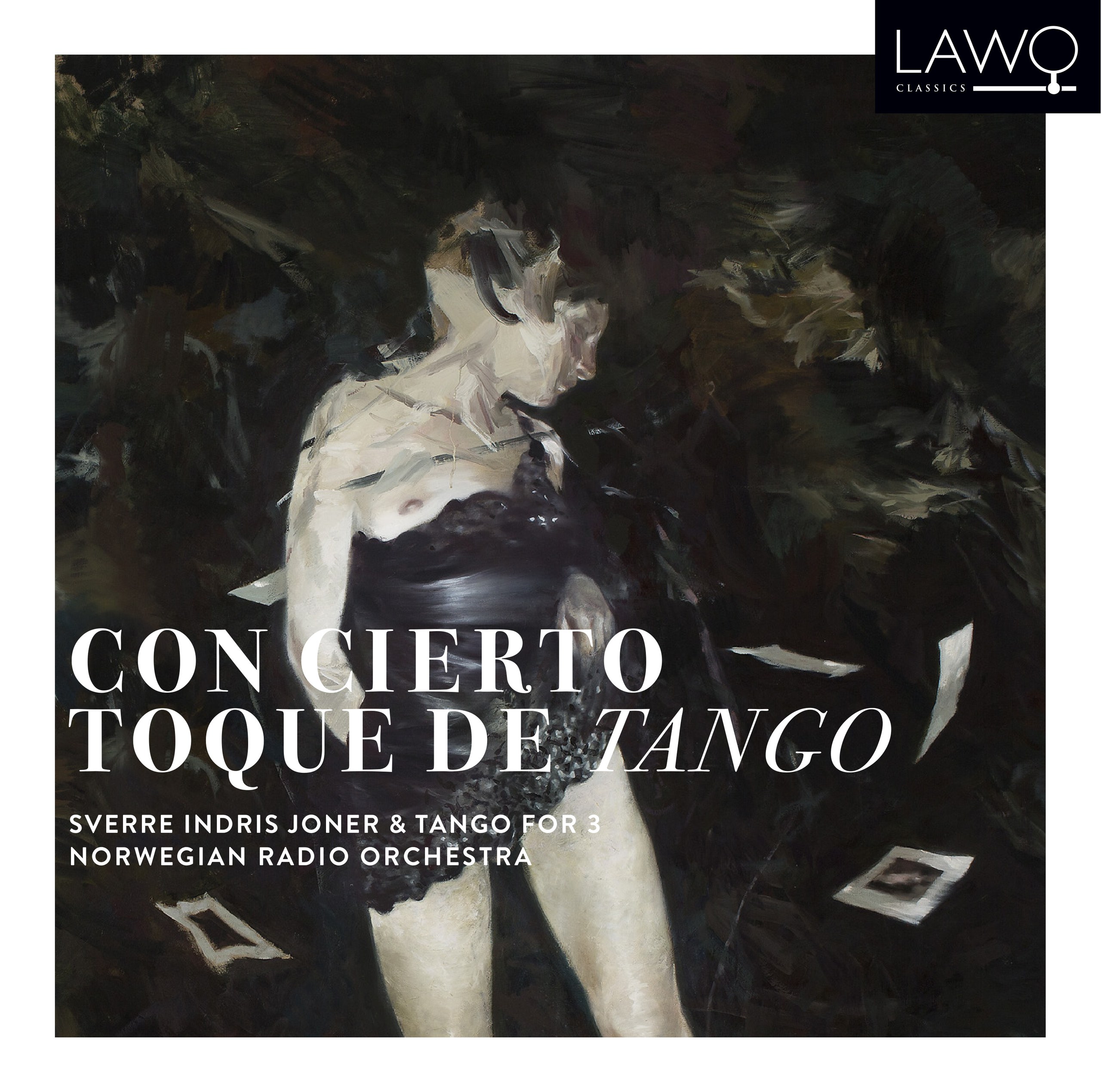
Con cierto toque de tango
Sverre Indris Joner (Piano) | Tango For 3 (Trio) | Henning Kraggerud (Violin) | Norwegian Radio Orchestra (Orchestra)
Stream & download
Tracks
Sverre Indris Joner (*1963)
Violin Concerto "Con cierto toque de tango"
Norwegian Radio Orchestra | Tango For 3 | Henning Kraggerud | Sverre Indris Joner
Concerto grosso
Norwegian Radio Orchestra | Tango For 3 | Sverre Indris Joner
Reviews
The musical level is high, the engagement total, and friends of the genre will certainly get their money's worth with this product.
 Pizzicato | 19.11.17
Read at Pizzicato →
The originality of Joner is evident in this lovely recording.…
Show more Show less
The originality of Joner is evident in this lovely recording. But not only is it original. This CD contains works of great contrast and depth, and most surprisingly is the fortunate treatment provided by the Norwegian Radio Orchestra Kringkastingsorkestret (KORK).
 Sonograma Magazine | 29.11.17
Read at Sonograma Magazine →
Piazzolla composed many fine concertos, and Joner’s piece for violin, Con Cierto toque de tango, pays homage to his inspiration, whilst also being specially written for the…
Show more Show less
Piazzolla composed many fine concertos, and Joner’s piece for violin, Con Cierto toque de tango, pays homage to his inspiration, whilst also being specially written for the brilliantly gifted Henning Kraggerud, who delivers a wonderfully luminous and idiomatic performance. The Tango for 3 quartet plays with no less verve in *Concerto grosso*, Retrolonga or the opening tribute to Piazzolla, Vino y se fue. The Norwegian Radio Orchestra plays fabulously throughout, live, with an appreciative audience that creates the atmosphere of a tango club.Show original
Piazzolla komponerte mange fine konserter, og Joners for fiolin, Con Cierto toque de tango, peker tilbake på forbildet, men er også spesialskrevet for den lynende begavede Henning Kraggerud, som leverer en fantastisk lys og idiomatisk fremføring. Kvartetten Tango for 3 spiller ikke med mindre schwung i Concerto grosso, Retrolonga eller åpningshyllesten til Piazzolla, Vino y se fue. Kringkastingsorkesteret spiller fabelaktig hele veien, live, med et takknemlig publikum som gir følelsen av en tango-klubb.
Sverre Indris Joner, Tango For 3, Henning Kraggerud and KORK are nothing short of a dynamite line-up.…
Show more Show less
Sverre Indris Joner, Tango For 3, Henning Kraggerud and KORK are nothing short of a dynamite line-up. [...] ‘A certain touch of tango’ is, in fact, the Norwegian translation of the title. For me, it’s much more than a touch – it’s tango in many forms and variations, with Sverre Indris Joner’s unmistakable touch all over it. Brilliant, powerful and original.Show original
Sverre Indris Joner, Tango For 3, Henning Kraggerud og KORK er intet mindre enn ei kruttsterk pakke. [...] Et visst snev av tango er altså den norske oversettelsen av tittelen. For meg er det mye mer enn et snev - det er tango i mange former og utgaver og med Sverre Indris Joners umiskjennelige klo over det hele. Flott, sterkt og originalt.
This disc gives a very good account of Joner’s music [...] to my ears, Joner has an original voice within the expected paradigms for the idiom.…
Show more Show less
This disc gives a very good account of Joner’s music [...] to my ears, Joner has an original voice within the expected paradigms for the idiom. Very appealing.
 American Record Guide | april 2018
Show all 6 reviews
Written “with one foot firmly planted in Norway”, it’s intoxicating stuff, the punning title’s hint of tango rather more than a hint.…
Show more Show less
Written “with one foot firmly planted in Norway”, it’s intoxicating stuff, the punning title’s hint of tango rather more than a hint. Kraggerud is outstanding, sultry and incisive by turns in a smart work which deserves to be a popular classic. [...] Brilliant – few recent discs have made me smile so much as this one.
 theartsdesk.com | 21.07.18
Read at theartsdesk.com →
Credits
- Performer
- Sverre Indris Joner (Piano) | Henning Kraggerud (Violin) | Tango For 3
- Orchestra (unspecified)
- Norwegian Radio Orchestra
- Trio
- Tango For 3
- Composer
- Sverre Indris Joner
- Producer
- Halldor Krogh
- Engineer
- Øystein Halvorsen | Per Arne Flø | Arne Kristian Dypvik
- Mastering
- Thomas Wolden
- Liner notes
- Sverre Indris Joner
- English translation
- Jim Skurdall
- Executive producer
- Vegard Landaas
- Booklet editor
- Hege Wolleng
- Design
- Anna-Julia Granberg | Blunderbuss
- Recording location
- NRK Radio Concert Hall, Oslo
- Recording country
- Norway
- Recording year
- 2016
- Recording dates
- 19.01.2016 | 20.01.2016 | 21.01.2016 | 22.01.2016
- Original source
- 44.1 kHz, 16 bit
- Discs / tracks
- 1 disc | 13 tracks
- Produced with support from
- Arts and Culture Norway | The Audio and Visual Fund | Fund for Performing Artists | NOPA
- Release year
- 2017
- Label
- LAWO Classics
- Duration
- 70:32
- EAN
- 7090020181592
- ISRC
- NOEHX1719010/130
Booklet text
(Foreword)
It's 28 years since I first got to know Sverre Indris Joner, when he invited me to record with his trio: bass, violin and piano ("Tango for 3"). I was struck by his talent and knowledge of the language of tango and we managed to tap into the pulse of the genre together effortlessly.
Over the course of time, he has shown me his talent as a composer, arranger and pianist. I was fortunate enough to premiere a version of his composition Vino y se fue with my Orquesta tipica, and both the musicians and the audience alike were unanimous in their appreciation of the originality and quality of the work, which you will also find on this recording.
You can imagine my sense of curiosity and admiration when I recently discovered this outstanding CD. It contains works of great contrast and depth, and his treatment of the symphony orchestra is reflected in the exceptional quality of the interpretations of the soloists and of course the diligence of the conductor and the orchestra as a whole.
Taking tango on a journey into the symphonic world is a challenge that Sverre has accepted and taken to the highest level. Personally, I'd say this work is one of the best (if not the best) adaptations to date.
Tango has been given the status of world heritage by UNESCO. Although it grew out of the Rio de la Plata area between Montevideo and Buenos Aires, musicians from all corners of the globe these days are producing creative tango works of enormous importance. As with all genres of music, what it takes to master it is loving it and immersing oneself in the universe of its style and sound.
Sverre shows full commitment as well as an innate knowledge of tango. His deep admiration for a number of important tango musicians, such as Horacio Salgan, shines through in his work.
I can personally vouch for the quality of his creative compositional work and his music undoubtedly holds a privileged place in the genre of tango.
As a humble musician, bandoneonist and performer, and in the name of TANGO, I say a big thanks to you Sverre Indris Joner for your huge contribution.
— Juan José Mosalini Renowned bandoneon-player, composer and orchestra leader from Argentina. Founder of the first bandoneon education in Europe at the Gennevilliers conservatory.
About the Works: In the Composer's Words
Orchestrating Argentine tango does present its challenges. One possible solution is to try to make the orchestra sound as much like a tango ensemble, an orquesta tipica, as possible. Another option is to cut a few corners and translate it into an easier language for the more conventional orchestra to decipher. A third is to invent new, unfamiliar solutions. I've done a bit of all three here.
Vino y se fue (He came and disappeared). The title relates to a piece by Piazzolla called lo que vendrá (What's to come) and alludes to the apparent vacuum Piazzolla has left in Argentina's tango tradition. So Vino y se fue could be construed as a kind of commentary on the direction tango of the future could possibly take. (I'm also well aware that the title could mean, "Wine, and then he went").
Victoriosa, dedicated to my daughter Viktoria, had a previous manifestation in the performance of the 2004 theatrical piece TanGhost, for which I received the Edvard Prize awarded by TONO.
Vino y se fue, Victoriosa and Mi viejo dolor are pieces originally composed for a traditional tango ensemble, but re-interpreted here for the larger orchestral palette.
The violin concerto Con cierto toque de tango was commissioned by Hugo Ticciati for O/Modernt in Stockholm, a festival which focuses on reflections of the musical past in the present, an agenda consistent with my own. The title translates to "with a certain hint of tango". Musically, there's probably more than just a hint of tango in this concerto, considering that the movements are named after the Argentine dance forms milonga, zamba and tango.
The concerto is written with one foot firmly planted in Norway, far away from the tango tradition. This gives me a certain freedom to experiment but also provides another more glaring necessity to find those moments and elements that provide the right connection to this tradition. I am delighted to have the likes of Henning Kraggerud on hand to perform the concerto!
Valserita is a virtuoso waltz inspired by the Venezuelan musica llanera tradition. The two core instruments in this tradition are the guitar-like cuatro as well as the maracas. In order to find someone who mastered these instruments at the highest level, I sent this concert recording of the piece to Nirgua in Venezuela. I was delighted to receive impeccable audio recordings in return, and hey presto, a new collaboration was born. The Norwegian Radio Orchestra played in the Store Studio (large studio) in Oslo, cybernetically interacting with Venezuelans Felix Farfan and Alexander Rios.
Julie is a waltz with a more controlled tempo. The ornate chromatic theme is a kind of metaphorical description of the inquisitive and slightly unconventional personality of my cousin Julie. The theme came to me in a moment of inspiration soon after she passed away, way too early.
Retrolonga is a type of concerto for orchestra. It's a milonga which in its original version with the band Electrocutango was bathed in a sea of Brazilian samba-reggae drums. In this version, it has become a thrilling orchestral piece that makes sure most of the orchestral instruments are at the top of their game.
The string serenade Mil vias (Thousands of roads) revolves around a simple little motif that evolves, mutates, and then yearns for some kind of resolution within an ever-ascending movement, while at the same time remaining within the bounds of a saccharine, harmonious framework. As this is a serenade, I must of course dedicate this to my wife Milvia.
Mi viejo dolor (My old pain) is dedicated to my mother, Irena, who came from Latvia to Norway as a refugee after the war and who has gone through more than her fair share of adversity and pain.
Concerto Grosso is written for tango quartet and string orchestra and is divided into three movements, Andante violento, Adagio introvertido and Allegro disfrasado.
Musically, the works are at the crossroads of Argentine tango and contemporary art music. My aim is to expand and challenge the musical palette that makes up the true essence of tango: the deep passion, the sharp dynamic contrasts, the teasing sudden transformations and the apparent rhythmic freedom of rubato phrasings against the fast-paced choppy rhythms.
These elements are injected and transfused into a dark and saturated harmony which tends towards modernism and which warns of a deeper and darker emotional vein without breaching the contract: connection to the roots.
One of the more challenging aspects here has been to remain faithful to the soul of tango without any sense of obligation to reproduce the clichés associated with it, be it in relation to early dance tango or the nuevo tango variants typified by the works of Astor Piazzolla. The challenge is not unlike the one the romantic composers of the past faced with their derivations of folk music. For me, the problem differs from the romantics' ideal through the desire to be equally true to both genres' inherent characteristics, and not to establish a kind of ranking where one "elevates" folk/popular music to so-called "art music".
The titles of the pieces here reflect this kind of duality. They refer to the customary tempos of the traditional orchestra, with the descriptive adjective taking on a new and contrasting twist.
Andante violento alludes to the minimalist rhythmic motive which drives the movement forward — a characteristic of Argentine tango's "Orquesta Tipica" tradition, with a nod to renowned orchestra leader Osvaldo Pugliese.
Adagio introvertido is self-explanatory. The introspective melodic twists and turns always hold back a little. Even during the melodic climax at the conclusion of the piece, the crux of the melody unfolds within the deep strings.
Allegro disfrasado literally translates to "disguised pleasure". After a pensive intro, the rhythmic gestures take the ascendancy, and the lines clamoring for focus create an uneasy harmony, bathed in cascades of polyrhythmic trip wires. The individualistic interaction so typical of the tango tradition has been knocked out in a multi-voiced brawl.
The soloists are from the tango quartet incongruously named "Tango for 3", founded in the 1980s. This includes Per Arne Glorvigen on bandoneon, Odd Hannisdal on violin, Steinar Haugerud on double bass and myself on piano.
I have certainly run the gamut of styles as a composer — everything from tango & salsa to waltz & pols (Norwegian folk dance), from electronica & hiphop to music for films, theatre and dance.
With this orchestral album you'll get an insight into my musical universe "with a certain hint of tango".
— Sverre Indris Joner