
THE ORGAN OF OSLO CATHEDRAL
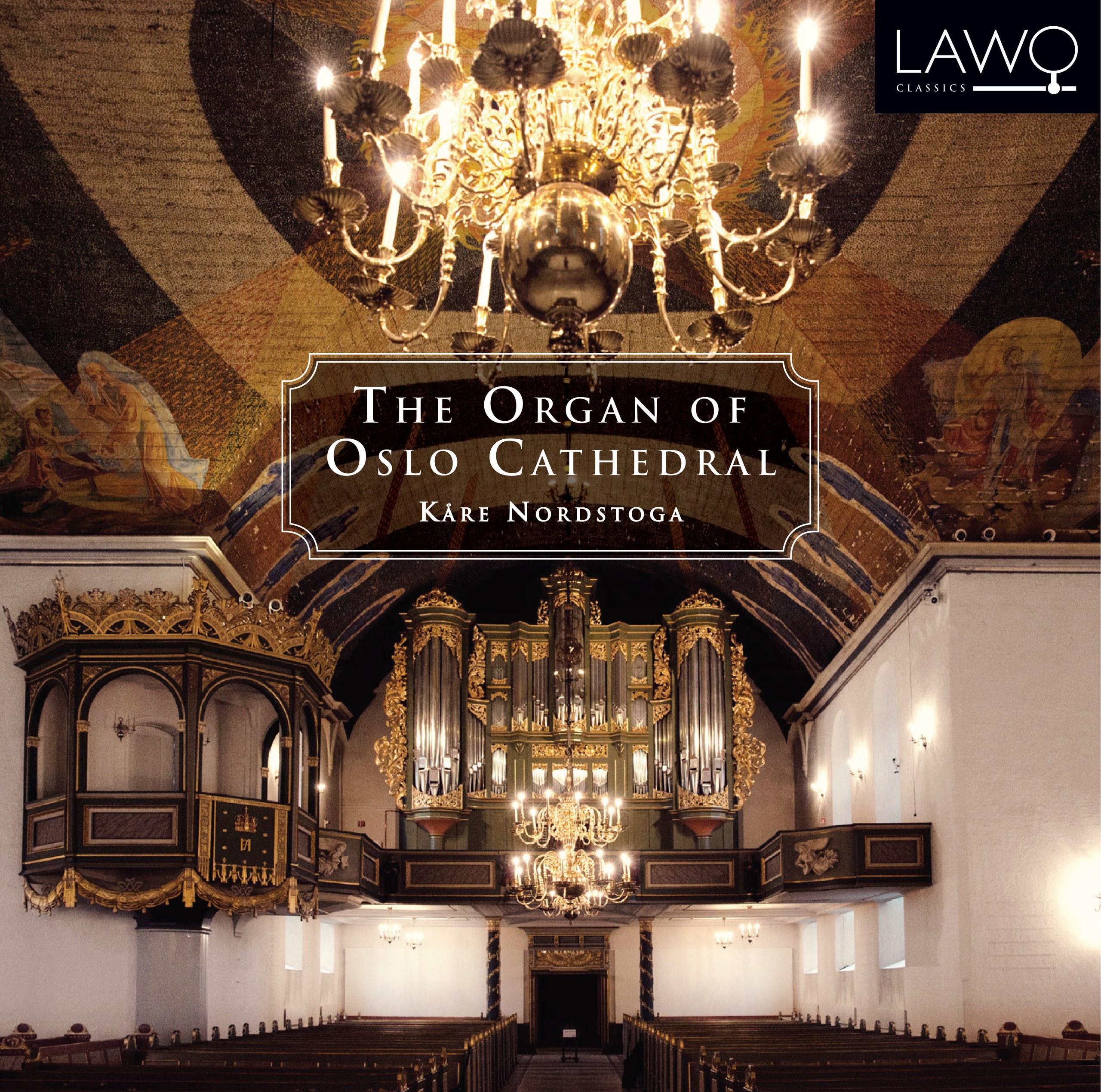
In the middle of recording the collected organ works of J. S. Bach, cathedral organist Kåre Nordstoga has found the energy to release an album of gems for the organ from Oslo Cathedral. “The Organ of Oslo Cathedral” is intended as a richly varied souvenir CD, showing off the full breadth of the cathedral’s Ryde & Berg organ built in 1998.
The CD features great works of Bach and Reger, two composers who over the years have been cornerstones of the cathedral’s organ tradition, not least due to the influence of former organist and choirmaster Arild Sandvold. Sandvold’s variations over “Eg veit I himmerik ei borg” can be heard on the recording. Nordstoga’s own organ version of Grieg’s “Holberg Suite” has been performed on a number of occasions, and now — after many requests — it has found its place on a recording. And with the inclusion of two exquisite samples of Swedish and Norwegian traditional music, together with a meditation of Charles Gounod, we see the contours of an album of organ music where many traditions meet.
Listen
Tracks
Johann Sebastian Bach (1685–1750)
Edvard Grieg (1843–1907)
Holberg Suite, Op. 40 (arr. Kåre Nordstoga)
Holberg Suite, Op. 40 (arr. Kåre Nordstoga)
Holberg Suite, Op. 40 (arr. Kåre Nordstoga)
Arild Sandvold (1895–1984)
Oskar Lindberg (1887–1955)
Traditional
Max Reger (1873–1916)
Chorale Fantasias, Op. 40
Charles Gounod (1818–1893)
Credits
- Performer
- Kåre Nordstoga (Organ)
- Composer
- Johann Sebastian Bach | Edvard Grieg | Arild Sandvold | Oskar Lindberg | Max Reger | Charles Gounod
- Producer
- Vegard Landaas
- Engineer
- Thomas Wolden
- Editing
- Vegard Landaas
- Mastering
- Thomas Wolden
- Liner notes
- Kåre Nordstoga
- English translation
- Jim Skurdall
- Executive producer
- Vegard Landaas
- Booklet editor
- Hege Wolleng
- Cover photo
- Anna-Julia Granberg
- Artist photo
- Kåre Nordstoga by Anna-Julia Granberg
- Design
- Anna-Julia Granberg | Blunderbuss
- Recording location
- Oslo Cathedral
- Recording country
- Norway
- Recording year
- 2015
- Recording dates
- 11.02.2015 | 12.02.2015
- Original source
- DXD (352.8 kHz, 24 bit)
- Discs / tracks
- 1 disc | 11 tracks
- Produced with support from
- Oslo Cathedral
- Release year
- 2016
- Label
- LAWO Classics
- Duration
- 66:31
- EAN
- 7090020181158
- ISRC
- NOEHX1608010/110
Booklet text
Oslo Cathedral and the Baroque Organ
Oslo Cathedral, formerly Our Saviour's Church, is a cruciform church located at Stortorvet in Oslo city centre. Completed in 1697, it is the main church for the Diocese of Oslo and the parish church for downtown Oslo. It is, at the same time, Norway's national church, used by the royal house and the government for weddings, funerals, and other official occasions.
The Baroque organ, once Scandinavia's largest, was completed in 1727 and built by Lambert Daniel Kastens, a Danish organ builder who studied and worked with the famous North German organ builder Arp Schnitger. Kastens's organ façade, together with the altarpiece, pulpit, and baptismal font, constitutes the cathedral's acanthus-carved Baroque interior, the organ façade being the only one of these treasures that has stood in the church continuously over the course of time.
The pipes of the old organ have vanished, and a number of organs have stood behind the organ's façade, the most recent one built by Norwegian organ builders Ryde & Berg in 1998. The façade was restored at that time and the new organ was, to a feasible extent, made to fit the old façade in size and construction. The distribution of divisions follows the façade, and the tonal profile is inspired by classical models, even though the organ has stylistic features that make it suitable for French and German Romanticism. Both the action and stop action are fully mechanical, with additional slider motors and digital combination system.
About the Works
J. S. Bach (1685–1750) — Toccata and Fugue in D Minor Few pieces have exemplified the essence of the monumental Baroque organ as much as Bach's Toccata and Fugue in D Minor. With its rhetorical statements, passages, and its spirited polyphony, the North German Baroque repertoire includes many such compositions, but none has achieved the status of this work. The original manuscript has been lost, but there is scarcely another Bach piece that has to the same extent taken on a life of its own through countless transcriptions and editions for other instruments, as film music, in TV series, etc.
Edvard Grieg (1843–1907) — Holberg Suite Edvard Grieg wrote his Suite in the Old Style, Holberg Suite for piano, premiering it himself at the 200th anniversary celebration for the Norwegian author Ludvig Holberg in 1884. The following year he completed a version for string orchestra. Here Grieg combines his own tonal language with stylistic elements from the old stylized dance suite (Couperin, Rameau, Bach) in a wonderfully vigorous blend. It is an unusually inspiring work, and with its classically straightforward linear interplay it is enticing to grapple with an organ version.
Arild Sandvold (1895–1984) — Variations on the Norwegian Folk Tune "Eg veit I himmerik ei borg" Arild Sandvold studied with, among others, Karl Straube in Leipzig and was organist and choirmaster of Oslo Cathedral from 1933 to 1966, in addition to being an important composer and teacher. It was during this time that the old religious folk tunes were introduced into the chorale books, becoming once again part of the core repertoire of Norwegian hymns. The idea of combining folk tunes with classical counterpoint in a series of variations became very popular, and one of the finest examples is Sandvold's variations over Eg veit I himmerik ei borg. The work is dedicated to organist Hans Solum, who often played Sandvold's music on concert tours of Norway.
Oskar Lindberg (1887–1955) — Gammal Fäbodpsalm från Dalarna The Swedish organist and composer Oskar Lindberg was born in Dalarna. His music is to a great extent inspired by the natural surroundings of his home district, and folk tunes often turn up in his compositions. He wrote a number of works for organ, including the large organ sonata in G minor, but it is this simple and stylistically compelling version of Gammal Fäbodpsalm that is perhaps best known.
Traditional / Kåre Nordstoga (b. 1954) — Rosa The closest we come to authentic Norwegian Baroque music is perhaps the richly ornamented Hardanger fiddle dance melodies with roots in the 1700s. The organ arrangement of Rosa is the result of a collaboration of many years with traditional fiddler Knut Buen from Tuddal, and it is a transcription of Buen's version that is the basis of this arrangement. Rosa is a popular dance melody in Telemark and can be traced back to the traditional music of Hans Fykerud and Knut Dahle.
Max Reger (1873–1916) — Chorale Fantasia "Wie schön leucht' uns der Morgenstern", Op. 40, No. 1 The chorale fantasia for organ has been at the centre of Lutheran church music for hundreds of years, and in this respect Max Reger's chorale fantasias represent a pinnacle achievement. Here Reger uses the Romantic organ's enormous power and tonal possibilities to colour both the chorale melodies and the textual content from the weakest pianissimo up to full organ. The hymn Wie schön leucht' uns der Morgenstern is familiar in Norwegian as Av høyheten opprunnen er, written by Phillip Nicolai in 1597 and referring to Christ as "Morning star" and "bridegroom", with reference to Psalm 45 from the Book of Psalms.
In Elias Blix's free adaptation from 1870 the hymn reads:
From the heavens above to earth below there shines / A morning star clear and beautiful / With truth and with mercy. / Thou root of Jesse and David's branch, / My heart's bridegroom, Jesus Christ! / I turn in all misfortune to / My sun / Thou Christmas / Lovely and magnificent, / Mild and caring! / Wonderful gifts, / Light and life to me you give.
Charles Gounod (1818–1893) — Meditation on "Prelude in C Major" by J. S. Bach This is originally supposed to have been an improvisation on the part of Gounod in which he improvised a melody line over Bach's Prelude in C Major from The Well-Tempered Clavier. The piece was first published for violin and piano in 1853 and later as a song with the Latin text Ave Maria.
Biographies
Kåre Nordstoga
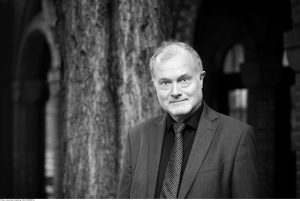
Kåre Nordstoga (b. 1954) studied at the Norwegian Academy of Music under Søren Gangfløt, Bjørn Boysen and Kaare Ørnung, among others. Following his debut concert in 1978, he continued his studies under David Sanger in London, and was for a time organist at Ullern Church before coming to Oslo Cathedral in 1984. He has also been associated with the Norwegian Academy of Music, where he was appointed professor in 1994.
As cathedral organist at Oslo Cathedral, Nordstoga frequently performs a large repertoire, which has included two popular concert series with Bach's complete organ works. His recordings include the organ music of Bach, Brahms, Franck, Widor and Liszt, all of Bach's violin sonatas recorded on the cathedral's chancel organ in collaboration with violinist Geir Inge Lotsberg, as well as several recordings of Norwegian organ music. Nordstoga is an active concert organist.
In recent years he has been soloist with the symphony orchestras of Oslo, Bergen and Trondheim, and he has been invited to organ festivals abroad, including Aarhus, Notre Dame in Paris, and the Musashino Cultural Center in Tokyo. In 2006 he was awarded the Lindeman Prize for his active contribution to musical life.