
Alexander Scriabin
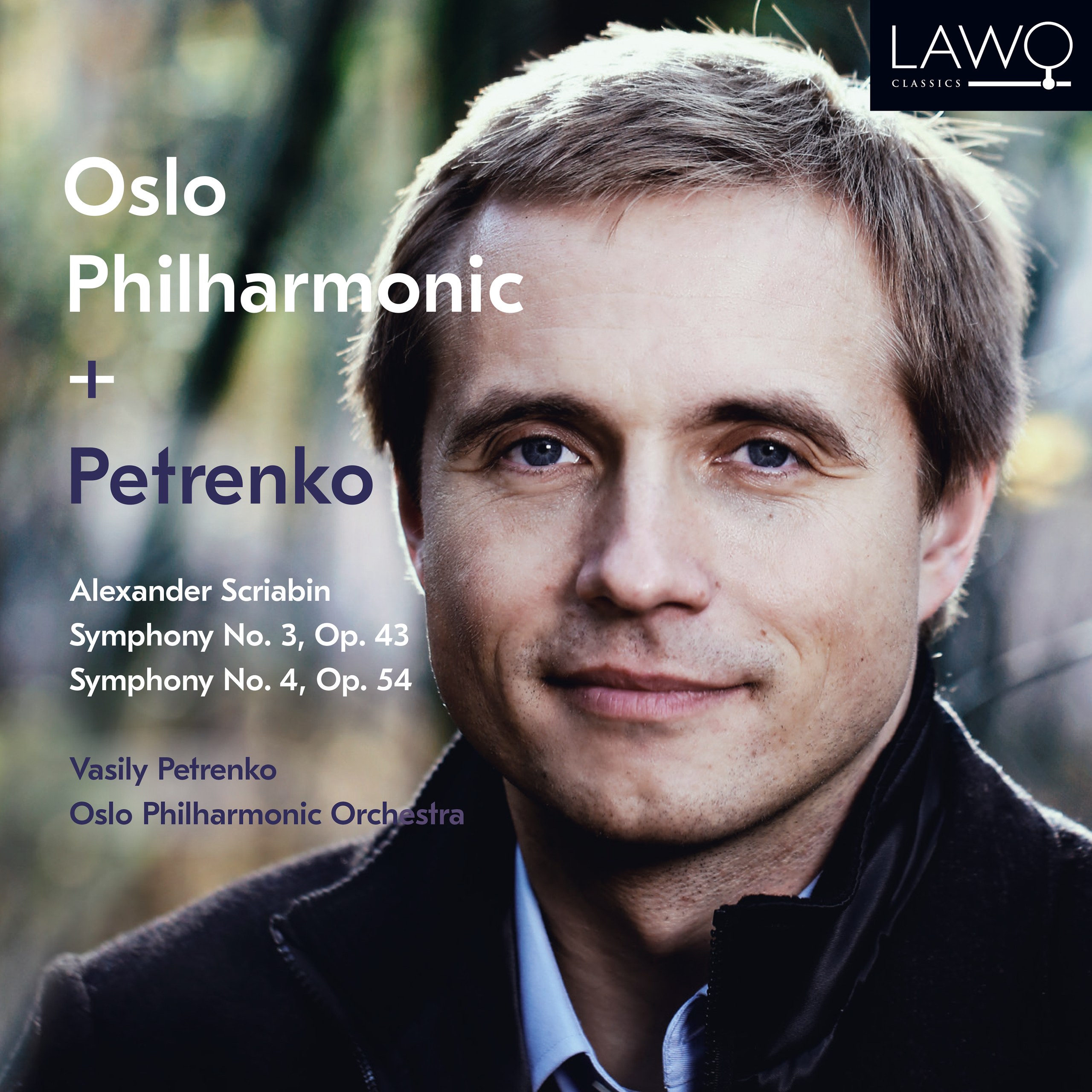
Alexander Scriabin Symphony No. 3, Op. 43 & Symphony No. 4, Op. 54
Oslo Philharmonic Orchestra (Symphony orchestra) | Vasily Petrenko (Conductor)
Stream & download
Tracks
Alexander Scriabin (1872–1915)
Symphony No. 3, Op. 43
Reviews
The Oslo Philharmonic Orchestra performs both works with a sense of foreboding and a flair for dramatic build-up.…
Show more Show less
The Oslo Philharmonic Orchestra performs both works with a sense of foreboding and a flair for dramatic build-up. Principal conductor Petrenko, in a recording from the Concert Hall in February this year, brings out many of Scriabin’s most interesting ideas[...]Show original
Oslo-Filharmonien spiller begge med skumle undertoner og sans for den dramatiske oppbyggingen. Sjefdirigent Petrenko, i opptak fra Konserthuset i februar i år, trekker frem mange av Skrjabins mest interessante ideer[...]
 Aftenposten | 08.11.15
Norwegian
They find lovely echoes of Tchaikovsky in the sprawling first movement, trickles of Wagner in the voluptuous middle section, and only really go for broke in the last hurrah.…
Show more Show less
They find lovely echoes of Tchaikovsky in the sprawling first movement, trickles of Wagner in the voluptuous middle section, and only really go for broke in the last hurrah. Petrenko ably controls the surging eddies of the more concise Poem of Ecstasy — which makes The Divine Poem look like a unedited dress rehearsal — and the orchestra’s principal trumpeter produces some beautifully silvery solos.
Petrenko’s debut disc with his new Oslo band should not be overlooked: Scriabin’s virtuosic writing holds no terrors for them, and they wallow in the “Voluptés” of No 3’s central movement with ravishing transparency.…
Show more Show less
Petrenko’s debut disc with his new Oslo band should not be overlooked: Scriabin’s virtuosic writing holds no terrors for them, and they wallow in the “Voluptés” of No 3’s central movement with ravishing transparency. The Poem of Ecstasy is heady stuff, brilliantly played.
 The Sunday Times | 28.10.15
It’s the first recording in the Oslo Philharmonic’s ongoing survey of Scriabin’s symphonies under the fiery baton of Vasily Petrenko, and together they give a gloriously opulent and fervent account.…
Show more Show less
It’s the first recording in the Oslo Philharmonic’s ongoing survey of Scriabin’s symphonies under the fiery baton of Vasily Petrenko, and together they give a gloriously opulent and fervent account. There’s more mystery and wonderment in the accompanying Symphony No 4 Le Poème de l’extase. If ever a set of performances caught the weird, psychedelic world of Scriabin, it’s this one.
It is simply that, throughout The Divine Poem, Petrenko, with his refined attention to texture and detail, makes the score sound so much more intriguing, so much more unusual.
 Gramophone | des. 2015
Show all 17 reviews
The sound team for Lawo Classics excel on this SACD with satisfying sonics that on my standard player are clear with a satisfying balance.…
Show more Show less
The sound team for Lawo Classics excel on this SACD with satisfying sonics that on my standard player are clear with a satisfying balance. [...] Under Petrenko the Oslo Philharmonic is in outstanding form and its playing of these Scriabin scores feels like a labour of love.
 MusicWeb International
This is a superb recording featuring ‘passionate’ music performed by an orchestra and a conductor at the top of his game!
Show original
dette er en topp innspilling med ‘glødende’ musikk framført av et orkester og med en dirigent i toppslag!

It is interesting that he is leading the Oslo Philharmonic into this repertoire, which – as far as I know – is quite rarely performed in these parts.…
Show more Show less
It is interesting that he is leading the Oslo Philharmonic into this repertoire, which – as far as I know – is quite rarely performed in these parts. The Norwegian record label Lawo has also done an impressive job with the sound.Show original
Det er interessant at han leder Oslo-Filharmonien inn i dette repertoaret, som – etter hva jeg vet – er nokså sjeldent fremført på våre kanter. Det norske plateselskapet Lawo har også gjort en imponerende jobb med lyden.
 Morgenbladet | 20.11.15
Norwegian
His music suits the Oslo Philharmonic, with its rich string sound and strong brass section.
 Presto Classical
This symphony has it all. Rhythmic subtleties – mysterious sounds, colourful and warm melodies, and sparkling fanfares – everything is so beautifully rendered by the musicians of…
Show more Show less
This symphony has it all. Rhythmic subtleties – mysterious sounds, colourful and warm melodies, and sparkling fanfares – everything is so beautifully rendered by the musicians of the Oslo Philharmonic and their principal conductor. This magnificent symphony is so thoroughly well performed – in every phase – that it is one of the finest recordings I have heard of this work.Show original
Denne symfonien har det meste. Rytmiske finurligheter - mystiske klanger, fargerike og varme melodier samt gnistrende fanfarer - alt er så inderlig godt tatt vare på av Oslo-filharmoniens musikere og sjefdirigent. Denne enorme symfonien er så gjennomført bra spilt - i alle faser - at den er en av de fineste innspillingene jeg har hørt av dette verket.

Scriabin’s climaxes are rendered even more powerful by Petrenko’s expertise [...] I have rarely heard any of these works sound so wildly exhilarating.…
Show more Show less
Scriabin’s climaxes are rendered even more powerful by Petrenko’s expertise [...] I have rarely heard any of these works sound so wildly exhilarating. The Oslo Philharmonic Orchestra plays with such verve, and the Lawo recording team has captured their sound superbly.Show original
Skrjabins klimaks blir ytterligere kraftfulle gjennom Petrenkos ekspertise [...] Jeg har sjelden hørt noen av disse verkene klinge så vilt opphissende. Oslo-Filharmonien spiller så det gnistrer, og innspillingsteamet til Lawo har gitt dem fantastisk lyd.
THEY HAVE NOW released two symphonies by Scriabin, his third and fourth, which are also titled *Poème Orgiaque* (No.…
Show more Show less
THEY HAVE NOW released two symphonies by Scriabin, his third and fourth, which are also titled *Poème Orgiaque* (No. 3) and *Le poème de l’extase* (No. 4). The titles say a great deal about a characteristic feature of the composer when he is at his best.Show original
NÅ ER DE ute med to symfonier av Skrjabin, hans tredje og fjerde, som også bærer titlene Poème Orgiaque (nr. 3) og Le poème de l’extase (nr.4). Titlene sier mye om et karakteristisk trekk ved komponisten når han er på sitt beste.
 Dagbladet | 11.11.15
Norwegian
Vasily Petrenko, who usually digs deep into the subtexts of scores he conducts, shows an excellent grasp of each symphony’s dramatic trajectory, and a broader than usual awareness…
Show more Show less
Vasily Petrenko, who usually digs deep into the subtexts of scores he conducts, shows an excellent grasp of each symphony’s dramatic trajectory, and a broader than usual awareness of the creative legacy within which Scriabin worked [...]
 BBC Music Magazine
For my ears, the Oslo wind and brass are most closely knitted into Scriabin's orchestral tapestry, and the Lawo recording is focussed beyond either or the other two, and its deep…
Show more Show less
For my ears, the Oslo wind and brass are most closely knitted into Scriabin's orchestral tapestry, and the Lawo recording is focussed beyond either or the other two, and its deep bass with clear attacks is far better than the comparatively muffled Barbican bass. The Oslo brass also sound most brilliant, with many upper register harmonics not usually discernible. Petrenko's wonderful heaven-storming sound excited me and was a real factor in catching and keeping my attention to the maverick Scriabin's dreams more than the other two, so I certainly recommend it heartily.
 HRAudio.net | 06.11.15
Vasily Petrenko (not to be confused with Kirill Petrenko, who has been appointed principal conductor of the Berlin Philharmonic from 2018) has taken the opportunity to record two…
Show more Show less
Vasily Petrenko (not to be confused with Kirill Petrenko, who has been appointed principal conductor of the Berlin Philharmonic from 2018) has taken the opportunity to record two of Scriabin’s major works on his first symphonic release with the Oslo Philharmonic. And the result is brilliant.Show original
Vasily Petrenko (ikke at forveksle med Kirill Petrenko, der er udnævnt som chefdirigent for Berliner Filharmonikerne fra 2018) har brugt anledningen til at indspille to af Skrjabins hovedværker på sin første symfoniske udgivelse med Oslo Filharmonikerne. Og resultatet er glimrende.
 Klassisk | 17.02.16
Norwegian
Petrenko's work is splendid, as is that of the Oslo Orchestra.…
Show more Show less
Petrenko's work is splendid, as is that of the Oslo Orchestra. The relentless chromatic complexity, which shapes the symphonic evolution, serves communicative tension. The growth of the orchestral mass, with the clarity the conductor gives to the strings, allows one to hear the various nuances and details that are not always in the score. All this is possible thanks to the musical quality of an orchestra that possesses an absolutely exuberant force. In any case, it will be interesting to look forward to the forthcoming recordings of the Scriabin project on Lawo Classics.Show original
El treball de Petrenko és esplèndid, com ho és igualment el de l’orquestra d’Oslo. La implacable complexitat cromàtica, que marca l’evolució simfònica, està al servei de la tensió comunicativa. El creixement de la massa orquestral, amb la claredat que el director atorga a la corda, permet escoltar els diversos matisos i detalls que no sempre estan a la partitura. Tot això és possible per la qualitat musical d’una orquestra que té una força absolutament exuberant. En qualsevol cas, serà interessant estar a l’expectativa dels propers enregistraments del projecte Scriabin a Lawo Classics.
 Sonograma
Norwegian
The orchestra displays such transparency, and the dynamic nuances in the piano passages are simply magnificent.…
Show more Show less
The orchestra displays such transparency, and the dynamic nuances in the piano passages are simply magnificent. (...) The tone is consistently maintained. (...) A CD that is an absolute must-listen.Show original
Welch eine Transparenz das Orchester an den Tag legt und auch die dynamischen Abstufungen im Piano sind schlichtweg grandios. (...) Ton konsequent durchgehalten. (...) Eine CD die man unbedingt gehört haben sollte.
Credits
- Conductor
- Vasily Petrenko
- Performer
- Oslo Philharmonic Orchestra
- Symphony orchestra
- Oslo Philharmonic Orchestra
- Composer
- Alexander Scriabin
- Producer
- John Fraser
- Engineer
- Arne Akselberg | Thomas Wolden
- Mastering
- Thomas Wolden
- English translation
- Jim Skurdall
- Executive producer
- Vegard Landaas
- Booklet editor
- Hege Wolleng
- Cover photo
- Trygve Indrelid
- Artist photo
- Oslo Philharmonic Orchestra by Trygve Indrelid
- Design
- Anna-Julia Granberg | Blunderbuss
- Recording location
- Oslo Concert Hall
- Recording country
- Norway
- Recording year
- 2015
- Recording dates
- 00.02.2015
- Original source
- DXD (352.8 kHz, 24 bit)
- Discs / tracks
- 1 disc | 5 tracks
- Produced with support from
- Arts and Culture Norway | The Audio and Visual Fund
- Release year
- 2015
- Label
- LAWO Classics
- Duration
- 68:42
- EAN
- 7090020181004
- ISRC
- NOEHX1512010/50
Booklet text
Scriabin's Revolution
'But this is a disaster!' Alexander Scriabin (1872-1915) is known to have cried out the night before he died. He was only forty-three, hardly old even in Russia of that time. What was it Scriabin did not manage to complete? And what, despite everything, did he succeed in accomplishing? To find answers, to understand his work, we must direct our attention toward his time.
'The beginning of the 20th century was Scriabin's era', Boris Pasternak wrote. Pasternak is best known here in this country as the author of Dr. Zhivago, which earned him the Nobel Prize. But he was perhaps a poet above all and originally wanted to become a composer. Young Boris was in fact fervently preoccupied with and inspired by the remarkable man who usually spent the summer near the family's country house: Alexander Scriabin. Boris's father, Leonid, a well-known artist in Russia at the time, painted some of the very best portraits that exist of the distinguished neighbour.
The closeness of painting, poetry and music is symptomatic of the period before and after the beginning of the 20th century in Russia, known as the Silver Age of Russian culture. Symbolism was the dominant school of thought and art in this period. One of its leading exponents, Andrei Bely, wrote four prose works that he referred to as 'symphonies', while Scriabin — who often and somewhat too categorically is seen as Symbolism's leading composer — for his part, called his third and fourth symphonies 'poems'.
The Symbolists can be compared to the Norwegian Neo-romantics. Just as Hamsun rebelled against Ibsen, the Symbolists challenged the Russian masters of the realistic narrative, the representatives of the 'Golden Age' and the positivist scientific view of that time. While the world, and Russia as well, was characterized by increasing industrialization and belief in progress, and by the rendering of art as superfluous by, for example, technological inventions such as the camera, the Symbolists were drawn toward a realm that could not be reduced to formulas, even if it meant forsaking this world. Occultism, spiritualism, mysticism were catchwords for the alternative thinkers of the time — for example, the founder of theosophy, Helena Blavatsky (Scriabin was deeply inspired by a meeting with her in Belgium), who wanted to synthesize all the world's religions. Nietzsche and Freud knew to what extent humans are dominated by instincts and irrational forces. Dreamlike, untamed images that cannot be explained now found expression in groundbreaking and often abstract art for art's sake, in which established rules were rejected: in poetry — rhyme and conventional syntax; in music — harmony and conventional keys. The Russian Wassily Kandinsky revolutionized painting by doing something as unheard of as filling the canvas with objects that scarcely reminded one of objects in the real world — and whatever did they represent?
Also characteristic for Russian Symbolism were eschatological expectations and a powerful attraction to the apocalyptic. Something immense and all-encompassing seemed somehow imminent, seemed bound to happen. Typical for the time are these lines of verse by the Symbolist poet Dmitry Merezhkovsky:
We stand at the edge of the deep / Children of darkness waiting for the sun / We see the light, and like shadows / We die in its beams.
The premonitions of the Symbolists met with a dramatic response in real life. The outbreak of a world war and the Russian revolutions of 1905 and 1917 heralded the unravelling of the old world order. The great empires of the Hapsburgs, the Ottomans, the Chinese and the Russians fell one after the other. And yet it was a different kind of revolution the Symbolists and Scriabin dreamed of: a revolution in art, a revolution in the hereafter as much as in this world, a time when art would supplant religion and the artist would become a priest of sorts on humankind's behalf. In Petersburg, Andrei Bely's great novel of 1916 about a son who plans to assassinate his father, a high-ranking government official, the real struggle takes place in a sphere other than politics: deep red clouds and other meteorological phenomena are foreboding signs that something even larger is brewing. Scriabin reacted to news of the first Russian revolution with the following words: 'The political revolution in Russia in its present phase and the upheaval that I envisage are two different things ... I wish for nothing more than that my art will lead to ever greater creative striving.'
What exactly did Scriabin mean by this? Did he really believe that his art could lead to a revolution? From having debuted as a romantically inspired, moderately experimental composer, Scriabin had developed in an increasingly megalomaniacal, eccentric direction. Contemporary witnesses have described how the little man wished to fly. He was often observed leaping and bounding in the street. Perhaps one should not attach too much importance to anecdotal material of this kind, yet it is certain that Scriabin's gaze was upward. In his notebooks, which were published posthumously, he wrote:
'I elevate you, my legions of feelings, pure striving, my children. I elevate you, my complicated, unified feelings, and embrace you all as my sole striving, my sole ecstasy, bliss, my last moment.
I am God. (…)
The soul must seek absolute being, ecstasy. How is ecstasy possible? Ecstasy is the supreme achievement of all striving. Ecstasy is the apex.'
Ramblings of this nature are difficult to take seriously, but whether or not Scriabin actually meant what he wrote, he was working resolutely on what was supposed to become his pinnacle achievement both geographically and artistically: a gigantic work entitled Mysterium, which would fully surpass Wagner's Gesamtkunstwerk. The music was to be performed in the foothills of the Himalayas, with Scriabin himself at the piano, surrounded by singers and dancers. The entire spectacle was intended as a week-long event that would gratify a broad range of senses, including smell and taste. This explosion of the senses would be followed by the end of the world, and a human race of nobler beings would emerge.
During periods of his short life, Scriabin worked tenaciously on Mysterium. He pasted together several sheets of music, using different coloured crayons. But he only managed to complete a few sketches. Mysterium never amounted to anything — perhaps that is why he cried out 'disaster' on his deathbed.
Fortunately for posterity, Scriabin succeeded in completing a number of works that have found their natural place in music history. In 1903 he left Russia and did not return for six years. He toured in the USA and was at the centre of impressario Sergey Diagilev's series of concerts intended to introduce Russian music to a Western audience in Paris. He was present at the premiere performance of Debussy's La Mer conducted by the composer himself, and he called the work 'earthly'. Coming from Scriabin, it was not a compliment.
During these years of living abroad, Scriabin composed Symphony No. 3, Le Divin Poème (1904), and Symphony No. 4, Le Poème de l'extase (1905-07). He also wrote long texts related to the symphonies and insisted that they be studied by conductors and others who performed the works. For the composer, the texts were inseparably connected with and almost as essential as the symphonies. To Tatiana, his second wife, he wrote: 'I have just completed a monologue with the most divine word colours. I have expressed what will become one and the same with the music.' (Scriabin had seven children, four with Vera Scriabina and three with Tatiana Schloezer Scriabina. One of the children, Julian, drowned in the Dnieper River, only eleven years old and already regarded as a promising composer.)
The content of these texts is a kind of free mix of Nietzsche, Freud and Blavatsky in symbolistic guise. Symphony No. 3 describes how the ego is simultaneously divine and servile by nature. The two human qualities struggle against one another before finally merging in a higher union, and humankind can joyously and ecstatically celebrate itself as God in another world. Symphony No. 4 originally had the title Poème Orgiaque, hence an orgiastic poem, and it is not difficult to recognize the act of love building toward a climax in the music, even though the transcendence for which Scriabin tried to find a tonal language was meant to be spiritual as much as physical. The text he wrote to this work ends with the word 'I' — the human god that triumphally has transcended itself.
'No one was more famous during his lifetime, and few have been more quickly ignored after death', biographer Faubion Bowers wrote about Scriabin. For the new Soviet state, which propagandized for revolution and collectivism on Earth, Scriabin's solipsism and otherworldly ideas about distant spheres were of little use. Communist Party ideologues by turns called him 'decadent', 'perverse' and 'mad'. Interestingly enough, he was trotted out again in 1961, when Yuri Gagarin completed the world's first space flight, and it was precisely Le Poème de l'extase that the Soviet authorities chose to broadcast over the airwaves.
In the West as well, Scriabin has been regarded as strange and esoteric. Here in Norway, other Russian composers such as Tchaikovsky, Shostakovich, Rachmaninov and Prokofiev are performed much more frequently. That Oslo Philharmonic Orchestra in this anniversary year has chosen to record Symphonies No. 3 and 4 is thus a boon for Scriabin's posthumous reputation.
Precisely because he needed to find a form of musical expression suitable to his increasingly boundless and unrestrained mental leaps, Alexander Scriabin ended up revolutionizing classical music at the beginning of the preceding century. He went even further in an atonal direction than Debussy, began using new dissonant harmonies, and abandoned traditional keys as structuring principles. One can even say that he achieved a kind of aesthetic extreme limit. In Vienna, the slightly younger Arnold Schoenberg experienced something similar. In order to move forward, Schoenberg developed new structural rules and a new philosophical approach — twelve-tone music.
It is entirely possible to enjoy Scriabin's music — the seductive, soulful parts, the leitmotifs, the sensual orchestration — without knowledge of or interest in the Russian composer's peculiar philosophical program. Invoking an image that Scriabin himself probably would appreciate, the beauty of the music is out of this world.
— Christian Kjelstrup · English translation: Jim Skurdall