
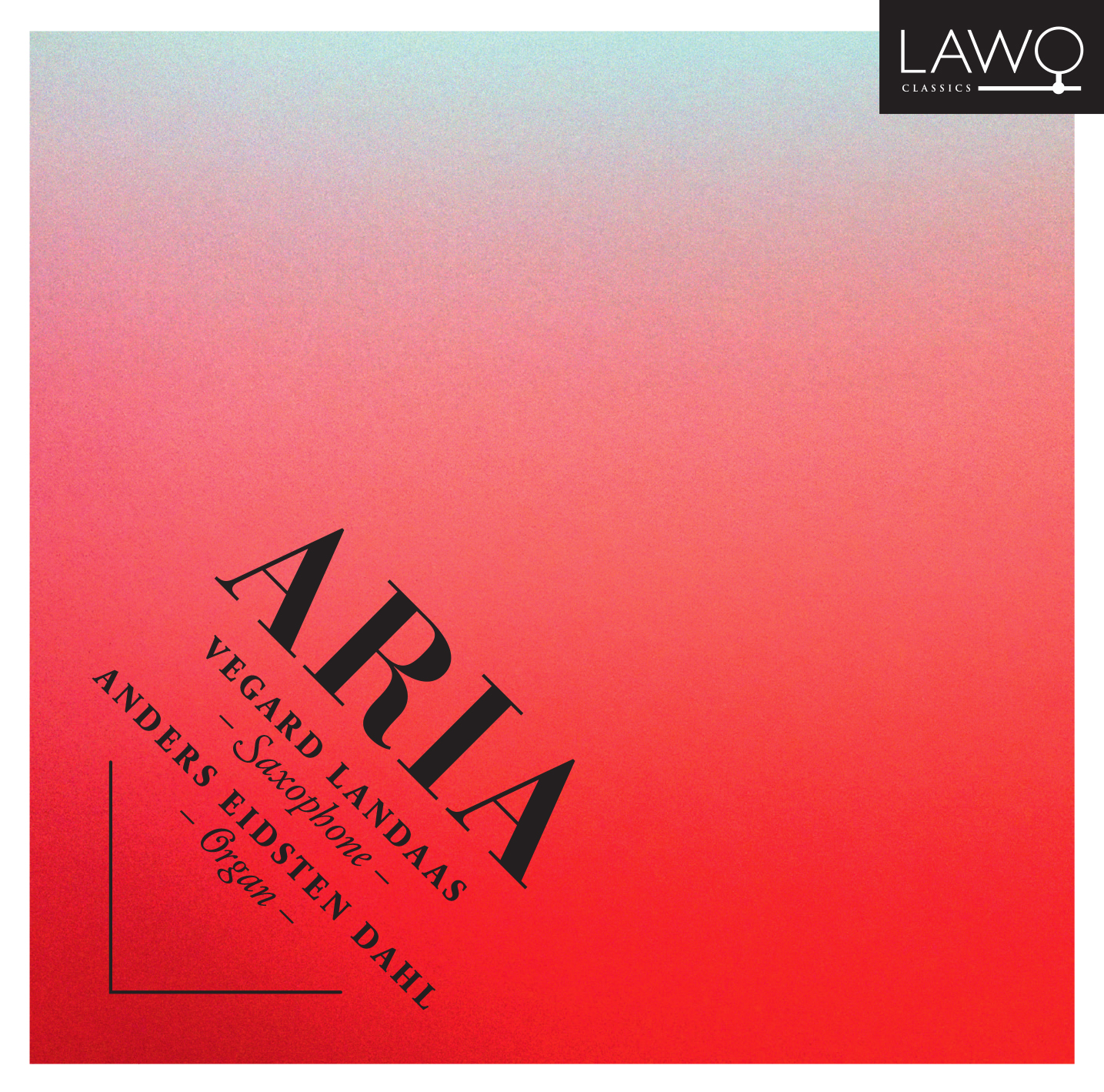
Aria – Music for Saxophone and Organ
Vegard Landaas (Saxophone) | Anders Eidsten Dahl (Organ)
Listen
Tracks
Geirr Tveitt (1908–1981)
Ennio Morricone (1928–2020)
Helge Hurum (*1936)
Traditional
Oskar Lindberg (1887–1955)
Helge Hurum (*1936)
Traditional
Eugène Bozza (1905–1991)
Traditional
Alessandro Marcello (1673–1747)
Concerto in D Minor
Erik Satie (1866–1925)
Rolf Wallin (*1957)
Credits
- Performer
- Vegard Landaas (Saxophone) | Anders Eidsten Dahl (Organ)
- Composer
- Geirr Tveitt | Ennio Morricone | Edvard Grieg | Johan Halvorsen | Oscar Lindberg | Helge Hurum | David Bratlie | Eugène Bozza | Alessandro Marcello | Erik Satie | Rolf Wallin
- Producer
- Vegard Landaas
- Engineer
- Thomas Wolden
- Editing
- Vegard Landaas
- Mastering
- Thomas Wolden
- Liner notes
- Anders Eidsten Dahl
- English translation
- Jim Skurdall
- Executive producer
- Vegard Landaas
- Booklet editor
- Hege Wolleng
- Cover photo
- Anette l'Orange, Blunderbuss (cover)
- Artist photo
- Vegard Landaas by Anna-Julia Granberg | Anders Eidsten Dahl by Hilde Kvivik Kavli
- Design
- Anette L’orange | Blunderbuss
- Recording location
- Bragernes Church, Drammen
- Recording country
- Norway
- Recording year
- 2012
- Recording dates
- 15.01.2012 | 16.01.2012 | 17.01.2012
- Original source
- 96 kHz, 24 bit
- Discs / tracks
- 1 disc | 18 tracks
- Produced with support from
- Buskerud Begravelsesbyrå
- Release year
- 2013
- Label
- LAWO Classics
- Duration
- 48:47
- EAN
- 7090020180472
- ISRC
- NOEHX1306010/180
Booklet text
An «aria» is a solo song, usually with orchestra accompaniment. But the terms «arie», «aria», «air» and «arietta» can have another meaning as well. Throughout music history, composers have used them to signify instrumental music with beautiful, expressive melodies. Many of the pieces on this album were not written originally for saxophone and organ. Rather, they are special arrangements of these melodies, these «arias».
Geirr Tveitt (1908–1982) studied in Leipzig and Paris, and his teachers included, among others, Arthur Honegger and Heitor Villa-Lobos. Tveitt's most important source of inspiration as a composer was Norwegian traditional music, specifically music from Hardanger, where his ancestors lived and where he spent a great deal of his life. Tveitt suffered a number of misfortunes, notably a fire in 1970 that destroyed his home and eighty percent of his collected works. His most well-known and most performed work is «Hundrad folketonar frå Hardanger» («One Hundred Folk Tunes from Hardanger»). The collection consists of compressed movements based on folk tunes, colourfully orchestrated, and with evocative titles. «Velkomne med æra» («O Be Ye Most Heartily Welcome») is the first piece in the collection.
Ennio Morricone (1928–2020) was an Italian composer who wrote music for more than 500 motion pictures and television series. He is perhaps best known for composing the film scores for the so-called Spaghetti Westerns. «Gabriel's Oboe» is the musical theme for the film «The Mission» (1986) with its critically acclaimed soundtrack. Morricone won a Golden Globe and received an Oscar nomination for the film score. Norwegian musician/composer Kjetil Bjerkestrand (b. 1955) penned the arrangement on this recording.
Helge Hurum (b. 1936) studied clarinet, flute, and saxophone at the Music Conservatory of Oslo (today the Norwegian Academy of Music). Regarded as one of Norway's foremost big band leaders, Hurum has written numerous compositions for diverse instrumentation. As a self-taught composer, his music draws its inspiration from jazz musicians like Gil Evans and Quincy Jones, and classical composers such as Maurice Ravel and Anton Bruckner. «Emigrantvisa» is a Swedish folk tune originally entitled «De solde sine hemmar». It deals with the emigration from Sweden to America in the 1800s. «Solefall» («Sunset») is an original piece for saxophone and organ composed for the funeral of Hurum's mother.
Edvard Hagerup Grieg (1843–1907) and Johan Halvorsen (1864–1935) are two of Norway's most well-known composers. Both belonged to the German classical tradition, but they were absorbed with traditional music and used it in their own composing. Grieg made it a salient feature of his popular piano collection, «Lyriske stykker» («Lyric Pieces»), and Halvorsen brought the Hardanger fiddle into the concert hall by composing and arranging for this distinctively Norwegian instrument. The Norwegian folk tunes collected and published by Grieg and Halvorsen have been compiled and arranged for saxophone and organ by organist Bjørn Luksengård. The music is based on Grieg and Halvorsen's arrangements and harmonizations of Norwegian traditional music and folk tunes.
Oskar Lindberg (1887–1955) spent his entire working life as organist of Engelbrekt Church in Stockholm. He also taught harmony at the Royal Conservatory of Music and was active as conductor, organ consultant, and composer. He drew inspiration for his compositions from the traditional music of his home region in Dalecarlia. Best known is a piece for organ entitled «Gammal fäbodpsalm från Dalecarlia». It was written in 1936 for a radio concert from Lindberg's cottage in Dalecarlia, where his home-built organ stood. In all probability, the melody was sung by a traveling preacher during a prayer meeting attended by young Oskar Lindberg in his home parish during the 1890s.
David Bratlie (b. 1972) holds a diploma in composition from the Norwegian Academy of Music. His works have been performed at most of the major Norwegian music festivals. He has taught composition at the Norwegian Academy of Music and the University of Oslo. The arrangement of «Jesus Din søte forening å smake» was commissioned for the reopening of Trinity Church in Oslo in 1997. In this arrangement, the saxophone part is reflective and an independent commentary on the quiet expression of the old hymn — sustained by the organ. According to «Norsk Koralbok», this folk tune comes from Gudbrandsdalen. In the words of O. M. Sandvik:
«This somewhat somber, yet intense melody interprets the text. It is sung in many parts of our country, and it is likely the melody that was sung by [Hans Nielsen] Hauge when he was awakened to his calling. A woman in Vest-Agder who sang the hymn for the author of this book [Sandvik], claimed that she had learned it from her grandmother, who had worked in Hauge's household.»
Eugène Bozza (1905–1991) studied composition, violin, and conducting at the Paris Conservatory of Music. Although he composed symphonies, operas, and ballets, today he is best known for his chamber music. «Aria» was written in 1936 for piano and saxophone, and later also arranged for both flute and violin. The piece is one of Bozza's most important works, and it is part of the standard repertoire for saxophone.
Alessandro Marcello (1669–1747), like his famous brother, Benedetto (1686–1739), was not a full-time musician and composer, but equally renowned in his time as a philosopher and mathematician. The brothers were members of the Venetian aristocracy. Alessandro's modest musical production comprised a few cantatas, concertos, and sonatas. His best-known composition is the concerto in D Minor for oboe, strings and basso continuo, published in 1717. It was customary in Baroque music for orchestral works to be rearranged for a single performer on harpsichord or organ. Johann Sebastian Bach, for example, transcribed his oboe concerto in D minor for solo harpsichord (BWV 974). Likewise, he arranged and embellished the slow second movement, and it is Bach's ornamented harpsichord version of the movement heard on this recording.
Erik Satie (1866–1925) is a remarkable figure in music history. Satie's mother was English and his father French, and he had a chequered career in Paris as cabaret pianist and composer. Referring to himself as a phonometrician, meaning «someone who measures sound», he was in opposition to Romantic composers of his time, such as Wagner, Franck, and Saint-Saëns. Satie wrote piano and orchestral music, and opera. His piano works number approximately two hundred, among them the three «Gymnopédies» from 1888. Based on seemingly simple harmonic and technical solutions, these three little pieces are his most well-known compositions. The title was ostensibly inspired by the poetry of J. P. Contamine de Latour (1867–1926), in which «gymnopaedia» alludes to an ancient Greek dance honouring Apollo.
Rolf Wallin (b. 1957) is a graduate of the Norwegian Academy of Music, where he also teaches. Wallin finds inspiration in the music of Iannis Xenakis and György Ligeti, and his list of works embraces electroacoustic music, incidental music, absolute music, and pure instrumental music. Wallin has established a solid international reputation. In 1998 he received the Nordic Council Music Prize for his clarinet concerto. «Elegi», an original work for trumpet and organ, was written in memory of Wallin's sister, who died young. The composer has given his consent to this recording for saxophone and organ.
— Notes: Anders Eidsten Dahl · English translation: Jim Skurdall
Biographies
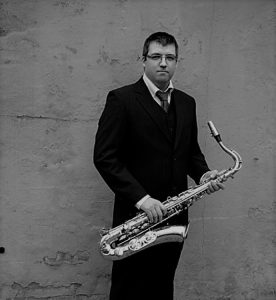
Vegard Landaas
Vegard Landaas (b. 1973) is the full-time producer and co-founder of LAWO Classics, the Norwegian label he started in 2008 with the sound engineer Thomas Wolden. The label is giving Norwegian musicians a home and a guaranteed involvement in the music production process. His work as a producer has been central to the label's growth.
Landaas received his diploma in 2000 from the Norwegian Academy of Music, where he studied with Harald Bergersen and was the first student with saxophone as principal instrument. He built a career as a soloist, with sparkling reviews for his solo concertos and a repertoire that emphasises contemporary music. Composers including Jon Balke, Bjørn Kruse, Yngve Slettholm and Jens Wendelboe have dedicated works to him.
As a soloist he has appeared with the Oslo Philharmonic, the Orchestra of the Norwegian Opera & Ballet, the Norwegian Radio Orchestra, the Oslo Sinfonietta and the BIT 20 Ensemble. His recordings include Slettholm's The Nights Exist with the Oslo Philharmonic (Aurora Records), and for LAWO Classics The Golden Hindemith (LWC1005) and Aria (LWC1046) with organist Anders Eidsten Dahl.
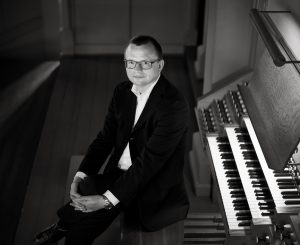
Anders Eidsten Dahl
Anders Eidsten Dahl (b. 1976 in Drammen) graduated with a degree in church music from the Norwegian Academy of Music and later completed a Master's degree in solo organ performance at the same institution. Following two years of solo performance study at the Royal Danish Academy of Music in Copenhagen, he gave debut concerts in Copenhagen and Oslo in 2003. He has studied organ with Professor Terje Winge, cathedral organist Kåre Nordstoga and Professor Hans Fagius. He holds the position as Associate Professor of organ at the Norwegian Academy of Music.
Eidsten Dahl is much in demand as organ soloist, chamber musician and harpsichordist, and he has given organ concerts at festivals in a number of European countries. His repertoire spans from the Baroque to the music of today, with emphasis on J. S. Bach and organ music from the Romantic period. Since 2001 he has served as organist and director of music at Bragernes Church in Drammen, where he is artistic and administrative director of the church's organ concert series.
A recipient of the Government Work Scholarship for Younger and Newly Established Artists, Eidsten Dahl has released a number of critically acclaimed albums on LAWO Classics.