
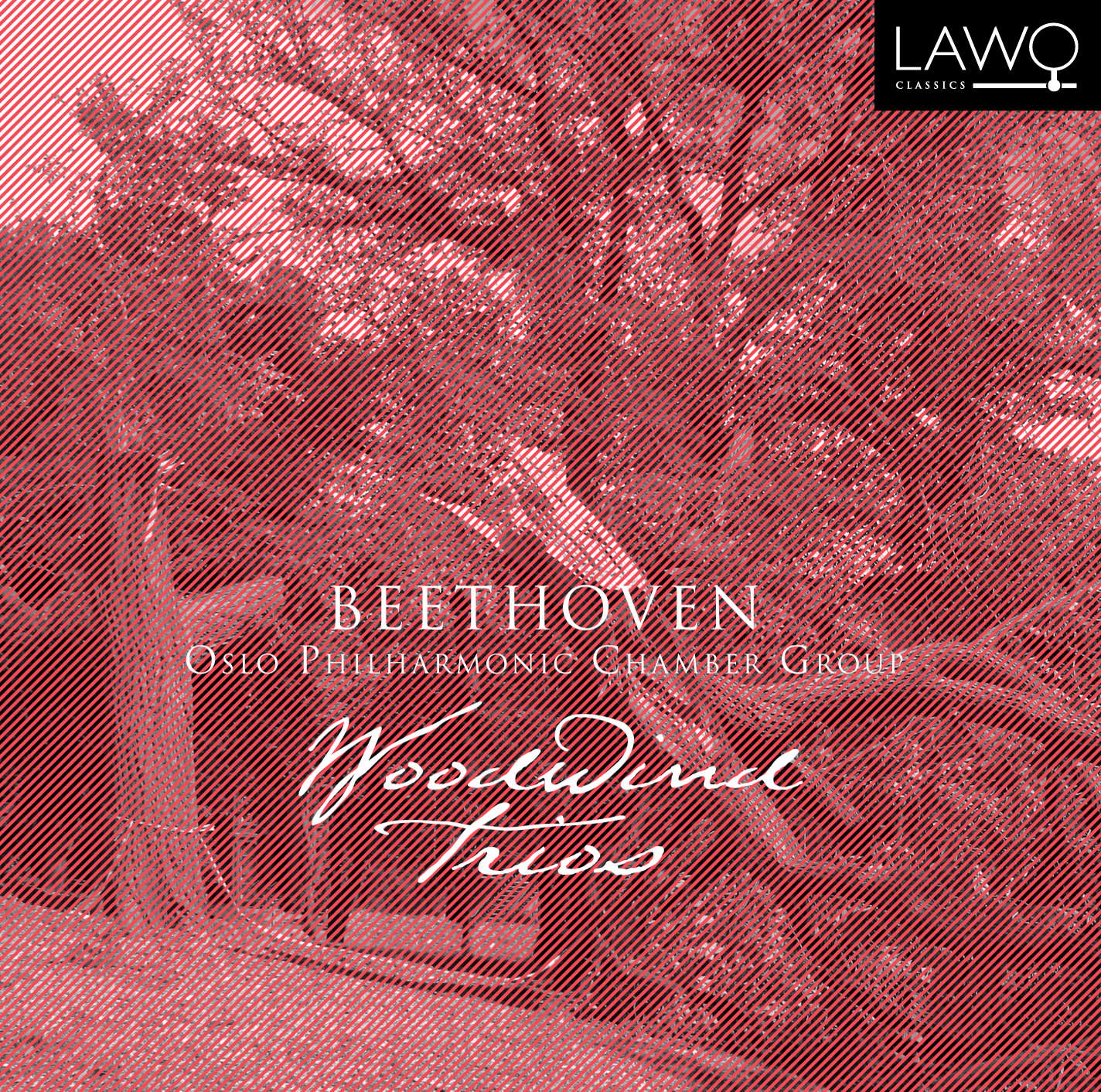
Beethoven: Wood Wind Trios
Oslo Philharmonic Chamber Group (Chamber ensemble)
Listen
Tracks
Ludwig van Beethoven (1770–1827)
Trio in G Major, WoO 37
Serenade in D Major for Flute, Violin and Viola, Op. 25
Piano Trio No. 4 in B-Flat Major, Op. 11, "Gassenhauer" (version for clarinet, cello and piano)
Credits
- Performer
- Per Flemstrøm | Leif Arne Pedersen (Clarinet) | Per Hannisdal (Bassoon) | Elise Båtnes (Violin) | Henninge Landaas (Viola) | Bjørn Solum (Cello) | Gonzalo Moreno (Piano)
- Chamber ensemble
- Oslo Philharmonic Chamber Group
- Composer
- Ludwig van Beethoven
- Producer
- Vegard Landaas
- Engineer
- Thomas Wolden
- Editing
- Vegard Landaas
- Mastering
- Thomas Wolden
- Piano tuner
- Thron Irby
- Liner notes
- Hild Borchgrevink
- English translation
- Jim Skurdall
- Executive producer
- Vegard Landaas
- Booklet editor
- Hege Wolleng
- Cover photo
- Anette L’orange
- Design
- Anna-Julia Granberg | Blunderbuss
- Recording location
- Sofienberg Church, Oslo | Bragernes Church, Drammen
- Recording country
- Norway
- Recording year
- 2011
- Recording dates
- 21.05.2011 | 28.08.2011 | 29.08.2011 | 30.08.2011 | 28.10.2011 | 29.10.2011
- Original source
- 96 kHz, 24 bit
- Discs / tracks
- 1 disc | 12 tracks
- Produced with support from
- The Audio and Visual Fund | Creo’s Remuneration Fund | The Lindeman Foundation
- Release year
- 2012
- Label
- LAWO Classics
- Duration
- 69:29
- EAN
- 7090020180359
- ISRC
- NOEHX1204010/120
Booklet text
LIGHT-HEARTED BEETHOVEN
Serenades are often light informal music. The Italian word sereno means calm and clear. Just like scenic divertimentos, serenades were intended as entertainment at occasions other than concerts, and they were usually written for small ensembles or solo instruments. The opening and closing movements frequently had a march-like character, perhaps to enable the musicians to play while moving to and from the place where they performed. For the same reason, the serenade was often multi-movement in form. Mozart wrote serenades with as many as ten movements.
SERENADE, OP. 25 — for flute, violin, and viola
Serenade op. 25 has many of these characteristics. It has six or seven movements, depending on whether the short adagio before the last movement is regarded as separate. The opening Allegro has a simple pastoral march rhythm and is marked Entrada, or entrance. The last movement presents a corresponding rhythm reversed, in a more energetic and syncopated version. The tempo marking here is Allegro vivace e disinvolto, or fast, lively, and easy.
The instrumentation is small, the viola providing the lowest range. This creates a timbral overlap in the middle register; the three parts generally appear in the same plane, with the flute glittering on top. The choice of instruments reflects another common practice of Beethoven's time whereby a string part in a small ensemble could be replaced by a wind instrument.
The tempo in the six movements alternates between fast and slow, but with shorter and lighter movements than in a suite. The work opens with a clear and seemingly light-hearted theme. Within each movement there are a number of repetitions, for example, the introductory minuet in the second movement is repeated after each of the movement's two trios. The first trio takes us along into a world dominated by the sound of the strings. In the next trio the flute's brilliance reasserts itself.
The third movement disrupts the idyll. Here the atmosphere becomes more ominous and sounds unmistakably Beethovenesque. A disquieting, probing phrase in minor is answered by a phrase implying a major key. It is then followed by an extended chorale-like movement with several variations that gradually become ever livelier.
The movements are short and transparent, as though catching a glimpse of a face that vanishes before we really are able to recognise it. The subsequent allegro scherzando is light and jovial, with a hint of melancholy in the middle part. The final section begins with a short, reflective adagio that leads straight into the syncopated rhythms of the last movement, a rondo which, more or less indifferently, hastens toward its goal.
Serenade, op. 25 is Beethoven's only larger work for flute. Apparently it was begun sometime during the 1790s, completed toward the end of 1801, and published in 1802. In October of the same year, Beethoven wrote a letter to his brothers known as the Heiligenstadt Testament, telling of his beginning deafness.
TRIO, WOO 37 — for flute, bassoon, and piano
The trio designated WoO 37 probably was composed when Beethoven was around fifteen years old. In the family for which it was written the father played bassoon, the son flute, and the daughter, who was Beethoven's pupil, played piano. The designation WoO refers to a list of Beethoven's works for which no opus numbers exist.
As the Serenade, this trio is an early work. Beethoven made no effort to publish it himself; it was published posthumously. There is a quality of clarity and hope in the first movement, until an entrance by the bassoon suddenly shifts to minor, anticipating what is to come in the middle movement. Still the flute insists on sustaining the more buoyant mood, and the bassoon answers with a phrase that begins in major and ends rather ambiguously with a diminished chord. The second half of the movement opens with an almost Bach-like cadenza in the piano part leading to the return of the theme.
The middle movement is a slow adagio, both mournful and elegant. Certain phrases can seem, in retrospect, reminiscent of film music a hundred years before the invention of film. In the transition from the D-major universe in which the adagio ends to the final movement's G-major, the movement is stripped down to the core. The development from D as tonal centre to D as the root of a dominant seventh chord occurs in two solitary notes in the piano part between long standing chords.
The last movement is designated Thema andante con variationi. All seven variations have the same form. Two melodies, each consisting of eight measures, form a question and an answer, and the last four measures in the answer repeat the last four in the question. The fourth variation distinguishes itself by being the only one in minor. Its lone fermata suddenly halts the flow and restrains the clockwork otherwise ticking throughout the entire work.
TRIO, OP. 11 — for clarinet, cello, and piano
The Trio for Clarinet, Cello, and Piano op. 11 was written in 1798 in Vienna, where Beethoven was studying with Joseph Haydn. This work, too, is light and lyrical and has two fast movements on either side of an adagio, but it is a larger-scale work than the preceding trio. Here we also find typical features that look forward to the more mature Beethoven, as, for example, in the first movement the sudden transition to a chorale-like theme in D major from an introduction that closes with a powerful F major chord.
The second movement presents the instruments using a single theme, first the cello, then the clarinet, and finally the piano. The secondary theme shifts to minor before returning to carefree ornaments in the piano part, and the cello and clarinet then share the first theme.
The third movement consists of nine variations on a cheerful popular melody, Pria ch'io l'impegno, from an opera of the time by Joseph Weigl. The piece also bears the name Gassenhauer Trio from the Viennese expression Gassenhauer used for a melody so popular it often could be heard in the "Gassen", the narrow city streets. The same melody was also used by Hummel and Paganini.
Most of Beethoven's chamber music for wind instruments is in the form of occasional music composed for a particular event. They are smaller pieces with transparent, homophonic movements in which the instruments continually answer each other and alternate between leading and accompanying. The longer sections do not plumb so deep, but in some of the harmonies and the forward movement of the music one senses a darker more resolute character that anticipates a more mature Beethoven.
— Notes: Hild Borchgrevink · English translation: Jim Skurdall
Biographies
Oslo Philharmonic Chamber Group
Oslo Philharmonic Chamber Group consists of principal clarinettist Leif Arne Pedersen, violist Henninge Landaas and principal pianist Gonzalo Moreno of the Oslo Philharmonic Orchestra. The group has previously released Mozart – Brahms: Clarinet Quintets (LWC1015), Mozart/Halvorsen/Brustad (LWC1028) and Beethoven: Woodwind Trios (LWC1034) on LAWO Classics.
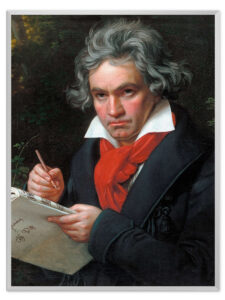
Ludwig van Beethoven
Ludwig van Beethoven was born in Bonn in 1770 and remained in his native city until 1792, when he moved to Vienna, where he spent the rest of his life and died in 1827. He began losing his hearing before the age of thirty, a decline that continued until he became completely deaf, yet he went on composing throughout this profound personal challenge. The von Breuning family, close friends from his Bonn years, were said to have been like a second family to him. Beethoven was also a prolific correspondent: although he once confessed to a friend that he "would rather write 10,000 notes than a single letter," he nonetheless produced over 100,000 letters by hand over the course of his life. He is remembered today as one of the most important composers in the history of music, and remains vividly present in Bonn, where the Beethoven-Haus preserves his legacy through its archives, chronologies of his years in Bonn and Vienna, and an extensive pictorial biography documenting his life.