
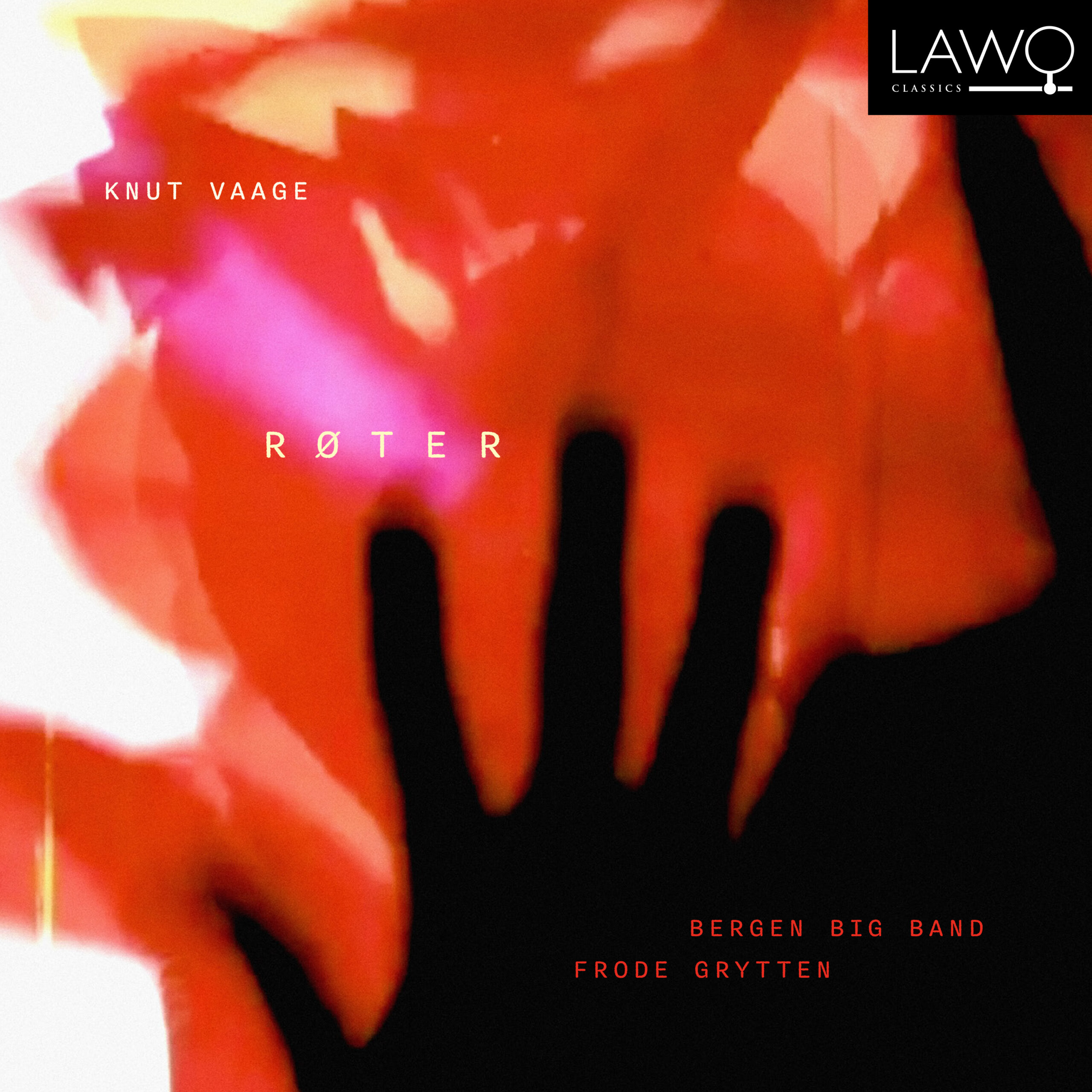
Knut Vaage: Røter
Bergen Big Band - Frode Grytten
Røter brings together the music of Knut Vaage, the poetry of Frode Grytten and the video art of Anne Marthe Dyvi. Commissioned and performed by Bergen Big Band, it is a work where jazz, poetry and image merge into something deeply human.
Vaage is a Bergen-based composer and pianist, trained at the Grieg Academy, who has long explored the borderland between improvisation and composition. His output spans symphonic works, opera and solo pieces, and in 2022 he was nominated for the Nordic Council Music Prize for Hybrid Spectacle. With Røter, he writes for Bergen Big Band, one of Norway’s leading big bands, gathering some of Western Norway’s foremost jazz musicians. Rooted in the 1970s and built on a strong commitment to new music, commissions and artistic collaboration, the band has shared the stage with international names such as Chris Potter, Diana Krall and Marius Neset. Røter is the band’s ninth release.
The work starts from the roots of jazz itself - a music born of migration, pain, resistance and cultural encounters - and turns toward our own time: people on the move, roots torn up, and new communities arising when cultures meet. Røter moves from fragile intimacy to explosive outbursts and driving jazz, from warm washes of sound and raw free-jazz energy to echoes of the classic big band tradition. Grytten’s distinctive poetic voice is woven seamlessly into the music, while Dyvi’s video art glides between its moods.
Premiered at the Bergen International Festival in 2022 to great acclaim, Røter was nominated for the 2024 Musikkforleggerprisen (Work of the Year).
Stream & download
Tracks
Knut Vaage (*1961)
Røter 2 Part I
Text: Frode Grytten
Lyrics
og politiet som dundrar på døra hans:
kva skjer der inne? kva i helvete driv du på med der inne?
Text: Frode Grytten
and the police pounding on his door:
what’s going on in there? what in the hell are you doing in there?
Translation: Alison McCullough
Lyrics
jo, eg kokar bare opp ein skyskrapar
jo, eg kokar bare opp ein skyskrapar
Text: Frode Grytten
yeah, I’m just cooking up a skyscraper
yeah, I’m just cooking up a skyscraper
Translation: Alison McCullough
Lyrics
jo, eg skapar bare himmel og jord og rytme
jo, eg skapar bare himmel og jord og rytme
Text: Frode Grytten
yeah, I’m just creating heaven and earth and rhythm
yeah, I’m just creating heaven and earth and rhythm
Translation: Alison McCullough
Lyrics
jo, eg skapar bare himmel og jord
jo, eg føder bare ein sommar og ein heil generasjon
Text: Frode Grytten
yeah, I’m just creating heaven and earth
yeah, I’m just delivering a summer and a whole generation
Translation: Alison McCullough
Lyrics
jo, eg fyller bare lungene mine med gud og flagget
og song og blå auge og raselovar og nervetrådar
og underkjolar og mytologi og elver og vegetasjon
Text: Frode Grytten
yeah, I’m just
filling my lungs with god and the flag
and song and
blue eyes and racial laws and nerve fibres
and petticoats and mythology and rivers and vegetation
Translation: Alison McCullough
Lyrics
bli lyd, bli låt, bli jazz
åpne opp, seier politiet, kom ut med
hendene over hovudet
og guten som pustar inn og blåser ut ein tyfon
Text: Frode Grytten
become sound, become song, become jazz
open up, say the police, come out with your hands above your head
and the boy takes a breath and blows out a typhoon
Translation: Alison McCullough
Lyrics
tenkande, syngande, svingande hammerslag
tenkande, syngande, svingande hammerslag
Text: Frode Grytten
thinking, singing, swinging hammer strikes
thinking, singing, swinging hammer strikes
Translation: Alison McCullough
Lyrics
blåser ut og blåser fridom inn i ansikta
Text: Frode Grytten
blows out and blows freedom into their faces
Translation: Alison McCullough
Lyrics
blåser overmot blåser autonomi blåser perfeksjon inn i natta
blåser overmot autonomi perfeksjon inn i natta
blåser opprør, blåser motstand inn i natta
Text: Frode Grytten
blows swagger
blows autonomy blows perfection into the night
blows swagger
autonomy perfection into the night
blows rebellion, blows resistance into the night
Translation: Alison McCullough
Lyrics
bli lyd, bli låt, bli jazz
Text: Frode Grytten
become sound, become song, become jazz
Translation: Alison McCullough
Røter 2 Part II
Text: Frode Grytten
Lyrics
Jo, det tok til med ein gut
som leita etter ein tone som ikkje fanst
Text: Frode Grytten
yeah, it began with a boy
who was searching for a note that didn’t exist
Translation: Alison McCullough
Lyrics
dette er gata vi bur i, dette er huset vi flytta inn i
her er trappene dette bandet klatra opp i
Text: Frode Grytten
this is the street we live on, the house we moved into
here are the stairs that this band climbed
Translation: Alison McCullough
Lyrics
bær inn inspirasjonen, bær inn trommene og trompeten
Text: Frode Grytten
carry in the inspiration, carry in the trumpet and the drums
Translation: Alison McCullough
Lyrics
bær inn new orleans og chicago og paris i april
bær inn heile empire state og birdland og blue note
bær inn alle kassettane, alle platene, alle plakatane
bær inn bird og basie, bær inn buddy og billie
bær inn monk og miles, fitzgerald og carter
jones, rollins, ellington, coltrane, armstrong
Text: Frode Grytten
carry in new
orleans and chicago and april in paris
carry in the whole
empire state and birdland and blue note
carry in all
the tapes, all the records, all the posters
carry in bird
and basie, carry in buddy and billie
carry in monk and miles, fitzgerald and carter
jones, rollins, ellington, coltrane, armstrong
Translation: Alison McCullough
Lyrics
dei som heldt mikrofonen tett mot leppene
dei som heldt mikrofonen tett mot hjartet
Text: Frode Grytten
those who held the microphone close to their lips
those who held the microphone close to their heart
Translation: Alison McCullough
Lyrics
hør, hør, korleis regnet rører seg
hør, hør, korleis vinden rører seg
hør, hør, korleis dette huset skjelv
bli lyd, bli låt, bli jazz
Text: Frode Grytten
listen, hear
how the rain moves
listen, hear
how the wind stirs
listen, feel
how this house shakes
become sound, become song, become jazz
Translation: Alison McCullough
Røter 2 Part III
Text: Frode GryttenBergen Big Band | Frode Grytten (narrator)
Lyrics
kven seier at amerika ikkje har ei historie
kven seier at amerika ikkje har røter
åpne opp, seier politiet, kom ut med
sjela di over hovudet
Text: Frode Grytten
who says
america doesn’t have a history
who says
america doesn’t have roots
open up, say the police, come out with your soul above your head
Translation: Alison McCullough
Lyrics
i mistankens tid har guten ingenting å skjule
han kjem ut, han går ut i lause lufta, blir lagt i bakken
fortida er skyene som flyt over dette huset
raseriet, profetiane, ideologiane, melodiane
Text: Frode Grytten
in this time
of suspicion the boy has nothing to hide
he comes out, steps
out into mid-air, is tackled to the ground
the past is the clouds that float above this house
the rage, the prophecies, ideologies and melodies
Translation: Alison McCullough
Lyrics
eg får ikkje puste, seier guten, men pustar likevel
pustar og løftar hornet i protest, pustar vidare
og dette bandet og alle band pustar vidare
Text: Frode Grytten
i can’t
breathe, says the boy, but breathes all the same
breathes and
lifts his horn in protest, keeps on breathing
and this band and all bands keep on breathing
Translation: Alison McCullough
Lyrics
spelar ein einaste høg svolten tone
pustar dei første tonane, dei første drinkane
dei første slåstkampane, dei første dagane
dei første taktane, dei første motorvegane
rasande tonar, klagande tonar, tapte tonar
fars tonar, mors tonar, våre tonar
Text: Frode Grytten
and this band
and all bands keep on breathing
playing one
single high and hungry note
breathing the
first notes, the first drinks
the first
fist-fights, the first days
the first
tempos, the first highways
furious notes,
plaintive notes, lost notes
father’s notes, mother’s notes, our notes
Translation: Alison McCullough
Lyrics
bli lyd, bli låt, bli jazz
Text: Frode Grytten
become sound, become song, become jazz
Translation: Alison McCullough
Credits
- Conductor
- Reid Gilje
- Ensemble
- Bergen Big Band
- Composer
- Knut Vaage
- Lyricist
- Frode Grytten
- Producer
- Vegard Landaas
- Engineer
- Thomas Wolden
- Editing
- Vegard Landaas
- Mastering
- Thomas Wolden
- Executive producer
- Vegard Landaas
- Booklet editor
- Alison Bullock Aarsten
- PR
- Camilla Momkvist-Skau
- Accounting
- Torgeir M. Landaas
- Cover art
- Anne Marthe Dyvi
- Design
- Anette L’orange | Blunderbuss
- Recording country
- Norway
- Recording year
- 2024–2026
- Recording dates
- 09.09.2024 | 10.09.2024 | 11.09.2024 | 25.05.2026
- Original source
- DXD (352.8 kHz, 24 bit)
- Discs / tracks
- 1 disc | 39 tracks
- Release year
- 2026
- Label
- LAWO Classics
- Duration
- 50:59
- EAN
- 7090020184074
- ISRC
- NOEHX2629
Booklet text
If you have to ask what jazz is, you’ll never know. So said Louis Armstrong when he was asked if he could define jazz. No artist likes to define what they do. To define is often to reduce and degrade. Nor are there many jazz musicians who like the word jazz. What does it mean? Is it an abbreviation of ‘jasmine’, is it the scent of perfume and the taste of tea? Or does it refer to James, a mythical instrumentalist from an early phase of the form?
Regardless, jazz was born of the blues in New Orleans, of the descendants of enslaved Americans. Jazz came of age in Chicago and along the banks of the Mississippi, jazz travelled from hot Chicago to the cool West Coast, sprinted down New York’s avenues, ended up in Paris in April, wandered through Tunisian nights, flew into Norwegian forests, landed atop mountain plateaus. Jazz was shot into outer space, found its way to inner spaces. Jazz is the music of the traveller — jazz moves, shifts, floats around, rises up, sinks down, finds paths and detours.
It’s possible to call jazz America’s classical music. Simple as that. But it isn’t actually all that simple. Jazz is music that changed the art, a sound and a rhythm that changed the tradition, which changed the language and the world — yes, changed the world. Jazz isn’t just a people’s music, it’s the narrative of an entire century. Jazz expresses not just the bloody history of Black America, but the story of modern humanity. No less than that.
Jazz tells a story. The trumpeter tells a story. The drummer shares a lifetime. The saxophonist cooks up a towering skyscraper. The bassist composes an entire city. The band creates an entire civilisation. Jazz developed in a unique way, through a collaboration between musicians and their audiences, through a dialogue between younger and older performers. Up-and-coming musicians were the apprentices of established ones. In this sense, jazz has always been aware of the power in its roots. The new generation quotes the old, and the younger musicians are acutely aware of the tradition that has been laid at their feet.
At the same time, having your own sound and unique style is crucial in making a name for yourself within jazz. It’s one of the paradoxes of the form, that you attain the original and unique by imitating others, by absorbing and incorporating the history of jazz into yourself. You’re indebted to those who came before, but you have to use that debt to reach yourself. The music is your own experiences, your own thoughts, your own wisdom, your own stupidity. If you don’t live it, nor will it emerge from your horn or your strings or your keys or your drumheads.
Dizzy Gillespie said that sooner or later, a performer has to push himself into the music. Dizzy Gillespie wanted to be Roy Eldridge, to play like Roy Eldridge, sound like Roy Eldridge. At some point, he became Dizzy Gillespie. That’s how it is. Miles Davis wanted to be Dizzy Gillespie, to play like Dizzy, sound like Dizzy, but he couldn’t do it, he lacked the ability to hit the high notes like Dizzy, so he conjured up his own cool, beautiful, solitary sound. He became Miles Davis. Jon Hassell wanted to be Miles Davis, to be Miles Davis at his most electric, play like him, sound like him. At some point, Hassell went beyond his hero, he created a landscape free of borders and the trumpet’s rules, he painted the whole world with his instrument. He became Jon Hassell.
And after Jon Hassell? Well, here come Nils Petter Molvær and Arve Henriksen and Sam Gendel. And after them? Well, they’ll come, they’re on their way, they’re already here. Jazz runs in both directions, back to the source, back to the beginning, but also towards the mouth of the river and out into the sea. The old masters are immensely present in the music’s development and evolution, jazz has a sense of both past and present, it unfolds in an endless commute, an eternal shuttling between heaven and earth, between roots and spaceflight. And here we stand, Bergen Big Band and Knut Vaage and Anne Marthe Dyvi and I, the artists who have created this work. We who are indebted to the very best, the artists who made jazz such a vital form, a wild genre full of atonality and disharmony and noise, but jazz can take it, jazz can incorporate darkness, because jazz is also everything else — the warmth and harmony and rhythm. Jazz is freedom and joy, explosion and tradition, risk and roots.
Ask the members of Bergen Big Band, and maybe they won’t want to define jazz, but they’ll talk about Basie and Buddy, about Miles and Mingus and Monk, about Thad Jones and Donny McCaslin, about Art Tatum and Billie Holiday and Carla Bley. Ask Knut Vaage, and maybe he won’t want to define jazz, but he’ll talk about roots, about back when he ran Husnes Jazz Club and wrote jazz reviews for the local newspaper under a pseudonym. This is where he came from, from jazz, the man who would become a pianist and contemporary composer. Ask Anne Marthe Dyvi, and she’ll tell you about the female artists who came before and opened doors, the ones who spoke up, who took up space, who paved the way so that she could work and explore and create, and so continue to hold the door open for those who come after.
Ask me, and I can’t define jazz, but I can talk about beat poetry and Gregory Corso and Frank O’Hara and Amiri Baraka and Diane di Prima and Frank London Brown. I stand on their shoulders, gazing out wards, listening, taking it all in. The beat of the band, the beat of the street, the beat of the night train and the pinball machines, the warm breeze that comes across the sea, the laughter and the sound of traffic running through my body. The work and the joy. The sound of a music that refuses to be defined. As the poet Ted Joans put it: Hallelujah I dig JAZZ so Yeah JAZZ IS MY RELIGION.
Note: Røter was originally commissioned by Bergen Big Band and premiered at the Bergen International Festival in 2022. The work includes text and recitation by Frode Grytten and video art by Anne Marthe Dyvi.
Biographies

Knut Vaage
Knut Vaage, a graduate of the Grieg Academy in Bergen, is a versatile composer and pianist whose work focuses primarily on improvisation and contemporary music. He has made significant contributions to orchestral music, including works such as Janus and Hokkaidos hagar. Vaage is recognised for his exploration of hybrid acoustic and electronic soundscapes, particularly in works such as Futurasjon and Hybrid spetakkel, which earned him a nomination for the Nordic Council Music Prize in 2022.
In addition to instrumental works, Vaage has composed several operas. Nokon kjem til å komme was the first opera based on a text by Jon Fosse. Khairos and Veslefrikk were created in collaboration with librettist Torgeir Rebolledo Pedersen. He has also composed music for theatre productions, including Peer Gynt and Hvite djevler. Vaage is actively involved in promoting contemporary music, including introducing it to children and young people. Vaage was nominated for the Norwegian Critics’ Award in 2026 for his opera "Nattfolket". He received the Lindeman Prize in 2024.

Frode Grytten
Frode Grytten (b. 1960) was born in Bergen and raised in Odda, and is widely regarded as one of the most distinctive voices in
contemporary Norwegian literature. Since his debut with the poetry collection Start in 1983, he has written novels, short stories, poetry, essays and children's books, establishing a unique body of work characterized by musicality, warmth and
a keen eye for the people and communities he portrays.
His major breakthrough came with Bikubesong (Beehive Song) in 1999, which won the Brage Prize and was nominated for the Nordic Council Literature Prize. Since then, Grytten has received numerous literary awards, including the Riverton Prize for Flytande bjørn (Floating Bear), and both the New Norwegian Literature Prize and the Melsom Prize for Rom ved havet, rom i byen (‘Rooms by the sea, Rooms in the city’). In 2023, Grytten published his first novel in ten years, Den dagen Nils Vik døde (‘The day that Nils Vik died’), which was widely acclaimed by critics and awarded the Brage Prize.
Alongside his literary career, Grytten has also worked as a journalist and essayist, and over the years has collaborated closely with musicians and performing artists on a wide range of literary and musical projects.
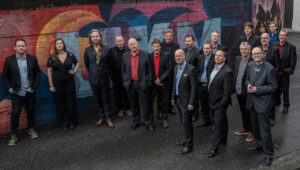
Bergen Big Band
Bergen Big Band (BBB) is one of Norway’s leading and most active big bands and has, over the past 35 years, established itself as a key force in Norwegian jazz. Based in Bergen and with roots dating back to the 1970s, the band is today regarded as a jazz flagship for Western Norway. The ensemble consists of some of the region’s foremost jazz musicians and is known for its high artistic standards, versatility, and innovative approach to the big band format.
BBB combines a deep respect for the big band tradition with a strong commitment to new music and artistic development. The band regularly commissions works from leading composers and collaborates with international soloists and bandleaders. Over the years, BBB has performed at major international festivals across Europe and North America and shared the stage with some of the world’s leading jazz musicians, including Diana Krall, Chris Potter and Marius Neset.
The band’s debut album, Seagull (2005), featuring Karin Krog and John Surman, was nominated for a Spellemann Award. Røter is the band’s ninth release and continues BBB’s work of advancing big band jazz through innovative commissioned works and exciting collaborations. Under the musical direction of Michael Barnes, BBB continues to be a driving force in Norwegian jazz.