
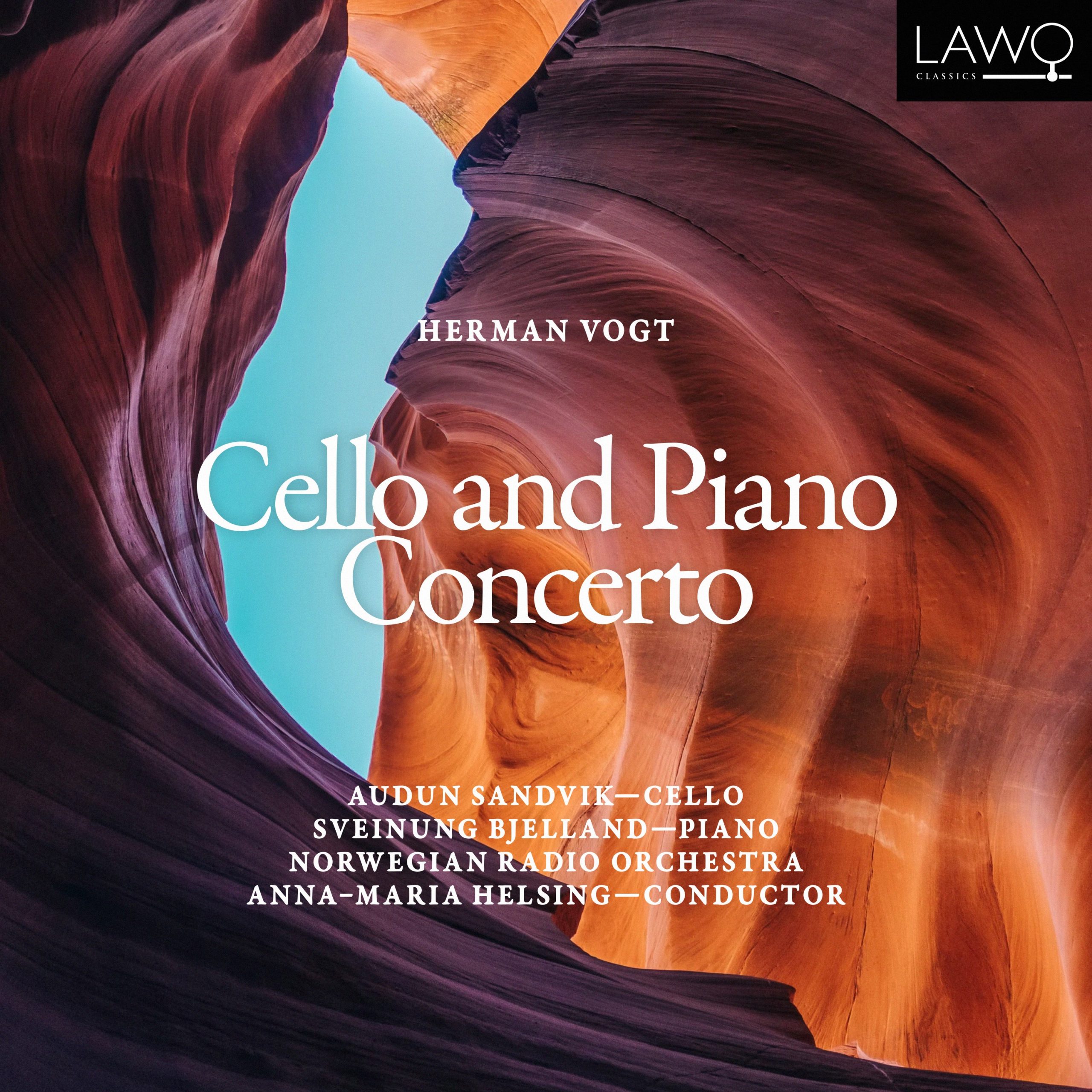
Herman Vogt: Cello and Piano concerto
Audun Sandvik (Cello) | Sveinung Bjelland (Piano) | Norwegian Radio Orchestra (Orchestra)
The Norwegian Radio Orchestra Releases Herman Vogt's Captivating Cello and Piano Concertos
The Norwegian Radio Orchestra is proud to announce the release of Herman Vogt: Cello and Piano Concerto, a showcase of contemporary Norwegian composition at its finest. This album, featuring two striking works by composer Herman Vogt, highlights his intricate interplay of soloist and orchestra, offering listeners an immersive musical experience.
The Cello Concerto, performed by cellist Audun Sandvik, is a deeply emotive work, rich in tonal exploration and lyrical depth. Vogt’s mastery shines in this piece as he balances the cello’s expressive voice with the dynamic power of the orchestra.
The Piano Concerto, featuring Sveinung Bjelland as the soloist, is equally captivating. This work seamlessly integrates virtuosic piano passages with sweeping orchestral textures, creating a vibrant and intricate soundscape that pushes the boundaries of modern concerto writing.
Both concertos are brought to life under the baton of the esteemed conductor Anna-Maria Helsing, leading the Norwegian Radio Orchestra with precision and sensitivity. The performances capture the essence of Vogt’s artistic vision, presenting music that is at once innovative and profoundly resonant.
Herman Vogt, a celebrated voice in contemporary Norwegian music, has crafted works that resonate with emotional intensity and intellectual depth. This album cements his place as a leading composer in the Nordic contemporary music scene.
Listen
Tracks
Herman Vogt (*1976)
Cello Concerto
Anna-Maria Helsing (conductor) | Norwegian Radio Orchestra | Audun Sandvik
Piano Concerto
Anna-Maria Helsing (conductor) | Norwegian Radio Orchestra | Sveinung Bjelland
Credits
- Conductor
- Anna-Maria Helsing
- Performer
- Audun Sandvik (Cello) | Sveinung Bjelland (Piano)
- Orchestra (unspecified)
- Norwegian Radio Orchestra
- Composer
- Herman Vogt
- Producer
- Vegard Landaas
- Engineer
- Thomas Wolden
- Editing
- Vegard Landaas
- Mastering
- Thomas Wolden
- Liner notes
- Andrew Mellor
- Executive producer
- Vegard Landaas
- Booklet editor
- Torgeir M. Landaas
- PR
- Camilla Momkvist-Skau
- Accounting
- Torgeir M. Landaas
- Cover photo
- Unsplash.com CC licence
- Artist photo
- Audun Sandvik by Anna-Julia Granberg | Sveinung Bjelland by Anna-Julia Granberg | Anna-Maria Helsing by Timo Heikkala | Herman Vogt by John Andresen | Norwegian Radio Orchestra by Julia Maria Naglestad
- Design
- Anette L’orange | Blunderbuss
- Recording location
- Store studio, NRK, Oslo
- Recording country
- Norway
- Recording year
- 2023
- Recording dates
- 24.04.2023 | 25.04.2023 | 26.04.2023 | 27.04.2023 | 28.04.2023
- Original source
- DXD (352.8 kHz, 24 bit)
- Discs / tracks
- 1 disc | 6 tracks
- Produced with support from
- Arts and Culture Norway | The Audio and Visual Fund | Creo – The Union for Arts and Culture | Norwegian Society of Composers
- Release year
- 2024
- Label
- LAWO Classics
- Duration
- 1:06:32
- EAN
- 7090020183183
- ISRC
- NOEHX2422010
Booklet text
Herman Vogt's work extends a line of artistic thinking established in the Romantic period. His music presents an emotional but formally disciplined response to the central questions of existence, grappling with the very problem of the place of the individual in the world that occupied the likes of Ludwig van Beethoven, Robert Schumann and Gustav Mahler. Much of Vogt's music follows the established rubric of Classical Romanticism but dresses it in a modern but often tonal sound, both sensitive and stringent. His music's duality echoes fundamental philosophical dilemmas that have always remained with us, pitting the veiled and vague against the distinct and clear.
Vogt was born in Drammen in central-southern Norway. He studied composition at the Norwegian Academy of Music (where he also studied violin) with Lasse Thoresen, Olav Anton Thommessen, Henrik Hellstenius and Bjørn Kruse and at the Royal Conservatory of The Hague with Martijn Padding and Louis Andriessen. His music has been performed by the Oslo orchestras and new music ensembles, and by many more besides.
Vogt's scores often harbour great drama and energy. In 2015, the composer completed a Violin Concerto that took its lead from Beethoven's own work in the form, and explored the dialectical interplay between soloist and orchestra. As he examined and probed concerto form, Vogt began to think of the solo concerto as a form 'in which the orchestra is regarded in relation to a soloist and must therefore constantly assume varying roles.'
Vogt's Cello Concerto was commissioned by the soloist on this recording, cellist Audun Sandvik. An initial version was completed in 2014, but the composer returned to it later, completing a new version in 2022 that replaced the final movement and added a second movement. In this final form, the piece was first performed by Sandvik and the Norwegian Radio Orchestra (KORK) in April 2023.
The Cello Concerto is a large-scale piece in three movements, but a work that combines broad, shifting landscapes and expressionistic tendencies with a certain intimacy. Throughout it, we hear Vogt mining a wide sound palette from the orchestra. In the first movement, titled Fantasia, the soloist emerges serenely as if from within an equally placid orchestra, but works its way into various states of agitation induced by outbursts from the tutti ensemble imbued with fantastical instrumentation and a beguiling harmonic spectrum - particularly so in the straining final pages of the movement that follow the cadenza from the soloist, itself initiated on a pizzicato and accompanied by percussion, timpani and harp.
The second movement is a lyrical Canzona marked 'largo e tranquillo' (slow and tranquil). Its long, lyrical lines are based on a simple melody of two adjacent notes but the music moves from its exalted state to a frenzied one in its central section.
The third movement, in sonata form, is altogether more brittle. It is characterized by highly effective interplay between orchestra and soloist, who constantly provide one another with musical fuel while also appearing in opposition - a singular being versus a diverse community (a snapshot of Vogt's view of concerto form). The cello can appear agitated in this movement, scurrying around in search of shelter through heavy orchestral weather, an extension of Vogt's desire to contrast the solo instrument's long, lyrical lines with more technically demanding sections whose complexity suggests something more transcendental. The invigorating harmonic transitions in this movement are particularly noteworthy, even as rendered by an orchestra used mostly traditionally. The cello strives to ascend through much of the movement, its upward scales eventually leading to a sense of resignation. But the concerto ends on an energizing throttle-surge of optimism.
Vogt's piano concerto was written between 2017 and 2021 as the culmination of the composer's cycle of three concertante works including those for cello and violin. The work represents a conscious effort on behalf of the composer to search for a new musical clarity and give fresh voice to classical ideals. The score's neoclassicism is underpinned most obviously by its scoring, modeled on that for Mozart's piano concertos but with added percussion manned by two players.
Immediately in the first movement, listeners will surely sense they are in a different harmonic space in this concerto - one also influenced by Vogt's retrospective glance at Mozart, as much of the harmonic argument is built using triads. The music twists, scissors and clambers its way up through triads, though a feeling of unease appears to pull it back down again. Beguilingly spelt and orchestrated chords hold the music in the air like a cloud, while gleaming pillars of brass appear like punctuation. Underneath all that is a sort of blurred sonata form in which the exposition and development are intermingled and the recapitulation is but a fleeing reminiscence, itself preceding a fiery cadenza-like passage for the soloist.
The concerto's middle movement is slow as in the cello concerto but less direct and more guarded, like an improvisatory idyll in which time stands still until, around two thirds in, a brass call heralds change. What Vogt describes as the music's 'peaceful soreness' presents a direct contrast to the mobility of the outer movements, the finale being characterized by an initial moto perpetuo built of pointillist gestures from trumpet and percussion which quickly induces the sense of a chase in which orchestra and soloist are on one another's tail. The chase calms for a slow central section for strings in which the piano is absent until it offers up a series of marbled chords in the manner of cadenza. When the chase ensues, it does so in a more developed light: more hindered, less fluent, those pillars of brass back again to complicate the music's flow. Echoing the closing bars of the cello concerto, this piece also ends on an upward surge.
— Andrew Mellor
Andrew Mellor is author of The Northern Silence — Journeys in Nordic Music and Culture (Yale University Press)
Biographies
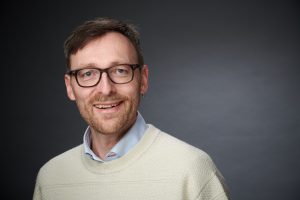
Herman Vogt
Herman Vogt (b. 1976) studied composition at the Norwegian Academy of Music from 1999 to 2004 with Bjørn Kruse, Lasse Thoresen, Olav Anton Thommessen and Henrik Hellstenius, and completed a master's degree in composition at the same institution in 2018 under Asbjørn Schaathun. In 2003 he studied composition at the Royal Conservatory in The Hague with Martijn Padding and Louis Andriessen. He also studied the violin at the Norwegian Academy of Music from 1995 to 1997.
Vogt's music has been performed at the ISCM World Music Days in Sydney and Belgium (the latter together with the Transit Festival), the Nordic Music Days in Copenhagen and Stockholm, ULTIMA in Oslo, Borealis in Bergen, and other festivals in Norway and abroad.
His works have been performed by the Oslo Philharmonic, Norwegian Radio Orchestra, Trondheim Symphony Orchestra, BIT20 Ensemble, Oslo Sinfonietta and Athelas Sinfonietta; pianists Ian Pace and Sveinung Bjelland; violinist Geir Inge Lotsberg; cellists Timo-Veikko Valve and Audun Sandvik; and organist Anders Eidsten Dahl. Conductors include Edward Gardner, Vasily Petrenko, Pierre-André Valade, Baldur Brönnimann, Christian Eggen, Ingar Bergby, Peter Szilvay, Per Kristian Skalstad and Anna-Maria Helsing, alongside many other ensembles and musicians in Norway and abroad.
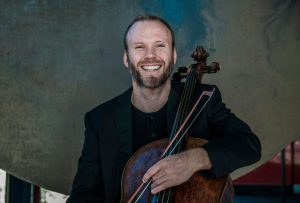
Audun Sandvik
Audun Sandvik is a much in-demand soloist, orchestral and chamber musician and cello teacher, known for his heartfelt playing and lively performances. He has appeared as a soloist with the Oslo Philharmonic, the Bergen Philharmonic, the Norwegian Radio Orchestra and the Stuttgarter Kammerorchester, as well as at Norwegian and international chamber music festivals.
With pianist Sveinung Bjelland he drew international attention with Rachmaninoff / Shostakovich: Cello Sonatas (LWC1131, 2017). His album Trace of Lament (2022) presents five works for cello and orchestra written for him by three Norwegian composers who usually work with audiovisual expression, but here focus on the cello as a solo instrument.
Sandvik is a cellist with the Norwegian Chamber Orchestra and was Co-Principal Cello of the Norwegian Radio Orchestra from 2005 to 2019, when he also became known from TV appearances as a soloist, chamber musician, presenter and mentor. He performs with artists in jazz, pop and rock, and is Professor of Cello at UiT The Arctic University of Norway in Tromsø, after many years as a cello teacher at the Norwegian Academy of Music. He is Artistic Director of the Gloppen Music Festival and plays a cello made in Rome in 1695 by Giorgio Taninger. He received the Lindeman Prize for Young Musicians, and the jury described him as a musician for today.
Sveinung Bjelland
The award-winning pianist Sveinung Bjelland from Stavanger studied with Professor Hans Leygraf at the University of Music and Dramatic Arts (Mozarteum) in Salzburg and at the Berlin University of the Arts, from which he graduated with highest honours. In 1999 he was the recipient of Concerts Norway's 'Young Soloist of the Year' award. In the international press he is described as an outstanding lieder pianist.
He is Professor at the Norwegian Academy of Music and the University of Agder. Bjelland can look back on an extensive career as soloist, on international concert stages as well as on numerous recordings. His album of sonatas of Scarlatti and Mendelssohn is testimony to his exquisite sense of style and sound.
His previous releases on the LAWO Classics label, Rachmaninoff/Shostakovich: Cello Sonatas (LWC1131) with cellist Audun Sandvik and Chopin/Schumann (LWC1149) with the Norwegian Radio Orchestra, received glowing reviews in Norway and abroad.
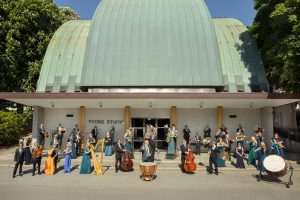
Norwegian Radio Orchestra
The Norwegian Radio Orchestra is known as 'the whole country’s orchestra' and is today regarded with a unique combination of respect and affection by its music-loving audience. With its remarkably diverse repertoire, it is the orchestra most listened to throughout Norway — on radio, television, and online, and at various venues around the country. It is a flexible orchestra, performing everything from symphonic and contemporary classical music to pop, rock, folk, and jazz.
Each year the orchestra performs together with internationally acclaimed artists at the Nobel Peace Prize Concert, aired to millions of viewers worldwide. The orchestra was founded by the Norwegian Broadcasting Corporation in 1946. Petr Popelka was the orchestra’s Chief Conductor from 2020 to 2023. From 2026, Holly Hyun Choe is the orchestra's Chief Conductor.
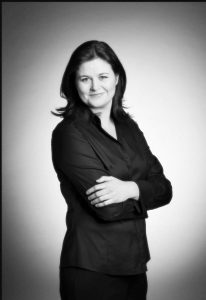
Anna-Maria Helsing
Anna-Maria Helsing (b. 1971, Södertälje, Sweden) is a Swedish-Finnish conductor who grew up in Munsala, Finland. She began as a violinist, earning diplomas from the Conservatory of Jakobstad and the Academy of Music in Bydgoszcz, Poland, before studying conducting with Leif Segerstam at the Sibelius Academy. She was later chosen for the Allianz Cultural Foundation’s International Conductors’ Academy under Esa-Pekka Salonen and Gustavo Dudamel, and has attended masterclasses with Jorma Panula, Vladimir Jurowski and John Carewe.
From 2010 to 2013 she was Chief Conductor of the Oulu Symphony Orchestra, the first woman to hold that post with a Finnish symphony orchestra. In 2019 she received the Louis Spohr Medal in Seesen, Germany. She became Principal Guest Conductor of the BBC Concert Orchestra in 2020 and Chief Conductor in 2023, the first woman to lead a BBC orchestra as chief conductor. In 2025 she also became Chief Conductor of the Vaasa City Orchestra. Her operatic debut at the Finnish National Opera was with Kaija Saariaho’s Adriana Mater.
Helsing has conducted all the major Scandinavian orchestras, including the Finnish Radio Symphony, the Helsinki Philharmonic, the Swedish Radio Symphony, the Royal Stockholm Philharmonic and the Norwegian Radio Orchestra, as well as the Philharmonia Orchestra, the Royal Philharmonic, the BBC Philharmonic and the Royal Scottish National Orchestra.